LABORATORY ANIMAL SCIENCE: FISH
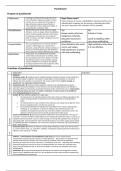
Assessment of the course
❖ written exam: 50% of the final score
o 20 multiple choice questions (linear grading scale): 25% of the final score
o 2-4 open questions: 25% of the final score
❖ Practical skills test, assessed using DOPS (Direct Observation of Procedural Skills): 25% of the final score
o Handling and restraint
o Welfare assessment
o Minimally invasive procedures
o Anesthesia for minor procedures
o Humane methods of killing
❖ Assignment: 25% of the final score
o Short description of a designed fish experiment
o Non-technical summary of the designed fish experiment
❖ Obtain a grade of at least 5/10 for the theory exam multiple choice + open questions AND Obtain a grade at
least 5/10 on the summed score practical skills test + assignment
C1: BASIC AND APPROPRIATE BIOLOGY OF FISH – DRIES KNAPEN
WHY A DEDICATED COURSE ON FISH?
❖ Fish account for 10-25% of all animals used
o 60% of all fish used are zebrafish
▪ Zebrafish: second largest group of lab animals
▪ After mice, zebrafish are the second frequently used animal
model
▪ zebrafish are the most used fish model
❖ Top 3 most used applications
❖ Translational and applied = drug
development
❖ Regulatory use = testing on
chemical substances, human and
animal drugs, the tests are most
often performed on fish
1
, TERMINOLOGY: FISH VERSUS FISHES
❖ Plural of fish can be fish or fishes → Be aware of it when you use the word fish in a paper !
❖ Fish
o Most typically used, especially in non-scientific context
o Can refer to either the same or different fish species
❖ Fishes
o Primarily used in a scientific context to refer to different species/types of fish
❖ Examples
o A school of fish (i.e., they are all the same species)
o A biologist studies the diversity of fish(es)
o We saw 10 different species of fish(es) on our trip
FISH PHYLOGENETICS AND TAXONOMY
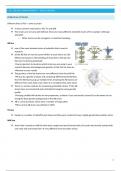
What is considered as a fish?
❖ Fish are vertebrates !!
❖ Within all the fish species, you have a
subdivision of fish that do not have jaws and
fish that do
❖ Another distinction → bone skeleton or a
cartilage skeleton
o Ray-finned fish = bone skeleton
o The bone and cartilage skeleton are the
most common ones
❖ At the bottom you have kind of exotic species
❖ every fish has completely different living
circumstances → salt water, sweet water, pH,…
→ keep in mind when you want to keep fish
TAXONOMIC CLASSIFICATION SCHEME
EXAM: Be able to explain the different groups
General groups:
❖ Agnatha: jawless fishes
o Hagfishes (70 species) and lampreys (38 species) = prik en slijmprikken
❖ Gnathostomata: jawed fishes
o Cartilaginous fishes
▪ Chondrichthyes (sharks, 400+ species; skates and rays, 530+ species; chimaeras, 33 species)
o Bony fishes
▪ Actinopterygii (ray-finned fishes, 26.000+ species, largest group)
▪ Sarcopterygii (lobe-finned fishes: coelacanths = living fossils that are very evolutionary
conserved, 2 species; lungfishes, 6 species)
2
Assessment of the course
❖ written exam: 50% of the final score
o 20 multiple choice questions (linear grading scale): 25% of the final score
o 2-4 open questions: 25% of the final score
❖ Practical skills test, assessed using DOPS (Direct Observation of Procedural Skills): 25% of the final score
o Handling and restraint
o Welfare assessment
o Minimally invasive procedures
o Anesthesia for minor procedures
o Humane methods of killing
❖ Assignment: 25% of the final score
o Short description of a designed fish experiment
o Non-technical summary of the designed fish experiment
❖ Obtain a grade of at least 5/10 for the theory exam multiple choice + open questions AND Obtain a grade at
least 5/10 on the summed score practical skills test + assignment
C1: BASIC AND APPROPRIATE BIOLOGY OF FISH – DRIES KNAPEN
WHY A DEDICATED COURSE ON FISH?
❖ Fish account for 10-25% of all animals used
o 60% of all fish used are zebrafish
▪ Zebrafish: second largest group of lab animals
▪ After mice, zebrafish are the second frequently used animal
model
▪ zebrafish are the most used fish model
❖ Top 3 most used applications
❖ Translational and applied = drug
development
❖ Regulatory use = testing on
chemical substances, human and
animal drugs, the tests are most
often performed on fish
1
, TERMINOLOGY: FISH VERSUS FISHES
❖ Plural of fish can be fish or fishes → Be aware of it when you use the word fish in a paper !
❖ Fish
o Most typically used, especially in non-scientific context
o Can refer to either the same or different fish species
❖ Fishes
o Primarily used in a scientific context to refer to different species/types of fish
❖ Examples
o A school of fish (i.e., they are all the same species)
o A biologist studies the diversity of fish(es)
o We saw 10 different species of fish(es) on our trip
FISH PHYLOGENETICS AND TAXONOMY
What is considered as a fish?
❖ Fish are vertebrates !!
❖ Within all the fish species, you have a
subdivision of fish that do not have jaws and
fish that do
❖ Another distinction → bone skeleton or a
cartilage skeleton
o Ray-finned fish = bone skeleton
o The bone and cartilage skeleton are the
most common ones
❖ At the bottom you have kind of exotic species
❖ every fish has completely different living
circumstances → salt water, sweet water, pH,…
→ keep in mind when you want to keep fish
TAXONOMIC CLASSIFICATION SCHEME
EXAM: Be able to explain the different groups
General groups:
❖ Agnatha: jawless fishes
o Hagfishes (70 species) and lampreys (38 species) = prik en slijmprikken
❖ Gnathostomata: jawed fishes
o Cartilaginous fishes
▪ Chondrichthyes (sharks, 400+ species; skates and rays, 530+ species; chimaeras, 33 species)
o Bony fishes
▪ Actinopterygii (ray-finned fishes, 26.000+ species, largest group)
▪ Sarcopterygii (lobe-finned fishes: coelacanths = living fossils that are very evolutionary
conserved, 2 species; lungfishes, 6 species)
2