C4: FUNCTIONAL BIOLOGY AND DIVERSITY OF FISH – GUDRUN DE BOECK
GENERAL CONCEPTS
ADAPTATION: CONSERVATION OR INNOVATION?
Organisms respond sensitively to small changes in their environment, but they live in the most diverse and variable
environments.
Different species of fish live in very different environments
❖ Fish evolved under many different circumstances
❖ Mammals look more alike whereas fish can live in a lot of
different temperatures, pH,…
❖ No fish in hot water springs !
❖ Deep sea fish live under very high pressure, they have an adapted membrane, proteins,…
Oxygen
❖ they can live in very low to very high oxygen levels
❖ Intertidal ponds with a lot of seaweed produces a lot of oxygen → can be 200-300% saturated oxygen
Temperature
❖ There are fish that can survive in ponds, they can tolerate temperatures over 30°C
❖ The coldest temperature of the water is at the poles, the fish live at -1.8°C (otherwise the water freezes)
o Fish can live near the ice, normally they would freeze because of the osmolarity (lower than the
water) but they have adapted themselves
❖ Fish can be in a dormant state up to -70°C, when it gets less cold they wake up
pH and salinity
❖ Fish can survive in salt lakes (sodium carbonate) at a pH of 9-10 → you cannot excrete ammonia at such a
high pH, but these fish still find a way to survive
❖ salinity = the amount of ions in the water
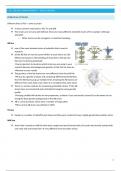
ENVIRONMENTAL CHALLENGES
OXYGEN
❖ Lowest: o mmol/L ~ Bacteria, archaea, animals inhabiting oxygen free sediments
o Low oxygens can occur when there is a high temperature or a high amount of organic content
o A certain type of shark is very tolerant to hypoxia → called the walking shark
❖ Highest: 24 mmol/L ~ Tide pools with photosynthetic activity
❖ Narrowest range: 0 mmol/L ~ Terrestrial species, many pelagic marine species
o Adapted to a certain oxygen level so changes in oxygen causes problems because the animals cannot
adapt
❖ Widest range (seasonal/daily): 0 to 24 mmol/L ~ Tide pools and Surfaces of coral reefs
1
, TEMPERATURE
❖ Lowest: -70°C ~ Arctic insects during winter dormancy
❖ Highest: +130°C ~ Thermophilic archaea from deep-sea hydrothermal vents
❖ Narrowest range: -1,9 to -2,0°C (polar sea), 2 to 3°C (deep sea) ~ Icefish (Notothenioid) die of heat at 4-6°C
o Fish that live in the polar sea cannot tolerate higher temperatures because they lost their
hemoglobin, they have a certain specific metabolism → if the temperature raises a bit, the fish die
o The deepest point in the sea is 11km, the average depth of the ocean is 4km
❖ Widest range: -70°C to 25°C ~ Arctic insects
SALINITY
❖ Lowest: 0 mosmol/L ~ freshwater organisms
❖ Highest: 3500 mosmol/L ~ halophilic bacteria and brine shrimp Artemia fransiscana
o salt water lakes
❖ Narrowest range: 0 mosmol/L ~ stenohaline marine species
o Marine species cannot really tolerate a lot of changes in salinity
❖ Widest range: 0-3500 mosmol/L ~ archaea and bacteria in shallow salt-flat ponds and Death Valley desert
pupfish
A FEW IMPORTANT SPECIES IN A LABORATORY CONTEXT
ppt = parts per thousand
Laboratory conditions are much more controlled, but not all the fish can live in the same environment → the fish
that are used as laboratory animals are tolerant to a lot of things because they are easier to keep
❖ Rainbow trout is a cold water species
o called the lab rat in physiology
o cannot cope with high temperatures.
o They can live in fresh and sea water → they go from fresh water to sea water and back
❖ European seabass is also very tolerant, they can live in multiple conditions
❖ Stickleback has a wide range in living conditions
o is used a lot in behavioral research → the males protect the eggs and show territorial behavior
❖ Neon tetra are soft water fish
! Sharks can also be used for medical research !
❖ shark have certain capacities that some fish or vertebrates do not have
❖ examples: they continuously change their teeth, how do they generate new teeth? How is their IS since they
rarely get cancer?
2
GENERAL CONCEPTS
ADAPTATION: CONSERVATION OR INNOVATION?
Organisms respond sensitively to small changes in their environment, but they live in the most diverse and variable
environments.
Different species of fish live in very different environments
❖ Fish evolved under many different circumstances
❖ Mammals look more alike whereas fish can live in a lot of
different temperatures, pH,…
❖ No fish in hot water springs !
❖ Deep sea fish live under very high pressure, they have an adapted membrane, proteins,…
Oxygen
❖ they can live in very low to very high oxygen levels
❖ Intertidal ponds with a lot of seaweed produces a lot of oxygen → can be 200-300% saturated oxygen
Temperature
❖ There are fish that can survive in ponds, they can tolerate temperatures over 30°C
❖ The coldest temperature of the water is at the poles, the fish live at -1.8°C (otherwise the water freezes)
o Fish can live near the ice, normally they would freeze because of the osmolarity (lower than the
water) but they have adapted themselves
❖ Fish can be in a dormant state up to -70°C, when it gets less cold they wake up
pH and salinity
❖ Fish can survive in salt lakes (sodium carbonate) at a pH of 9-10 → you cannot excrete ammonia at such a
high pH, but these fish still find a way to survive
❖ salinity = the amount of ions in the water
ENVIRONMENTAL CHALLENGES
OXYGEN
❖ Lowest: o mmol/L ~ Bacteria, archaea, animals inhabiting oxygen free sediments
o Low oxygens can occur when there is a high temperature or a high amount of organic content
o A certain type of shark is very tolerant to hypoxia → called the walking shark
❖ Highest: 24 mmol/L ~ Tide pools with photosynthetic activity
❖ Narrowest range: 0 mmol/L ~ Terrestrial species, many pelagic marine species
o Adapted to a certain oxygen level so changes in oxygen causes problems because the animals cannot
adapt
❖ Widest range (seasonal/daily): 0 to 24 mmol/L ~ Tide pools and Surfaces of coral reefs
1
, TEMPERATURE
❖ Lowest: -70°C ~ Arctic insects during winter dormancy
❖ Highest: +130°C ~ Thermophilic archaea from deep-sea hydrothermal vents
❖ Narrowest range: -1,9 to -2,0°C (polar sea), 2 to 3°C (deep sea) ~ Icefish (Notothenioid) die of heat at 4-6°C
o Fish that live in the polar sea cannot tolerate higher temperatures because they lost their
hemoglobin, they have a certain specific metabolism → if the temperature raises a bit, the fish die
o The deepest point in the sea is 11km, the average depth of the ocean is 4km
❖ Widest range: -70°C to 25°C ~ Arctic insects
SALINITY
❖ Lowest: 0 mosmol/L ~ freshwater organisms
❖ Highest: 3500 mosmol/L ~ halophilic bacteria and brine shrimp Artemia fransiscana
o salt water lakes
❖ Narrowest range: 0 mosmol/L ~ stenohaline marine species
o Marine species cannot really tolerate a lot of changes in salinity
❖ Widest range: 0-3500 mosmol/L ~ archaea and bacteria in shallow salt-flat ponds and Death Valley desert
pupfish
A FEW IMPORTANT SPECIES IN A LABORATORY CONTEXT
ppt = parts per thousand
Laboratory conditions are much more controlled, but not all the fish can live in the same environment → the fish
that are used as laboratory animals are tolerant to a lot of things because they are easier to keep
❖ Rainbow trout is a cold water species
o called the lab rat in physiology
o cannot cope with high temperatures.
o They can live in fresh and sea water → they go from fresh water to sea water and back
❖ European seabass is also very tolerant, they can live in multiple conditions
❖ Stickleback has a wide range in living conditions
o is used a lot in behavioral research → the males protect the eggs and show territorial behavior
❖ Neon tetra are soft water fish
! Sharks can also be used for medical research !
❖ shark have certain capacities that some fish or vertebrates do not have
❖ examples: they continuously change their teeth, how do they generate new teeth? How is their IS since they
rarely get cancer?
2