NR507 Week 8 Final Exam Advanced Pathophysiology
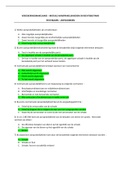
NR507 Week 8 Final Exam Advanced Pathophysiology Chamberlain College of Nursing Question 1 What is the major virus involved in the development of cervical cancer? a) Herpes simplex virus type 6 b) Herpes simplex virus type 2 c) Human papillomavirus d) Human immunodeficiency virus Question 2 Which statement accurately describes childhood asthma? a) An obstructive airway disease characterized by reversible airflow obstruction, bronchial hyperreactivity, and inflammation b) A pulmonary disease characterized by severe hypoxemia, decreased pulmonary compliance, and diffuse densities on chest x-ray imaging c) A pulmonary disorder involving an abnormal expression of a protein, producing viscous mucus that lines the airways, pancreas, sweat ducts, and vas deferens d) An obstructive airway disease characterized by atelectasis and increased pulmonary resistance as a result of a surfactant deficiency Question 3 The ability of the pathogen to invade and multiply in the host is referred to as: a) Infectivity b) Toxigenicity c) Pathogenicity d) Virulence Question 4 Obesity creates a greater risk for dehydration in people because: a) Adipose cells contain little water because fat is water repelling. b) The metabolic rate of obese adults is slower than the rate of lean adults. c) The rate of urine output of obese adults is higher than the rate of output of lean adults. d) The thirst receptors of the hypothalamus do not function effectively. Question 5 Continued therapy of pernicious anemia (PA) generally lasts how long? a) 6 to 8 weeks b) 8 to 12 months c) Until the iron level is normal d) The rest of one’s life Question 6 Which statement best describes cystic fibrosis? a) Obstructive airway disease characterized by reversible airflow obstruction, bronchial hyperreactivity, and inflammation b) Respiratory disease characterized by severe hypoxemia, decreased pulmonary compliance, and diffuse densities on chest x- ray imaging c) Pulmonary disorder involving an abnormal expression of a protein-producing viscous mucus that obstructs the airways, pancreas, sweat ducts, and vas deferens d) Pulmonary disorder characterized by atelectasis and increased pulmonary resistance as a result of a surfactant deficiency Question 7 What pulmonary defense mechanism propels a mucous blanket that entraps particles moving toward the oropharynx? a) Nasal turbinates b) Alveolar macrophages c) Cilia d) Irritant receptors on the nares Question 8 As stated in the Frank-Starling law, a direct relationship exists between the of the blood in the heart at the end of diastole and the of contraction during the next systole. a) Pressure; force Volume; b) strength Viscosity; c) force Viscosity; strength Question 9 : a) 2 years b) 1 year c) 10 months d) 5 months Question 10 Carcinoma refers to abnormal cell proliferation originating from which tissue origin? a) Blood vessels b) Epithelial cells c) Connective tissue d) Glandular tissue Question 11 Which of the following describes how the body compensates for anemia? a) Increasing rate and depth of breathing b) Decreasing capillary vasoconstriction c) Hemoglobin holding more firmly onto oxygen d) Kidneys releasing more erythropoietin Question 12 What term is used to describe a hernial protrusion of a saclike cyst that contains meninges, spinal fluid, and a portion of the spinal cord through a defect in a posterior arch of a vertebra? a) Encephalocele b) Meningocele c) Spina bifida occulta d) Myelomeningocele Question 13 Chvostek and Trousseau signs indicate which electrolyte imbalance? a) Hypokalemia b) Hyperkalemia c) Hypocalcemia d) Hypercalcemia Question 14 After sexual transmission of HIV, a person can be infected yet seronegative for how many months? a) 1 to 2 b) 6 to 14 c) 18 to 20 d) 24 to 36 Question 15 Which hormone prompts increased anxiety, vigilance, and arousal during a stress response? a) Norepinephrine b) Epinephrine c) Cortisol d) Adrenocorticotropic hormone (ACTH) Question 16 Which blood cells are the chief phagocytes involved in the early inflammation process? a) Neutrophils b) Monocytes c) Eosinophils d) Erythr Question 17 Where are alveolar macrophages found? a) Skin b) Breasts c) Gastrointestinal tract d) Lungs Question 18 Which normal physiologic change occurs in the aging pulmonary system? a) Decreased flow resistance b) Fewer alveoli c) Stiffening of the chest wall d) Improved elastic recoil Question 19 An infant diagnosed with a small patent ductus arteriosus (PDA) would likely exhibit which symptom? a) Intermittent murmur b) Lack of symptoms c) Need for surgical repair d) Triad of congenital defects Question 20 Hemophilia B is caused by a deficiency of which clotting factor? a) V b) VIII c) IX d) X Question 21 A hypersensitivity reaction that produces an allergic response is called: a) Hemolytic shock b) Anaphylaxis c) Necrotizing vasculitis d) Systemic erythematosus Question 22 Which statement is true regarding pain and cancer? a) Pain is primarily a result of pressure caused by the tumor. b) Pain indicates the metastasis of a cancer. c) Pain is usually the initial symptom of cancer. d) Pain is generally associated with late-stage cancer. Question 23 What is the anomaly in which the soft bony component of the skull and much of the brain is missing? a) Anencephaly b) Myelodysplasia c) Cranial meningocele d) Hydrocephaly Question 24 At birth, which statement is true? a) Systemic resistance and pulmonary resistance fall. b) Gas exchange shifts from the placenta to the lung. c) Systemic resistance falls and pulmonary resistance rises. d) Systemic resistance and pulmonary resistance rise. Question 25 What is the most commonly reported symptom of cancer treatment? a) Nausea b) Fatigue c) Hair loss d) Weight loss Question 26 a The common property among the three types of medications used to treat depression is that theya:) Increase neurotransmitter levels within the synapse. b) Increase neurotransmitter levels in the presynapse. c) Decrease neurotransmitter levels in the postsynapse. d) Decrease neurotransmitter levels within the synapse. Question 27 Prolonged high environmental temperatures that produce dehydration, decreased plasma volumes, hypotension, decreased cardiac output, and tachycardia cause which disorder of temperature regulation? a) Heat cramps b) Heat stroke c) Malignant hyperthermia d) Heat exhaustion Question 28 Congenital aganglionic megacolon (Hirschsprung disease) involves inadequate motility of the colon caused by neural malformation of which nervous system? a) Central b) Parasympathetic c) Sympathetic d) Somatic Question 29 What type of fracture occurs at a site of a preexisting bone abnormality and is a result of a force that would not normally cause a fracture? a) Idiopathic b) Incomplete c) Pathologic d) Greenstick Question 30 What is the leading cause of infertility in women? a) Pelvic inflammatory disease b) Endometriosis c) Salpingitis dstic ovary syndrome Question 31 Alterations in which part of the brain are linked to hallucinations, delusions, and thought disorders associated with schizophrenia? a) Parietal lobe b) Limbic system c) Temporal lobe d) Hypothalamus . Question 32 What is the function of the mucus secreted by the Bartholin glands? a) Enhancement of the motility of sperm b) Lubrication of the urinary meatus and vestibule c) Maintenance of an acid-base balance to discourage proliferation of pathogenic bacteria d) Enhancement of the size of the penis during intercourse Question 33 People with gout are at high risk for which co-morbid condition? a) Renal calculi b) Joint trauma c) Anemia d) Hearing loss Question 34 The tear in a ligament is referred to as a: a) Fracture b) Strain c) Disunion d) Sprain Question 35 Regarding type 2 diabetes, obesity is considered to be what type of risk? a) Genetic b) Empirical c) Relative d) Modifiable Question 36 Adoption studies have shown that the offspring of an alcoholic parent when raised by nonalcoholic parents have what amount of an increased risk of developing alcoholism? a) Twofold b) Threefold c) Fourfold d) Tenfold Question 37 What causes the crystallization within the synovial fluid of the joint affected by gouty arthritis? a) Reduced excretion of purines b) Overproduction of uric acid c) Increase in the glycosaminoglycan levels d) Overproduction of proteoglycans Question 38 It is true that Guillain-Barré syndrome (GBS): a) Is preceded by a viral illness. b) Involves a deficit in acetylcholine. c) Results in asymmetric paralysis. d) Is an outcome of HIV. Question 39 The failure of bones to ossify, resulting in soft bones and skeletal deformity, characterizes which disorder? a) Osteogenesis imperfecta b) Rickets c) Osteochondrosis d) Legg-Calvé-Perthes disease Question 40 Which dietary lifestyle choice has been associated with a decreased risk for developing colon cancer? a) Increased consumption of dairy produces b) Increased consumption of foods containing vitamin C c) Decreased consumption of foods high in fat d) Decreased consumption of artificial food coloring
École, étude et sujet
- Établissement
- Chamberlain College Of Nursing
- Cours
- NR507
Infos sur le Document
- Publié le
- 16 octobre 2023
- Nombre de pages
- 9
- Écrit en
- 2023/2024
- Type
- Examen
- Contient
- Questions et réponses
Sujets
-
nr507 week 8 final exam advanced pathophysiology