ASSIGNMENT 3: PORTFOLIO RCE2601
Name and surname:
Student number:
Module code: RCE2601
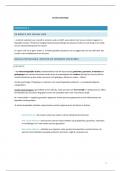
TABLE OF COTENT
Page
1. Title of research 2
2. Introduction 2
3. Problem statement and Research question
4. Literature review 3-4
5. Research participants 4
6. Data collection 4
Data analysis 5
7. Summary 5
8. Bibliography 5
9. Declaration 6
1|Page
, PLEASE DO NOT COPY WORD TO WORD TO AVOID PLAGIARISM
Topic: School violence in South Africa
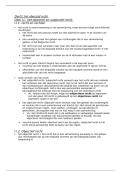
Introduction
Twenty percent of South Africa‟s teachers believe that schools are violent places and suspect
their students and colleagues are armed. This is according to survey conducted by the Human
Sciences Research Council with the Department of Education among more than 20 000 teachers
at 1 380 schools across the country. About 17% of teachers reported fights involving weapons at
school and almost 13% of teachers believe gangs operate in their school. Most reported violence
was between learners or between a learner and a teacher. Violence in South African schools is
rampant and has been so for a while. As far back as 1999, Kader Asmal, the former Minister of
Education, strongly condemned the unacceptably high levels of violence and directed that
schools must be reclaimed as “space of peace and stability” (Department of Education, 2000).
Yet, violent incidents continue making news headlines. According to Burton & Leoschut (2012),
the risk for school violence is often compounded by community level factors, such as alcohol and
drug availability as well as access to weapons. I chose this study because South African schools
are becoming battle sites of widespread violence. The escalation of cases o violence against
educators is a security concern as educators are considered the custodians of education.
Problem statement and Research question
The problem is that learners bring dangerous weapons to school and attack each other and
educators using these weapons. Media reports show that the Limpopo province alone
experienced more than 900 incidents by June 2018. It is clear that school violence is not unique
to South Africa, In South Africa; however it is easy to get away with school violence because
there are little or no consequences for the perpetrator‟s actions. Violence against educators in
South Africa is not a new manifestation (de wet, 2010; Payne & smith, 2013). South African
schools were declared as battlegrounds since 2003 (Mncube & Netshitangani, 2014). The South
African Media continues to report that educators are exposed to hostile learners in schools, which
affects teaching and learning (De Wet 2016; Van Nieuwenhuizen, 2018; Leanne, 2019). In
Limpopo Province, 942 cases of teacher assault were reported between Jnuary and September
2018. During the same period, the Gauteng Province reported 531 cases, the Western Cape 26
and the Mpumalanga Province 113 (NAPTOSA, 2018). While the South African constitution
2|Page
Name and surname:
Student number:
Module code: RCE2601
TABLE OF COTENT
Page
1. Title of research 2
2. Introduction 2
3. Problem statement and Research question
4. Literature review 3-4
5. Research participants 4
6. Data collection 4
Data analysis 5
7. Summary 5
8. Bibliography 5
9. Declaration 6
1|Page
, PLEASE DO NOT COPY WORD TO WORD TO AVOID PLAGIARISM
Topic: School violence in South Africa
Introduction
Twenty percent of South Africa‟s teachers believe that schools are violent places and suspect
their students and colleagues are armed. This is according to survey conducted by the Human
Sciences Research Council with the Department of Education among more than 20 000 teachers
at 1 380 schools across the country. About 17% of teachers reported fights involving weapons at
school and almost 13% of teachers believe gangs operate in their school. Most reported violence
was between learners or between a learner and a teacher. Violence in South African schools is
rampant and has been so for a while. As far back as 1999, Kader Asmal, the former Minister of
Education, strongly condemned the unacceptably high levels of violence and directed that
schools must be reclaimed as “space of peace and stability” (Department of Education, 2000).
Yet, violent incidents continue making news headlines. According to Burton & Leoschut (2012),
the risk for school violence is often compounded by community level factors, such as alcohol and
drug availability as well as access to weapons. I chose this study because South African schools
are becoming battle sites of widespread violence. The escalation of cases o violence against
educators is a security concern as educators are considered the custodians of education.
Problem statement and Research question
The problem is that learners bring dangerous weapons to school and attack each other and
educators using these weapons. Media reports show that the Limpopo province alone
experienced more than 900 incidents by June 2018. It is clear that school violence is not unique
to South Africa, In South Africa; however it is easy to get away with school violence because
there are little or no consequences for the perpetrator‟s actions. Violence against educators in
South Africa is not a new manifestation (de wet, 2010; Payne & smith, 2013). South African
schools were declared as battlegrounds since 2003 (Mncube & Netshitangani, 2014). The South
African Media continues to report that educators are exposed to hostile learners in schools, which
affects teaching and learning (De Wet 2016; Van Nieuwenhuizen, 2018; Leanne, 2019). In
Limpopo Province, 942 cases of teacher assault were reported between Jnuary and September
2018. During the same period, the Gauteng Province reported 531 cases, the Western Cape 26
and the Mpumalanga Province 113 (NAPTOSA, 2018). While the South African constitution
2|Page