
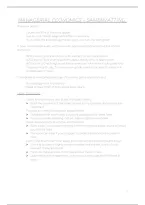
MA NA GERIA L ECONOMICS – SA MENV A TTING:
Business game
- Counts for 30% of the total grade
- Has its own Toledo page and different teachers
- If you took the business game last year, you can use that grade
2-hour closed book exam with exercises, open questions and multiple choice
questions:
- (8/20 points) Multiple choice, with penalty for wrong answers
- (4/20 points) Two short questions about theory and its application
- (8/20 points) One ’long’ quantitative exercises with several sub-questions
- Progressive difficulty, for maximum grade, need to be able to adapt the
models seen in class
Final grade is a weighted average of business game and exam but
- Business game is mandatory
- Need at least 10/20 in the closed book exam
HOW TO STUDY:
- Listen to the lectures and study the slides closely
Both the contents of the slides as well as my broader discussions are
important
- Practice all weekly homework assignments
Uploaded after each class, solutions uploaded one week later
Focus on understanding, not on replicating answer model
- Read relevant parts of articles and the book
Each week I will present ending from one relevant paper, parts of which
you should read
The book can help if you struggle to understand topics discussed in
class
- Even if the exam seems far away, prioritize some aspects straight away!
Coming to class is highly recommended and a great way to force
yourself to pay attention
Try to do the exercises in the weeks that there is class
Learning requires repetition, so force yourself to get the first reps in
early!
1
,Inhoud
Lecture 1) Game Theory: Fundamentals:.................................................................................................. 17
Game Theory (Managerial Economics):............................................................................................... 17
Games in economics:.................................................................................................................................... 17
Goals of game theory:................................................................................................................................... 17
Game representation, strategies and payoffs:................................................................................ 18
Payoffs:.................................................................................................................................................................... 18
Strategies:............................................................................................................................................................. 18
Outcome of a game:..................................................................................................................................... 18
Game theory and individual rationality:.............................................................................................. 18
Three main categories of games:............................................................................................................. 19
Strategic games:................................................................................................................................................... 19
Complete information does not mean certainty:....................................................................... 20
Uncertainty / Risk:.......................................................................................................................................... 20
Asymmetric Information:......................................................................................................................... 20
Important for Strategic Games:........................................................................................................... 20
A broad taxonomy of games:....................................................................................................................... 21
Strategic games: abstract form:................................................................................................................ 21
Strategic games: Normal (payoff-matrix) form............................................................................. 22
Finding an equilibrium: Elimination of dominated strategies:..........................................23
Step 1: Best response of P1:...................................................................................................................... 23
Step 2: Best response of P2:.................................................................................................................... 23
Towards a more general equilibrium:.................................................................................................. 24
Nash Equilibrium (NE):.................................................................................................................................... 24
Definition:............................................................................................................................................................. 24
How to find a NE:............................................................................................................................................ 24
Apply to the example:................................................................................................................................. 25
Nash equilibrium quiz: True or false? :................................................................................................. 26
Extensive games:................................................................................................................................................. 27
Why extensive games? :............................................................................................................................ 27
Categorization:................................................................................................................................................. 27
Abstract Form of Extensive Games:.................................................................................................. 28
Key intuition:...................................................................................................................................................... 28
2
, Extensive games: Extensive form:...................................................................................................... 29
Strategies in extensive game:.................................................................................................................... 30
Backward induction and equilibrium in extensive games:..................................................30
Solving an extensive game by backward induction.................................................................. 32
Is playing first always advantageous?............................................................................................. 32
Subgame Perfect Nash Equilibria (SPNE):........................................................................................ 33
Demand and Competition:............................................................................................................................... 34
Market demand:.................................................................................................................................................. 34
Price elasticity of demand:........................................................................................................................... 35
Linear demand:..................................................................................................................................................... 35
Market demand (inverse):............................................................................................................................. 36
Perfect competition:......................................................................................................................................... 37
Monopoly:................................................................................................................................................................. 38
Imperfect competition with strategic interaction:..................................................................... 39
Bertrand duopoly:............................................................................................................................................... 39
BERTRAND DUOPOLY: BEST RESPONSE:................................................................................... 40
BERTRAND DUOPOLY: NASH EQUILIBRIUM............................................................................. 41
BEYOND THE BERTRAND PARADOX.............................................................................................. 41
Market Power:............................................................................................................................................................ 42
Guidelines on articles:...................................................................................................................................... 42
Measuring market power:............................................................................................................................ 42
Average markup has sharply increased:............................................................................................ 43
Should we be worried?:.................................................................................................................................. 43
Changing technology explains much of the increase in markups:...............................44
Article - De Loecker, Eeckhout & Unger (2020) :........................................................................... 45
What is market power?............................................................................................................................. 45
Main findings.................................................................................................................................................... 46
How do they measure markups?....................................................................................................... 47
Profits also increased.................................................................................................................................. 47
Macroeconomic implications (VERY IMPORTANT)...............................................................48
Key Takeaways:......................................................................................................................................................... 49
IMPORTANT GAME THEORY CONCEPTS.......................................................................................... 49
Nash Equilibrium:.......................................................................................................................................... 49
Prisoner’s Dilemma:..................................................................................................................................... 49
3
, The Sheep and the Wolf (Matching Pennies):........................................................................... 50
Simultaneous Entry Game:..................................................................................................................... 50
Lecture 2) Product Differentiation:.............................................................................................................. 52
Introduction:........................................................................................................................................................... 52
Bertrand Paradox revisited...................................................................................................................... 52
Is more differentiation always better?............................................................................................ 53
Important ideas............................................................................................................................................... 53
Types of Product Differentiation......................................................................................................... 54
Relevance............................................................................................................................................................. 55
Horizontal Product Differentiation:........................................................................................................ 57
The Hotelling model..................................................................................................................................... 57
Location of products and consumers............................................................................................. 58
Location of products and consumers (more general).........................................................59
Consumer density more generally.................................................................................................... 59
Adding prices to the Hotelling line.................................................................................................... 61
One firm on the Hotelling line.............................................................................................................. 62
Price decrease from to............................................................................................................................... 63
Hotelling duopoly with fixed locations........................................................................................... 64
Firm 1 raises price........................................................................................................................................... 65
Demand functions......................................................................................................................................... 65
Solving the Hotelling model.................................................................................................................. 66
Equilibrium prices and profits.............................................................................................................. 67
Firms first choose location, then price............................................................................................ 68
Vertical Product Differation:....................................................................................................................... 69
A model of vertical product differentiation................................................................................. 70
Structure of the game.................................................................................................................................. 71
Solving Stage 2: indifferent consumer............................................................................................ 72
Profit functions and reaction functions......................................................................................... 73
Equilibrium prices and profits.............................................................................................................. 74
Intuition of Stage 2........................................................................................................................................ 74
Solving Stage 1: choosing quality........................................................................................................ 75
What did we ignore in this analysis?............................................................................................... 76
Horizontal + Vertical Product Differentiation................................................................................. 77
Combining horizontal and vertical differentiation in a model......................................77
4

