1. Sample preparation [11]
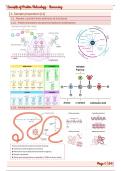
1.1. Review: a protein from synthesis to functional
1.1.A. Protein translation and post-translational modifications
1.1.B. Folding into a functional protein
Amino acid diversity results in protein diversity
❥ Cytosolic proteins (globular proteins)
❥ Membrane associated (transmembrane regions)
❥ Protein complexes
❥ Short open reading frames, peptides to 1000s of amino acids
,1.2. Defining the research question
❥ The first step in sample preparation is defining the research question
❥ What am I going to investigate?
❣ Protein
❣ Proteoforms (the different molecular forms of a protein produced from a single gene, incorporating
sequence variations, alternative splicing, and post-translational modifications (PTMs)
❣ Protein class (e.g. phosphoproteome, ubiquitome, RNA-binding proteins,...)
❣ Proteome
❥ What techniques are available to me and are best suited?
❣ Consider that some machines may lead to information loss, so if you need further downstream
usage of the proteins take this into account
❥ Do I want to keep secondary or tertiary structures of protein or protein complexes/interactions intact?
1.3. The different steps in sample preparation
1.3.A. Sample collection
❥ Cell lines can be grown under controlled laboratory settings but are not always representative of real
tissue or cells
❥ Patient samples are more variable, partially due to differences in handling and partially due to patient
differences
❥ The exact time to stabilize the sample (usually freezing) is an important variable to control
❥ Expect large sample numbers to achieve statistical meaningful results
❥ Serum and plasma can be highly variable and hard to analyse due to the large differences in protein
concentration
❥ Biobanked samples can be very variable, especially formalin-fixed paraffin embedded tissue
❥ Overall: fresh is best!
❥ Samples can also degrade due to stress since this causes...
❣ Proteolytic activity in the cell
❣ Phosphotase activity; this can be quite dramatic with phosphorylated peptides disappearing within
minutes
❥ Proteins are not as stable as DNA and the stability of different proteins varies greatly
❥ Solution to this
❣ Inhibition of enzymes that can degrade the sample, this is done using inhibitors (for proteases and
phosphatases)
❣ Denaturation of proteins (so they lose their activity) using chaotropic agents or detergents
❣ By temperature: cold can reduce activity and is also reversible, heat is not
❣ By adjusting the pH
,1.3.B. Protein extraction and solubilization
Goal: during this step we will try to break open cells so that the proteins can enter the solution.
Then we can try to solubilize the proteins within that solution.
① Protein extraction
❥ During this step we will attempt to disrupt the cellular membrane as well as the cell wall (if present) so
that we can free the proteins and bring them in solution
❥ This step can be optional depending on the sample type: cell-free samples such as serum and plasma
already contain loose, free proteins and thus no cell lysis is needed
❥ Aims of this step: releasing as much proteins as possible (completeness, however, can’t be achieved)
❥ There are many different approaches that depend on the sample type: in which tissue or organism did
the sample come from?
❥ There are two ways to categorize these methods...
❣ Based on their effect on the protein structure and/or activity
⤷ Soft methods: causes little to no denaturation of proteins, useful if you need proteins to remain in
their native structure or if you need
them to keep their physiological activity
⤷ Hard methods: causes a lot of
denaturation of proteins as well as
destruction
❣ Based on the method itself
⤷ Mechanical: sonication, bead beating,
mixing, freeze thawing
⤷ Non-mechanical via the addition of
chaotropic agents or detergents,
osmosis, enzymes
❥ To prevent protein degradation you can...
❣ Add a complete protease inhibitor cocktail is also added, these do need to be removed before doing
LC-MS since they are peptide-like
❣ Reduce/increase the temperature
❣ Alter the pH
❥ Afterwards you can separate the organelles
❣ Done via methods such as subcellular
fractionation, if you require proteins from a
specific organelle
❣ Depending on the speed and gradient used you
can separate the different organelles
, A. Soft methods
1. Osmotic shock
❣ Non-mechanical method
❣ Gives minimal damage to proteins
❣ Principle
⤷ When a high EC salt concentration is present (hypertonic), IC
water will leave the cell
⤷ When a low EC salt concentration is present (hypotonic), EC
water will enter the cell
⤷ In this method a cell is placed in...
⧙ A hypotonic environment (solute in cell >> solute in EC): water will flow inside the cell → cell will
swell → cell will burst
⧙ A hypertonic environment (solute in cell << solute in EC environment): water will flow or out the
cell → cell will shrink → cell membrane is weakened
⤷ Alternatively the sample can also be frozen:
⧙ Water in the cell will turn to ice and with the
absence of water the concentration of other
compounds such as salt increases and they go EC
⧙ Upon thawing, ice crystals can puncture
membranes, and osmotic imbalance further causes cell rupture (freeze–thaw lysis)
2. Addition of a detergent
❣ Non-mechanical method
❣ Principle: most detergents bind to the cell membrane and
disrupt them
❣ Detergents can also solubilize proteins in the membrane by
binding with their hydrophobic side to hydrophobic proteins
3. Enzymatic digestion (addition of an enzyme/enzymes)
❣ Non-mechanical method
❣ Used for bacterial cells
❣ Principle: addition of lysozyme which will degrade the
peptidoglycan later within the cell-wall of G+ bacteria
4. Dounce homogenizer
❣ Mechanical method
❣ This method can keep organelles intact
❣ Principle:
⤷ Your sample will be in a specialized tube
⤷ In this tube you can enter a rod that is specially made so that the gap
between this rod and the tube is narrow enough for cells to be pressed
up against each other and the rod and wall of the tube
⤷ When you then move the rod up and down the tube, the cells will tear open via shear stress and
minimal heating
1.1. Review: a protein from synthesis to functional
1.1.A. Protein translation and post-translational modifications
1.1.B. Folding into a functional protein
Amino acid diversity results in protein diversity
❥ Cytosolic proteins (globular proteins)
❥ Membrane associated (transmembrane regions)
❥ Protein complexes
❥ Short open reading frames, peptides to 1000s of amino acids
,1.2. Defining the research question
❥ The first step in sample preparation is defining the research question
❥ What am I going to investigate?
❣ Protein
❣ Proteoforms (the different molecular forms of a protein produced from a single gene, incorporating
sequence variations, alternative splicing, and post-translational modifications (PTMs)
❣ Protein class (e.g. phosphoproteome, ubiquitome, RNA-binding proteins,...)
❣ Proteome
❥ What techniques are available to me and are best suited?
❣ Consider that some machines may lead to information loss, so if you need further downstream
usage of the proteins take this into account
❥ Do I want to keep secondary or tertiary structures of protein or protein complexes/interactions intact?
1.3. The different steps in sample preparation
1.3.A. Sample collection
❥ Cell lines can be grown under controlled laboratory settings but are not always representative of real
tissue or cells
❥ Patient samples are more variable, partially due to differences in handling and partially due to patient
differences
❥ The exact time to stabilize the sample (usually freezing) is an important variable to control
❥ Expect large sample numbers to achieve statistical meaningful results
❥ Serum and plasma can be highly variable and hard to analyse due to the large differences in protein
concentration
❥ Biobanked samples can be very variable, especially formalin-fixed paraffin embedded tissue
❥ Overall: fresh is best!
❥ Samples can also degrade due to stress since this causes...
❣ Proteolytic activity in the cell
❣ Phosphotase activity; this can be quite dramatic with phosphorylated peptides disappearing within
minutes
❥ Proteins are not as stable as DNA and the stability of different proteins varies greatly
❥ Solution to this
❣ Inhibition of enzymes that can degrade the sample, this is done using inhibitors (for proteases and
phosphatases)
❣ Denaturation of proteins (so they lose their activity) using chaotropic agents or detergents
❣ By temperature: cold can reduce activity and is also reversible, heat is not
❣ By adjusting the pH
,1.3.B. Protein extraction and solubilization
Goal: during this step we will try to break open cells so that the proteins can enter the solution.
Then we can try to solubilize the proteins within that solution.
① Protein extraction
❥ During this step we will attempt to disrupt the cellular membrane as well as the cell wall (if present) so
that we can free the proteins and bring them in solution
❥ This step can be optional depending on the sample type: cell-free samples such as serum and plasma
already contain loose, free proteins and thus no cell lysis is needed
❥ Aims of this step: releasing as much proteins as possible (completeness, however, can’t be achieved)
❥ There are many different approaches that depend on the sample type: in which tissue or organism did
the sample come from?
❥ There are two ways to categorize these methods...
❣ Based on their effect on the protein structure and/or activity
⤷ Soft methods: causes little to no denaturation of proteins, useful if you need proteins to remain in
their native structure or if you need
them to keep their physiological activity
⤷ Hard methods: causes a lot of
denaturation of proteins as well as
destruction
❣ Based on the method itself
⤷ Mechanical: sonication, bead beating,
mixing, freeze thawing
⤷ Non-mechanical via the addition of
chaotropic agents or detergents,
osmosis, enzymes
❥ To prevent protein degradation you can...
❣ Add a complete protease inhibitor cocktail is also added, these do need to be removed before doing
LC-MS since they are peptide-like
❣ Reduce/increase the temperature
❣ Alter the pH
❥ Afterwards you can separate the organelles
❣ Done via methods such as subcellular
fractionation, if you require proteins from a
specific organelle
❣ Depending on the speed and gradient used you
can separate the different organelles
, A. Soft methods
1. Osmotic shock
❣ Non-mechanical method
❣ Gives minimal damage to proteins
❣ Principle
⤷ When a high EC salt concentration is present (hypertonic), IC
water will leave the cell
⤷ When a low EC salt concentration is present (hypotonic), EC
water will enter the cell
⤷ In this method a cell is placed in...
⧙ A hypotonic environment (solute in cell >> solute in EC): water will flow inside the cell → cell will
swell → cell will burst
⧙ A hypertonic environment (solute in cell << solute in EC environment): water will flow or out the
cell → cell will shrink → cell membrane is weakened
⤷ Alternatively the sample can also be frozen:
⧙ Water in the cell will turn to ice and with the
absence of water the concentration of other
compounds such as salt increases and they go EC
⧙ Upon thawing, ice crystals can puncture
membranes, and osmotic imbalance further causes cell rupture (freeze–thaw lysis)
2. Addition of a detergent
❣ Non-mechanical method
❣ Principle: most detergents bind to the cell membrane and
disrupt them
❣ Detergents can also solubilize proteins in the membrane by
binding with their hydrophobic side to hydrophobic proteins
3. Enzymatic digestion (addition of an enzyme/enzymes)
❣ Non-mechanical method
❣ Used for bacterial cells
❣ Principle: addition of lysozyme which will degrade the
peptidoglycan later within the cell-wall of G+ bacteria
4. Dounce homogenizer
❣ Mechanical method
❣ This method can keep organelles intact
❣ Principle:
⤷ Your sample will be in a specialized tube
⤷ In this tube you can enter a rod that is specially made so that the gap
between this rod and the tube is narrow enough for cells to be pressed
up against each other and the rod and wall of the tube
⤷ When you then move the rod up and down the tube, the cells will tear open via shear stress and
minimal heating