Core Mandatory Part II - Relias, Prophecy- Core Mandatory Part II (Nursing
Study online at https://quizlet.com/_g6j6yo
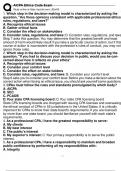
1. What communication strategies contribute to providing successful culturally
competent care?: Asking nonjudgmental questions
2. What should patients be told if an adverse event occurs in their care?: Hospitals
are required to tell the patient if an adverse occured
3. What is an adverse event?: Patient safety event that resulted in harm to the patient that may or may not
have resulted from an error
4. What is an element of performance for the National Patient Safety Goal -
Reduce the likelihood of patient harm associated with the use of anticoagu-
lant therapy?: The hospital uses approved protocols and evidence-based practice guidelines for the reversal of
anticoagulation and management of bleeding events related to each anticoagulant medication.
5. What is an example of patients' rights?: The right to know the names and the jobs of their
caregivers
6. What is the term for an event, incident, or condition that could have resulted
in harm to a patient?: Close call - WRONG
7. In a psychiatric unit, a patient has been identified as at high risk for suicide.
Upon entering their room, you find an object next to the patient that could be
used for self-harm. What should you do?: Remove the object
8. According to the National Patient Safety Goals, which group of patients are
at higher risk of misidentification?: Newborns
9. According to the National Patient Safety Goals, what must effective education
about anticoagulation therapy include?: Face-to-face interaction with a trained professional
10. Where should blood and/or specimen containers be labeled with the pa-
tient's identifiers?: In front of the patient
11. According to the National Patient Safety Goals, one of the MOST important
ways to address healthcare-associated infections is to do which of the follow-
ing?: Improving the hand hygiene of healthcare staff
12. What is the goal of the Universal Protocol?: Wrong person, wrong site, and wrong procedure
must be prevented
13. According o the National Patient Safety Goals, which type of therapy poses
a risk to patients due to its complex dosing?: Anticoagulation Therapy
1/4
Study online at https://quizlet.com/_g6j6yo
1. What communication strategies contribute to providing successful culturally
competent care?: Asking nonjudgmental questions
2. What should patients be told if an adverse event occurs in their care?: Hospitals
are required to tell the patient if an adverse occured
3. What is an adverse event?: Patient safety event that resulted in harm to the patient that may or may not
have resulted from an error
4. What is an element of performance for the National Patient Safety Goal -
Reduce the likelihood of patient harm associated with the use of anticoagu-
lant therapy?: The hospital uses approved protocols and evidence-based practice guidelines for the reversal of
anticoagulation and management of bleeding events related to each anticoagulant medication.
5. What is an example of patients' rights?: The right to know the names and the jobs of their
caregivers
6. What is the term for an event, incident, or condition that could have resulted
in harm to a patient?: Close call - WRONG
7. In a psychiatric unit, a patient has been identified as at high risk for suicide.
Upon entering their room, you find an object next to the patient that could be
used for self-harm. What should you do?: Remove the object
8. According to the National Patient Safety Goals, which group of patients are
at higher risk of misidentification?: Newborns
9. According to the National Patient Safety Goals, what must effective education
about anticoagulation therapy include?: Face-to-face interaction with a trained professional
10. Where should blood and/or specimen containers be labeled with the pa-
tient's identifiers?: In front of the patient
11. According to the National Patient Safety Goals, one of the MOST important
ways to address healthcare-associated infections is to do which of the follow-
ing?: Improving the hand hygiene of healthcare staff
12. What is the goal of the Universal Protocol?: Wrong person, wrong site, and wrong procedure
must be prevented
13. According o the National Patient Safety Goals, which type of therapy poses
a risk to patients due to its complex dosing?: Anticoagulation Therapy
1/4