
- Guías de estudio, Notas de estudios & Resúmenes
¿Buscas las mejores guías de estudio, notas de estudio y resúmenes para ? En esta página encontrarás 8 documentos de estudio para .

Examen
Pathophysiology WGU Questions with Correct Answers.
Malara Correct Answer Symptoms are fever and flulike illness, including shaking chills, headache, muscle aches, and malaise. Nausea, vomiting, and diarrhea may also occur. can cause anemia and jaundice because of the destruction of RBCs. MRSA Correct Answer Signs and symptoms depend on where the infection causes disease. For example, if the infection occurs in a wound, the wound will be painful, reddened, swollen, and warm to the touch. If the skin infection spreads to the lung, causing pneum...
 ExamsGuru

Examen
Pathophysiology WGU practice exam questions correctly answered
PopularMalara Symptoms are fever and flulike illness, including shaking chills, headache, muscle aches, and malaise. Nausea, vomiting, and diarrhea may also occur. can cause anemia and jaundice because of the destruction of RBCs. MRSA Signs and symptoms depend on where the infection causes disease. For example, if the infection occurs in a wound, the wound will be painful, reddened, swollen, and warm to the touch. If the skin infection spreads to the lung, causing pneumonia, or to the bloodstrea...
 QUINTER
Examen
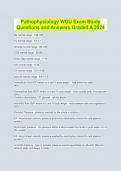
Pathophysiology WGU Exam Study Questions and Answers Graded A 2024
Na normal range - 133-145 K+ normal range - 3.5-5.1 chloride normal range - 96-108 CO2 normal range - 20-28 Anion Gap normal range - 7-16 UN normal range - 6-20 Crt normal range - 0.51-0.95 calcium normal range - 8.8-10.2 Intracellular fluid (ICF) where is it and % body weight - fluid within the cells 40% Extracellular fluid (ECF) where is it and % body weight - fluid outside cells, intravascular 20% Contains electrolytes, O2, glucose, cellular waste interstitial...
 Bestzone
Examen
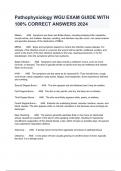
Pathophysiology Wgu Exam Guide With 100% Correct Answers 2024
Pathophysiology Wgu Exam Guide With 100% Correct Answers 2024
 CUTENURSE1

Otro
Pathophysiology WGU exam study guide verified 100% (contains latest updates 2023)
Pathophysiology WGU exam study guide verified 100% (contains latest updates 2023) Malara - Symptoms are fever and flulike illness, including shaking chills, headache, muscle aches, and malaise. Nausea, vomiting, and diarrhea may also occur. can cause anemia and jaundice because of the destruction of RBCs. MRSA - Signs and symptoms depend on where the infection causes disease. For example, if the infection occurs in a wound, the wound will be painful, reddened, swollen, and warm to the to...
 stuvaai

Examen
Pathophysiology WGU (all correct)
Malara correct answers Symptoms are fever and flulike illness, including shaking chills, headache, muscle aches, and malaise. Nausea, vomiting, and diarrhea may also occur. can cause anemia and jaundice because of the destruction of RBCs. MRSA correct answers Signs and symptoms depend on where the infection causes disease. For example, if the infection occurs in a wound, the wound will be painful, reddened, swollen, and warm to the touch. If the skin infection spreads to the lung, causing pne...
 SirAnton

Examen
Pathophysiology WGU D236 with 100% correct answers (2022/2023)
Malara Symptoms are fever and flulike illness, including shaking chills, headache, muscle aches, and malaise. Nausea, vomiting, and diarrhea may also occur. can cause anemia and jaundice because of the destruction of RBCs. MRSA Signs and symptoms depend on where the infection causes disease. For example, if the infection occurs in a wound, the wound will be painful, reddened, swollen, and warm to the touch. If the skin infection spreads to the lung, causing pneumonia, or to the bloodstr...
 ExamVerse

Examen
Pathophysiology WGU Questions And Answers 2022/2023
Malara - Answer - Symptoms are fever and flulike illness, including shaking chills, headache, muscle aches, and malaise. Nausea, vomiting, and diarrhea may also occur. can cause anemia and jaundice because of the destruction of RBCs. MRSA - Answer - Signs and symptoms depend on where the infection causes disease. For example, if the infection occurs in a wound, the wound will be painful, reddened, swollen, and warm to the touch. If the skin infection spreads to the lung, causing pneumonia, or...
 GEEKA