
- Guías de estudio, Notas de estudios & Resúmenes
¿Buscas las mejores guías de estudio, notas de estudio y resúmenes para ? En esta página encontrarás 4 documentos de estudio para .
Examen
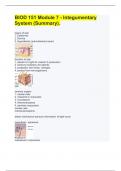
BIOD 151 Module 7 - Integumentary System (Summary).
BIOD 151 Module 7 - Integumentary System (Summary). layers of skin 1. Epidermis 2. Dermis 3. Hypodermis (subcutaneous layer) function of skin 1. absorb UV light for vitamin D production 2. sensory receptors and glands 3. protection from temp. changes 4. protect from miroorganisms sensory organs 1. merkel cells 2. missener's corpuscles 3. nociceptors 4. thermoreceptors 5. pacinian corpuscles merkel cells mechanoreceptors detect mechanical sensory information of li...
 MYSOLUTIONS
Examen
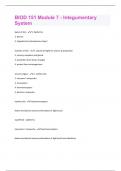
BIOD 151 Module 7 - Integumentary System | Questions and Answers with complete solution
Popularlayers of skin - 1. Epidermis 2. Dermis 3. Hypodermis (subcutaneous layer) function of skin - 1. absorb UV light for vitamin D production 2. sensory receptors and glands 3. protection from temp. changes 4. protect from miroorganisms sensory organs - 1. merkel cells 2. missener's corpuscles 3. nociceptors 4. thermoreceptors 5. pacinian corpuscles merkel cells - mechanoreceptors detect mechanical sensory information of light touch superficial - epidermis meissener's corpuscles - m...
 Brainarium
Examen
Dlc Ii
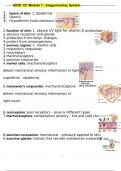
DLC II Which of the following should SGT Smith include as part of his description of NCOs in the militia? Militia NCOs had standardized roles and responsibilities. Militia NCOs followed Democratic traditions and were elected to their positions. Militia NCOs were appointed by an Officer. Militia NCOs were appointed by a commander Militia NCOs followed Democratic traditions and were elected to their positions
 NURSEALBRIGHT
Lote
BIOD 151 Bundled Exams with complete solution
BIOD 151 Bundled Exams with complete solution
Brainarium