Biol 151 (BIO151)

University Of Wisconsin - Madison

Aquí están los mejores recursos para pasar Biol 151 (BIO151). Encuentra Biol 151 (BIO151) guías de estudio, notas, tareas, y mucho más.

All 44 resultados

Ordenador por:
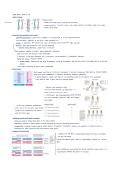
Mutations
  • Notas de lectura

    Mutations

  • 1. Are mutations harmful or beneficial? Explain. 2. Which mutations are inherited? Which mutations cause cancer? 3. What is the difference between a gene and an allele? 4. Describe the different types of Mutations. 5. Which types of mutations are passed onto the next generation? 6. Is there a sex bias in mutation rate? Why? 7. Where do new genes come from? 8. Which mutations impact phenotype, and which mutations do not? Mutation, Lactase Persistence, Germline versus Somatic Mutations, ...
  • anhnguyen9
    $11.49 Más información
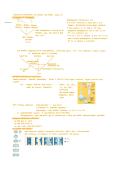
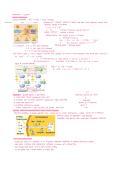
Mitosis, the Cell Cycle
  • Notas de lectura

    Mitosis, the Cell Cycle

  • 1. Contrast cell division in prokaryotes and eukaryotes 2. Draw and label the structure of a single eukaryotic chromosome before and after DNA replication 3. Draw the phases of mitosis, including the structure and location of chromosomes, centrosomes, the mitotic spindle, and the nuclear envelope. 4. Explain how the kinetochore and microtubules move chromosomes to the poles of the cell. 5. Diagram how DNA content of a cell changes during the M, G1, S, and G2 phases of the cell cycle. 6. Ex...
  • anhnguyen9
    $11.49 Más información
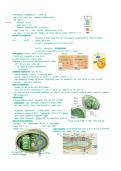
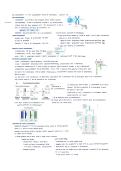
Energy IV: More Photosynthesis, Alternatives
  • Notas de lectura

    Energy IV: More Photosynthesis, Alternatives

  • 1. Contrast non-cyclic and cyclic light reactions. 2. Diagram the Calvin cycle showing the carbon inputs and outputs, where energy is used and the fixation, reduction and regeneration stages. 3. Describe what happens during photorespiration and how it is affected by the relative levels of CO2 and O2. 4. Explain how CAM and C4 photosynthesis is used by some plants to suppress photorespiration. 5. Relate an organism's energy source to the terms phototroph and chemotroph, and it its source o...
  • anhnguyen9
    $11.49 Más información
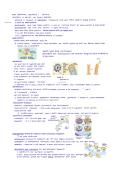
Complex (polygenic) Traits
  • Notas de lectura

    Complex (polygenic) Traits

  • 1. Why did Darwin and Mendel’s theories/principles seem incompatible? What was the source of the problem? 2. What are complex traits? 3. What are the differences between discrete and continuous (quantitative) traits? 4. How would studying monozygous and dizygous twins help distinguish between genetic and environmental components of a trait? 5. What is a common garden experiment, and how can it be used to distinguish between genetic and environmental components of a trait? Darwin versus ...
  • anhnguyen9
    $11.49 Más información
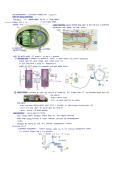
Energy III: Photosynthesis
  • Notas de lectura

    Energy III: Photosynthesis

  • . Explain the role of alternative final electron acceptors in anaerobic respiration. 2. Draw the structure of the chloroplast noting where the light reactions and dark reactions of photosynthesis occur. 3. Describe the inputs needed for dark reactions of the Calvin cycle, and the outputs generated by the light reactions. 4. Explain the role of the photosystems and their pigments in the light reactions 5. Diagram the process of non-cyclic light reactions, including inputs and outputs, photosy...
  • anhnguyen9
    $10.99 Más información
Linked Genes
  • Notas de lectura

    Linked Genes

  • 1. In what way does linkage violate Mendel’s laws? Which law does it violate? 2. What is the relationship between linkage and the probability of crossing over? 3. What is the relationship between crossing over and recombination? 4. What is the relationship between recombination rate and genetic distance on a linkage map? 5. How is a linkage map constructed? Linkage, Crossing over, Recombination, Genetic Map (Linkage Map), Genetic Association Study
  • anhnguyen9
    $11.49 Más información
Energy II: More Respiration
  • Notas de lectura

    Energy II: More Respiration

  • 1. Relate the movement of electrons from one molecule or atom to another to the terms reduction and oxidation, and recognize whether electron carriers are in their oxidized or reduced form. 2. Describe the inputs to and products of glycolysis, pyruvate oxidation, and the Krebs (citric acid) cycle, including CO2 and the different molecules used to capture energy, 3. Explain what makes the citric acid (Krebs) cycle a "cycle". 4. Diagram the origins, flow and exit of electrons through the ...
  • anhnguyen9
    $11.49 Más información
Sex Chromosomes
  • Notas de lectura

    Sex Chromosomes

  • 1. Why do X-linked diseases (and traits) affect males more often than females? 2. Why do males with an X-linked disease have sons without the disease? 3. In what case would a female whose father has an X-linked disease have sons with the disease? 4. How did Morgan and Bridges figure out that genes were on chromosomes? 5. Why do calico cats have different color patches? Linkage, Sex Chromosomes, X and Y chromosomes, Mendelian Segregation of Sex Chromosomes, X-linked, Segregation of X-linke...
  • anhnguyen9
    $10.99 Más información
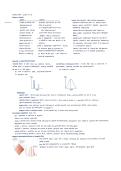
More cytoskeleton, Organelles and Energy I: Respiration
  • Notas de lectura

    More cytoskeleton, Organelles and Energy I: Respiration

  • 1. Describe the ways that microtubules and microfilaments assemble, and changes in assembly and their associated motor proteins can anchor or move cellular components and organelles. 2. Diagram how microtubule sliding changes the shape of cilia and flagella. 3. Provide examples of how microfilaments and their associated myosin motor proteins can change cellular shape and movement. 4. Describe how the intermediate filaments provide structural support for membranes. 5. Provide evidence in favo...
  • anhnguyen9
    $11.49 Más información
Eukaryotes, Trafficking, and the Cytoskeleton
  • Notas de lectura

    Eukaryotes, Trafficking, and the Cytoskeleton

  • 1. Outline some unique ways in which membranes are used in eukaryotic cells. 2. Describe how a protein is selected to move into the rough ER or by imported or exported through the nuclear pore. 3. Diagram the origins and fates of vesicle membranes and vesicle contents during exocytosis and endocytosis. 4. Contrast the functions of the smooth and rough endoplasmic reticulum, the Golgi apparatus, transport and secretory vesicles, and the lysosome. 5. Diagram the trafficking of a secreted or ...
  • anhnguyen9
    $10.99 Más información
¿Queda demasiado mes al final del dinero?
5,99 euros por el resumen de tu libro de texto multiplicado por 100 compañeros... Haz cuentas: ¡eso es mucho dinero! No seas ladrón de tu propia cartera y empieza ya a subir el tuyo.