

South Texas College
Las últimas cargas en South Texas College. ¿Buscando notas en South Texas College? Tenemos muchas notas, guias de estudio y notas de estudio disponsible para tu escuela.
-
264
-
1
-
28
All courses for South Texas College
-
ATI Maternal Newborn 2019 1
-
BIOL 2421 4
-
BIOL 2421: Microbiology final ocx, Latest 2020/2021 TEST BANK Guide, South Texas College. BIOL2421 8
-
BSN 1112 BSN 1112 2
-
C1 - Chapter 1 Introduction to the Human Body Test Bank MULTIPLE CHOICE 1 What is the branch of science that studies how the body functions a Anatomy b 1
-
COM MISC COM MISC (COMMISC) 1
-
COM MISC ) COM MISC 1
-
English Lit. 1
-
HEALTH 1349 1
-
HESI PN 1
-
MAT CHILD 1001 MAT CHILD 1001 1
-
MED SURG 1
-
MED SURG F LEVEL 4 3
-
MED SURG LEVEL 4 2
-
MED SURG/MED SURG MED SURG 1
-
MEDSURG LEVEL 4 1
-
NURSING 1
-
NURSING 122 1
-
Nursing 2363 1
-
Nursing Mathematics NUR304 1
-
NURSING MEDSURG LEVEL 4 MEDSURG LEVEL 4 2
-
PHARM 1301 Pharmacology 1
-
Pharmacotherapeutics TEST BANK 1
-
Psychology 2
-
RN 1343 RN 1343 2
-
RN ATI Capstone Leadership And Community Health Focused Review RN ATI Capstone Leadership and Community Health Focused Review 2
-
RNSG RNSG 2
-
RNSG . 1
-
RNSG 1209 RNSG 1209 3
-
RNSG 1300 8
-
RNSG 1301 2
-
RNSG 1343 RNSG1343 4
-
RNSG 1412 OB RNSG 1412 3
-
RNSG 1417 3
-
RNSG 2213 3
-
RNSG 2331 RNSG2331 14
-
VNSG 1106 VNSG 1106 2
-
VNSG 1230 3
-
VNSG 1304 8
-
VNSG 1500 1
-
VNSG 1509 VNSG1509 4
-
VNSG 2510 3
Último contenido South Texas College
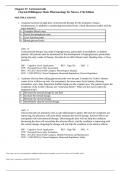
1. A patient has been on high-dose corticosteroid therapy for the treatment of lupus erythematosus. In addition to monitoring electrolyte levels, which laboratory studies will the nurse monitor? a. Complete blood count b. Partial thromboplastin time c. Liver function panel d. Blood glucose levels ANS: D Corticosteroid therapy may induce hyperglycemia, particularly in prediabetic or diabetic patients. All patients must be monitored for the development of hyperglycemia, particularly duri...
- Examen
- • 8 páginas's •
-
South Texas College•RNSG MISC
Vista previa 2 fuera de 8 páginas
Preparando tu documento...
1. A patient has been on high-dose corticosteroid therapy for the treatment of lupus erythematosus. In addition to monitoring electrolyte levels, which laboratory studies will the nurse monitor? a. Complete blood count b. Partial thromboplastin time c. Liver function panel d. Blood glucose levels ANS: D Corticosteroid therapy may induce hyperglycemia, particularly in prediabetic or diabetic patients. All patients must be monitored for the development of hyperglycemia, particularly duri...
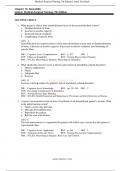
1. What negative effects does immobilization have on the musculoskeletal system? a. Demineralization of bone b. Increase in aerobic capacity c. Increased muscle oxidation d. Lengthening of muscle fibers ANS: A Immobilization has negative effects on the musculoskeletal system such as demineralization of bone, a decrease in aerobic capacity, a decrease in muscle oxidation, and shortening of muscle fibers. DIF: Cognitive Level: Comprehension REF: p. 192 OBJ: 1 TOP: Effects of Immobility K...
- Package deal
- Examen
- • 10 páginas's •
-
South Texas College•AA 1
-
TEST BANK FOR MEDICAL SURGICAL NURSING 7TH EDITION,Medical-Surgical Nursing Linton and Basic Pharmacology for Nurses (ALL 1 to 60 CHAPTERS IN ONE BUNDLE) questions with 100% correct answers Download for an A+• PorStudygreatsolutions
Vista previa 2 fuera de 10 páginas
Preparando tu documento...
1. What negative effects does immobilization have on the musculoskeletal system? a. Demineralization of bone b. Increase in aerobic capacity c. Increased muscle oxidation d. Lengthening of muscle fibers ANS: A Immobilization has negative effects on the musculoskeletal system such as demineralization of bone, a decrease in aerobic capacity, a decrease in muscle oxidation, and shortening of muscle fibers. DIF: Cognitive Level: Comprehension REF: p. 192 OBJ: 1 TOP: Effects of Immobility K...
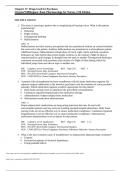
1. The nurse is assessing a patient who is complaining of hearing voices. What is this patient experiencing? a. Delusions b. Flight of ideas c. Disorganized thinking d. Hallucinations ANS: D Hallucinations are false sensory perceptions that are experienced without an external stimulus but seem real to the patient. Auditory hallucinations are prominent in a schizophrenic patient. Additional sensory hallucinations include those of touch, sight, smell, and body sensation. Delusions are fa...
- Package deal
- Examen
- • 7 páginas's •
-
South Texas College•RNSG MISC
-
TEST BANK FOR MEDICAL SURGICAL NURSING 7TH EDITION,Medical-Surgical Nursing Linton and Basic Pharmacology for Nurses (ALL 1 to 60 CHAPTERS IN ONE BUNDLE) questions with 100% correct answers Download for an A+• PorStudygreatsolutions
Vista previa 2 fuera de 7 páginas
Preparando tu documento...
1. The nurse is assessing a patient who is complaining of hearing voices. What is this patient experiencing? a. Delusions b. Flight of ideas c. Disorganized thinking d. Hallucinations ANS: D Hallucinations are false sensory perceptions that are experienced without an external stimulus but seem real to the patient. Auditory hallucinations are prominent in a schizophrenic patient. Additional sensory hallucinations include those of touch, sight, smell, and body sensation. Delusions are fa...
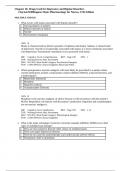
1. What occurs with mania associated with bipolar disorder? a. Varying degrees of sadness b. Distinct episodes of elation c. Suicide d. Psychomotor retardation ANS: B Mania is characterized by distinct episodes of euphoria and elation. Sadness is characteristic of depression. Suicide is not generally associated with mania; it is more commonly associated with depression. Psychomotor retardation is not associated with mania. DIF: Cognitive Level: Comprehension REF: Page 230 OBJ: 1 TOP: N...
- Package deal
- Examen
- • 11 páginas's •
-
South Texas College•RNSG MISC
-
TEST BANK FOR MEDICAL SURGICAL NURSING 7TH EDITION,Medical-Surgical Nursing Linton and Basic Pharmacology for Nurses (ALL 1 to 60 CHAPTERS IN ONE BUNDLE) questions with 100% correct answers Download for an A+• PorStudygreatsolutions
Vista previa 2 fuera de 11 páginas
Preparando tu documento...
1. What occurs with mania associated with bipolar disorder? a. Varying degrees of sadness b. Distinct episodes of elation c. Suicide d. Psychomotor retardation ANS: B Mania is characterized by distinct episodes of euphoria and elation. Sadness is characteristic of depression. Suicide is not generally associated with mania; it is more commonly associated with depression. Psychomotor retardation is not associated with mania. DIF: Cognitive Level: Comprehension REF: Page 230 OBJ: 1 TOP: N...
1. What is the recommended time over which antianxiety medications must be gradually tapered before discontinuation? a. 1 week b. 1 month c. 6 months d. 1 year ANS: B Withdrawal from medication should be done under a health care provider’s supervision. Withdrawal usually takes 4 weeks and requires a gradual reduction in dosage and greater intervals between medication administrations. One week is an inadequate interval for cessation of antianxiety medication therapy. Six months to 1 y...
- Package deal
- Examen
- • 8 páginas's •
-
South Texas College•RNSG MISC
-
TEST BANK FOR MEDICAL SURGICAL NURSING 7TH EDITION,Medical-Surgical Nursing Linton and Basic Pharmacology for Nurses (ALL 1 to 60 CHAPTERS IN ONE BUNDLE) questions with 100% correct answers Download for an A+• PorStudygreatsolutions
Vista previa 2 fuera de 8 páginas
Preparando tu documento...
1. What is the recommended time over which antianxiety medications must be gradually tapered before discontinuation? a. 1 week b. 1 month c. 6 months d. 1 year ANS: B Withdrawal from medication should be done under a health care provider’s supervision. Withdrawal usually takes 4 weeks and requires a gradual reduction in dosage and greater intervals between medication administrations. One week is an inadequate interval for cessation of antianxiety medication therapy. Six months to 1 y...
1. A patient with a body mass index (BMI) of 25 would be considered to be in which weight category? a. Underweight b. Normal weight c. Overweight d. Obese ANS: C A BMI of less than 18.5 is considered underweight. A BMI of 18.5 to 24.9 is considered normal weight. A BMI of 25 to 29.9 is considered overweight. A BMI of 30 to 34.9 is considered obesity, class I; 35 to 39.9 is considered obesity, class II; and more than 40 is considered extreme obesity. DIF: Cognitive Level: Knowledge REF...
- Package deal
- Examen
- • 6 páginas's •
-
South Texas College•RNSG MISC
-
TEST BANK FOR MEDICAL SURGICAL NURSING 7TH EDITION,Medical-Surgical Nursing Linton and Basic Pharmacology for Nurses (ALL 1 to 60 CHAPTERS IN ONE BUNDLE) questions with 100% correct answers Download for an A+• PorStudygreatsolutions
Vista previa 2 fuera de 6 páginas
Preparando tu documento...
1. A patient with a body mass index (BMI) of 25 would be considered to be in which weight category? a. Underweight b. Normal weight c. Overweight d. Obese ANS: C A BMI of less than 18.5 is considered underweight. A BMI of 18.5 to 24.9 is considered normal weight. A BMI of 25 to 29.9 is considered overweight. A BMI of 30 to 34.9 is considered obesity, class I; 35 to 39.9 is considered obesity, class II; and more than 40 is considered extreme obesity. DIF: Cognitive Level: Knowledge REF...
1. Which drug will be administered to a patient being admitted with severe digoxin intoxication? a. Amiodarone (Cordarone) b. Spironolactone (Aldactone) c. Digoxin immune Fab (Digibind) d. Digitalis glycoside ANS: C The antidote for digoxin intoxication is digoxin immune Fab (Digibind). Amiodarone is an antidysrhythmic and would not treat digoxin intoxication. Spironolactone is a diuretic and does not treat digoxin intoxication. Giving more of the same type of drug does not treat drug i...
- Package deal
- Examen
- • 9 páginas's •
-
South Texas College•RNSG MISC
-
TEST BANK FOR MEDICAL SURGICAL NURSING 7TH EDITION,Medical-Surgical Nursing Linton and Basic Pharmacology for Nurses (ALL 1 to 60 CHAPTERS IN ONE BUNDLE) questions with 100% correct answers Download for an A+• PorStudygreatsolutions
Vista previa 2 fuera de 9 páginas
Preparando tu documento...
1. Which drug will be administered to a patient being admitted with severe digoxin intoxication? a. Amiodarone (Cordarone) b. Spironolactone (Aldactone) c. Digoxin immune Fab (Digibind) d. Digitalis glycoside ANS: C The antidote for digoxin intoxication is digoxin immune Fab (Digibind). Amiodarone is an antidysrhythmic and would not treat digoxin intoxication. Spironolactone is a diuretic and does not treat digoxin intoxication. Giving more of the same type of drug does not treat drug i...
1. The nurse is assessing the patient’s leg for peripheral vascular disease (PVD) and is unable to palpate the pedal pulse in either foot. Which action will the nurse take first? a. Contact the health care provider for further orders. b. Request x-ray studies of the lower extremities. c. Request that the patient lie flat. d. Obtain a Doppler ultrasound device for auscultation. ANS: D The Doppler ultrasound device may aid in determining peripheral blood flow. This is not a sufficient ca...
- Package deal
- Examen
- • 6 páginas's •
-
South Texas College•RNSG MISC
-
TEST BANK FOR MEDICAL SURGICAL NURSING 7TH EDITION,Medical-Surgical Nursing Linton and Basic Pharmacology for Nurses (ALL 1 to 60 CHAPTERS IN ONE BUNDLE) questions with 100% correct answers Download for an A+• PorStudygreatsolutions
Vista previa 2 fuera de 6 páginas
Preparando tu documento...
1. The nurse is assessing the patient’s leg for peripheral vascular disease (PVD) and is unable to palpate the pedal pulse in either foot. Which action will the nurse take first? a. Contact the health care provider for further orders. b. Request x-ray studies of the lower extremities. c. Request that the patient lie flat. d. Obtain a Doppler ultrasound device for auscultation. ANS: D The Doppler ultrasound device may aid in determining peripheral blood flow. This is not a sufficient ca...
1. Which medication is used in the treatment of gastric reflux esophagitis and diabetic gastroparesis? a. Metoclopramide b. Misoprostol c. Pantoprazole d. Ranitidine ANS: A Metoclopramide is a gastric stimulant used to relieve the symptoms of gastric reflux esophagitis and diabetic gastroparesis, aid in small bowel intubation, and stimulate gastric emptying and intestinal transit of barium after radiologic examination of the upper gastrointestinal (GI) tract. Misoprostol is used to pre...
- Package deal
- Examen
- • 9 páginas's •
-
South Texas College•RNSG MISC
-
TEST BANK FOR MEDICAL SURGICAL NURSING 7TH EDITION,Medical-Surgical Nursing Linton and Basic Pharmacology for Nurses (ALL 1 to 60 CHAPTERS IN ONE BUNDLE) questions with 100% correct answers Download for an A+• PorStudygreatsolutions
Vista previa 2 fuera de 9 páginas
Preparando tu documento...
1. Which medication is used in the treatment of gastric reflux esophagitis and diabetic gastroparesis? a. Metoclopramide b. Misoprostol c. Pantoprazole d. Ranitidine ANS: A Metoclopramide is a gastric stimulant used to relieve the symptoms of gastric reflux esophagitis and diabetic gastroparesis, aid in small bowel intubation, and stimulate gastric emptying and intestinal transit of barium after radiologic examination of the upper gastrointestinal (GI) tract. Misoprostol is used to pre...
1. A patient who has just begun taking an angiotensin converting enzyme (ACE) inhibitor calls the nurse and reports feeling very dizzy when standing up and asks if the medication should be discontinued. What is the nurse’s best response? a. “Stop taking the medication immediately.” b. “Rise to a sitting or standing position slowly; your symptoms will resolve.” c. “I will schedule you to visit the health care provider today.” d. “Cut the pill in half and take a reduced dosag...
- Package deal
- Examen
- • 11 páginas's •
-
South Texas College•RNSG MISC
-
TEST BANK FOR MEDICAL SURGICAL NURSING 7TH EDITION,Medical-Surgical Nursing Linton and Basic Pharmacology for Nurses (ALL 1 to 60 CHAPTERS IN ONE BUNDLE) questions with 100% correct answers Download for an A+• PorStudygreatsolutions
Vista previa 2 fuera de 11 páginas
Preparando tu documento...
1. A patient who has just begun taking an angiotensin converting enzyme (ACE) inhibitor calls the nurse and reports feeling very dizzy when standing up and asks if the medication should be discontinued. What is the nurse’s best response? a. “Stop taking the medication immediately.” b. “Rise to a sitting or standing position slowly; your symptoms will resolve.” c. “I will schedule you to visit the health care provider today.” d. “Cut the pill in half and take a reduced dosag...