Biology (Biology)
Stanford University
All 32 resultados
Ordenador por
-
"Parasitic Adaptations in Helminthes – A Detailed Study of Morphological and Physiological Modifications" (Understanding How Helminthes Thrive as Endoparasites in Their Hosts)
- Resumen • 4 páginas • 2025
- $11.49
- + aprende más y mejor
This document provides an in-depth explanation of the parasitic adaptations in Helminthes, focusing on both morphological and physiological modifications that enable these worms to survive and reproduce successfully within their hosts. It highlights how helminthes—comprising flatworms (Platyhelminthes) and roundworms (Nemathelminthes)—have evolved specialized structures and life processes suited to a parasitic mode of life. The document elaborates on morphological adaptations such as the ...
-
"Ultrastructure of Colloblast – A Detailed Study" (Understanding the Specialized Adhesive Cells of Ctenophores)
- Resumen • 4 páginas • 2025
- $11.49
- + aprende más y mejor
This document provides a comprehensive and detailed explanation of the ultrastructure of colloblasts, the unique adhesive cells found exclusively in Ctenophora (comb jellies). It describes the morphology, fine structure, and functional mechanisms of these specialized cells that play a crucial role in capturing prey and defense. The document explains that each colloblast consists of a bulbous head containing secretory granules, a straight filament, and a spiral filament, all anchored to the me...
-
"Canal Systems in Sponges – A Detailed Study of Their Types and Functional Significance" (Exploring the Asconoid, Syconoid, and Leuconoid Types in Porifera)
- Resumen • 6 páginas • 2025
- $11.49
- + aprende más y mejor
This document provides a comprehensive explanation of the canal systems encountered in different sponges, illustrating how the flow of water through their bodies facilitates feeding, respiration, and excretion. It elaborates on the three main types of canal systems — Asconoid, Syconoid, and Leuconoid, describing in detail their structural organization, evolutionary progression, and functional adaptations. The document explains how the Asconoid type (simplest) is found in Leucosolenia, the S...
-
"Evolutionary Significance of Ctenophora – A Detailed Study" (Understanding the Phylogenetic Importance of Comb Jellies in Animal Evolution)
- Resumen • 6 páginas • 2025
- $11.49
- + aprende más y mejor
This document provides a comprehensive and detailed explanation of the evolutionary significance of the phylum Ctenophora, commonly known as comb jellies. It explores the unique structural, physiological, and developmental features that make ctenophores an important group in understanding animal evolution and phylogeny. The document discusses their biradial symmetry, diploblastic organization, presence of colloblasts, and the first appearance of true tissues and a nervous system, which place ...
-
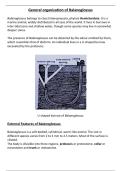
"General Organization of Balanoglossus – A Detailed Study" (Exploring the Structure and Body Organization of the Acorn Worm)
- Resumen • 4 páginas • 2025
- $11.49
- + aprende más y mejor
This document provides a comprehensive account of the general organization of Balanoglossus, a marine hemichordate commonly known as the acorn worm. It describes in detail the external morphology, body division, and internal organization, highlighting its proboscis, collar, and trunk regions, which represent the tripartite body plan typical of hemichordates. The document elaborates on the body wall, coelomic organization, digestive, circulatory, respiratory, excretory, and nervous systems, al...

¿Miedo a perderte algo? Pues no lo hagas.

-
"MCQs on Erythropoiesis and Factors Regulating Erythropoiesis" (A Comprehensive Practice Guide for Understanding Red Blood Cell Formation)
- Examen • 18 páginas • 2025
- $8.49
- + aprende más y mejor
This document presents a comprehensive collection of Multiple Choice Questions (MCQs) covering the topics Erythropoiesis and Factors Regulating Erythropoiesis, designed to help students master the concepts of red blood cell formation, maturation, and control mechanisms. The questions are arranged systematically — from basic to advanced levels — testing understanding of key concepts such as sites of erythropoiesis, stages of RBC development, hormonal regulation by erythropoietin, oxygen te...
-
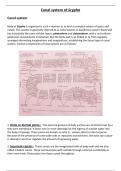
"Canal System of Scypha – A Detailed Study" (Exploring the Syconoid Type of Water Circulation in Sponges)
- Resumen • 2 páginas • 2025
- $11.49
- + aprende más y mejor
This document provides a comprehensive explanation of the canal system in Scypha (Sycon), a marine sponge belonging to the phylum Porifera. It focuses on the syconoid type of canal system, explaining how water enters through ostia, passes into incurrent canals, then through prosopyles into radial canals, and finally exits via the spongocoel and osculum. Detailed diagrams and step-by-step descriptions illustrate the structure and function of each canal component, emphasizing the importance of ...
-
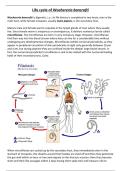
"Life Cycle of Wuchereria bancrofti – A Detailed Study" (Understanding the Human Filarial Parasite and Its Transmission)
- Resumen • 2 páginas • 2025
- $11.49
- + aprende más y mejor
This document provides a comprehensive explanation of the life cycle of Wuchereria bancrofti, a parasitic nematode responsible for lymphatic filariasis (elephantiasis) in humans. It describes in detail the morphology, mode of transmission, developmental stages, and host relationships of the parasite. The document explains the digenetic life cycle, involving humans as the definitive host and the female Culex mosquito as the intermediate host, outlining each stage — microfilaria, larval stage...
-
"Life History of Fasciola hepatica – A Detailed Study" (Understanding the Complex Life Cycle of the Liver Fluke)
- Resumen • 7 páginas • 2025
- $11.49
- + aprende más y mejor
This document presents a comprehensive explanation of the life history of Fasciola hepatica, commonly known as the liver fluke, a parasitic flatworm that infects the liver of sheep, cattle, and sometimes humans. It describes in detail the structure, mode of infection, and developmental stages of the parasite, highlighting its digenetic life cycle, which involves two hosts — the primary host (sheep or cattle) and the intermediate host (Lymnaea snail). The document explains each developmental...
-
"Organization of Body Wall in Scypha – A Detailed Study" (Understanding the Structural Complexity of a Simple Sponge)
- Resumen • 3 páginas • 2025
- $11.49
- + aprende más y mejor
This document provides a comprehensive explanation of the body wall organization in Scypha (Sycon), a marine sponge belonging to the phylum Porifera. It describes in detail the three-layered structure of the body wall — the pinacoderm (outer layer), choanoderm (inner layer), and mesohyl (middle gelatinous layer) — along with their cellular composition and functions. The document also discusses the canal system (syconoid type) associated with Scypha, explaining how the ostia, incurrent can...