

University of St Andrews
Las últimas cargas en University of St Andrews. ¿Buscando notas en University of St Andrews? Tenemos muchas notas, guias de estudio y notas de estudio disponsible para tu escuela.
-
136
- 0
-
6
Estudios @ University of St Andrews
Notas disponibles para los estudios siguiente en University of St Andrews
-
Biochemistry 1
-
French Literature 1
-
Medicine 52
-
University of St Andrews 2
Último contenido University of St Andrews
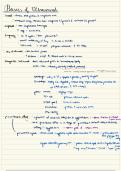
Basics of Ultrasound Element Learning Outcomes: -Explain, simply, the physics of ultrasound. -Differentiate different types of transducers and explain their strengths and weaknesses. -Explain the advantages and disadvantages of ultrasound scanning in comparison to other imaging modalities -Understand the different modes of scanning used in clinical practice.
- Notas de lectura
- • 3 páginas's •
-
University of St Andrews•MD2001
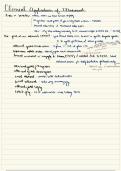
Clinical Applications of Ultrasound Element Learning Outcomes: -Compare the benefits vs risks of ultrasound -Identify the role of ultrasound in diagnosis of conditions -Explain the benefits and limitations of point of care ultrasound (POCUS) and Extended focused assessment with sonography for trauma (eFAST) -Give examples of other uses of ultrasound
- Notas de lectura
- • 1 páginas's •
-
University of St Andrews•MD2001
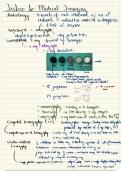
Introduction to Medical Imaging Element Learning Outcomes: -Learn the definitions used within radiology and imaging discussions -Differentiate between the different types of medical imaging techniques, with a particular focus on safety and risk -Explain the advantages and disadvantages of the different medical imaging techniques -Understand how to request scans appropriately
- Notas de lectura
- • 2 páginas's •
-
University of St Andrews•MD2001
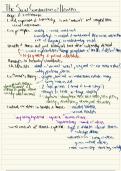
Social Construction of Health Element Learning Outcomes: -Describe and apply the social construction of health to identify how patients ascribe meaning to experiences of illness and disease -Understand and apply relevant sociological theories related to social constructionism in the context of health and illness -Explore the role of ‘stigma’ related to how patients may perceive health and illness -Examine the role of medicalisation for patients and healthcare systems
- Notas de lectura
- • 2 páginas's •
-
University of St Andrews•MD2001
Moral Theories and Ethics Element Learning Outcomes: -Identify the main characteristics of the moral theories of consequentialism, deontology, and virtue ethics -Compare and contrast the moral theories of consequentialism, deontology, and virtue ethics -Identify the shortcomings of each of the moral theories in decision-making -Name 3 other ethical theories that are commonly used in the healthcare setting. -Define and explain each of the 4 principles of medical ethics -Explain what the do...
- Notas de lectura
- • 2 páginas's •
-
University of St Andrews•MD2001
Medical Culture and Moral Vulnerability Element Learning Outcomes: -Identify aspects within the culture of medicine that could be viewed as moral vulnerabilities -Describe three ways to avoid moral erosion within medical school -Demonstrate the four quadrant approach through application to a particular case -Construct the steps involved in a structured case analysis
- Notas de lectura
- • 2 páginas's •
-
University of St Andrews•MD2001
Introduction to Medical Sociology Element Learning Outcomes: -Describe and apply sociological principles, key concepts, theories and evidence to health, illness and medical practice. -Develop an understanding of ‘medical sociology’ as an academic field. -Examine the key concepts of medical sociology. -Recognise and identify the relevance and presence of medical sociology in ‘everyday life’.
- Notas de lectura
- • 1 páginas's •
-
University of St Andrews•MD2001
Introduction to Medical Humanities Element Learning Outcomes: -Explain the importance of medical humanities and medical ethics in medicine -Recognise different ways that medical humanities approaches can benefit your learning in medicine -Describe the role of the General Medical Council (GMC) and list the four domains of the Duties of a Doctor, from the GMC's Good Medical Practice -State what a doctor's first concern should be, according to the Duties of a Doctor, and understand the impor...
- Notas de lectura
- • 1 páginas's •
-
University of St Andrews•MD2001
Consent Element Learning Outcomes: -Explain the four criteria required for consent to be valid -Discuss the importance of consent in the practice of medicine -Describe the rights of a capacitous patient as regards refusal of, preference for and demanding of treatment -Explain the criteria for adult capacity, and incapacity (under the Adults with Incapacity (Scotland) Act (2000)) -Recognise some of the difficulties that can arise when trying to assess capacity -Explain how decisions can be...
- Notas de lectura
- • 1 páginas's •
-
University of St Andrews•MD2001
Confidentiality Element Learning Outcomes: -Explain why confidentiality is important in medicine -Identify the circumstances under which confidential information can be disclosed under common law and by statutory requirement and explain the justifications for doing so in each case -List the 4 criteria that define 'the public interest' in terms of justifying disclosure of confidential information -Discuss the role of GMC guidance with regards to confidentiality, in particular as it relates...
- Notas de lectura
- • 2 páginas's •
-
University of St Andrews•MD2001
Being a Patient Element Learning Outcomes: -Explain the major features of what the patient is likely to experience in modern medicine -Evaluate the relevance of a behavioural science approach to being a doctor -Illustrate the application of behavioural science to medicine with three examples
- Notas de lectura
- • 1 páginas's •
-
University of St Andrews•MD2001
AI Safety Element Learning Outcomes: -Describe Generative AI (in basic terms), including its basic principles and functionalities. -Discuss AI Safety and relate this to the study and practice of medicine. -Discuss the limitations of Generative AI in relation to the accuracy of its outputs and suggest methods of validating AI tools in medicine. -Describe the shortcomings of Generative AI in relation to representation and diversity, and suggest methods to overcome these. -Propose generative ...
- Notas de lectura
- • 1 páginas's •
-
University of St Andrews•MD2001
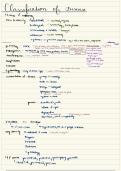
Classification of Disease Element Learning Outcomes -To define disease -To describe the characteristics of disease -To define terms used in the nomenclature of disease -To describe the classification of disease -To describe the epidemiological characteristics of some major human diseases -Understand what personalised medicine is trying to achieve
- Notas de lectura
- • 1 páginas's •
-
University of St Andrews•MD2001
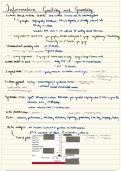
Information: Quality not Quantity Element Learning Outcomes: -Explain the importance of using up to date evidence for addressing clinical questions -Discuss potential sources of bias in medical research -Describe the strategy for conducting a systematic review -Explain the value of a meta-analysis and interpret a forest plot -Explain the importance of a confidence interval
- Notas de lectura
- • 2 páginas's •
-
University of St Andrews•MD2001
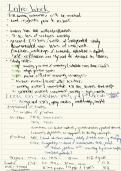
Introduction Week. Summary of the course MD2001 and MD2002, test components, study materials.
- Resumen
- • 2 páginas's •
-
University of St Andrews•MD2001
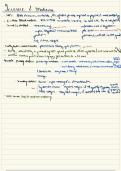
Science and Medicine Element Learning Outcomes: -Summarise the scientific method and the role of peer review -Explain the importance of evidence based medicine in the provision of care -Comment on the effect of bias on scientific research -Differentiate between primary and secondary research studies -Explain what is meant by an evidence pyramid
- Notas de lectura
- • 1 páginas's •
-
University of St Andrews•MD2001
Local Anaesthetics Element Learning Outcomes: -To give named examples of local anaesthetics and explain their clinical uses -To recognise the features of the weak base structure and the interaction with pH, which account for the mechanisms of action of local anaesthetics -To explain why local anaesthetics will have varying time courses of action and how this can be modified -To identify the different routes of administration of local anaesthetics -To predict the dangers and side-effects of...
- Notas de lectura
- • 2 páginas's •
-
University of St Andrews•MD2001
Principles of Antimicrobial Chemotherapy Element Learning Outcomes: -Define the principles of antibiotic chemotherapy -List the main classes of antibacterial agents -Describe the principle of selective toxicity giving examples -Outline the main mechanisms of action of the main antibiotic classes
- Notas de lectura
- • 3 páginas's •
-
University of St Andrews•MD2001
Active Transport and the Sodium Pump Element Learning Outcomes: -Describe the structure and function of the sodium pump, explain how it regulates ion concentrations and the clinical and physiological significance of this -Explain the clinical significance of the interaction between the binding of the cardiac glycosides and the extracellular potassium concentration -Explain, with example substances, the key features, energetics, differences and similarities of/ between primary active transpor...
- Notas de lectura
- • 2 páginas's •
-
University of St Andrews•MD2001
Body Fluid Compartments Element Learning Outcomes: -Explain the divisions of the fluid compartments of the body -List the concentrations of the major components of intracellular and extracellular fluid -Summarise the main features of biological membranes -Explain the importance of the amphipathic properties of membrane lipds -Explain the differences between integral and peripheral membrane proteins -Identify the key roles played by membrane transport processes -Use flux equation to expla...
- Notas de lectura
- • 2 páginas's •
-
University of St Andrews•MD2001