

CIE • History
Las últimas cargas en History @ CIE. ¿Buscas apuntes de History en CIE? Tenemos un montón de apuntes, guías de estudio y notas de estudio disponibles para History en CIE.
-
156
- 0
-
20
Cursos History @ CIE
Notas disponibles para los cursos siguiente de History en CIE
-
Unit 1 - Document question
-
Unit 2 - Outline study
-
Unit 3 - Interpretations question
-
Unit 4a - Europe of the Dictators, 1918-1941
-
Unit 4b - he History of the USA, 1945-1990
-
Unit 4c - International History, 1945-1991
-
Unit 4d - African History, 1945-1991
-
Unit 4e - Southeast Asian History, 1945-1990s
Libros populares CIE • History

Graham David Goodlad, Patrick Walsh-Atkins, Russell Williams • ISBN 9781108739795
Chris Hinton, John Hite • ISBN 9780719573439
Chris Corin, Terry Fiehn • ISBN 9781444124231
Terry Fiehn, Chris Corin • ISBN 9780719574887
Ben Walsh • ISBN 9781471860201
Último contenido CIE • History
Stalin; formerly known as Iosif Vissarionovich Dzhugashvili, was a Marxist and an avid follower of Vladimir Lenin. His involvement in the Bolshevik movement was due to his active violent attacks on the Tsarist government, through bank robbing and kidnapping to fund the revolution, allowing him to become one of Lenin’s closest associates. Despite his early success within the Bolsheviks, he was not considered to be among the list of natural successors; Trotsky, Bukharin, Zinoviev, Kamenev and Ki...
- Book
- Ensayo
- • 3 páginas's •
-
CIE•Unit 4a - Europe of the Dictators, 1918-1941
-
The Dictators • Richard Overy• ISBN 9780140281491
Stalin; formerly known as Iosif Vissarionovich Dzhugashvili, was a Marxist and an avid follower of Vladimir Lenin. His involvement in the Bolshevik movement was due to his active violent attacks on the Tsarist government, through bank robbing and kidnapping to fund the revolution, allowing him to become one of Lenin’s closest associates. Despite his early success within the Bolsheviks, he was not considered to be among the list of natural successors; Trotsky, Bukharin, Zinoviev, Kamenev and Ki...
- Book
- Ensayo
- • 3 páginas's •
-
CIE•Unit 4a - Europe of the Dictators, 1918-1941
-
The Dictators • Richard Overy• ISBN 9780140281491
Stalin; formerly known as Iosif Vissarionovich Dzhugashvili, was a Marxist and an avid follower of Vladimir Lenin. His involvement in the Bolshevik movement was due to his active violent attacks on the Tsarist government, through bank robbing and kidnapping to fund the revolution, allowing him to become one of Lenin’s closest associates. Despite his early success within the Bolsheviks, he was not considered to be among the list of natural successors; Trotsky, Bukharin, Zinoviev, Kamenev and Ki...
- Book
- Presentación
- • 15 páginas's •
-
CIE•Unit 4a - Europe of the Dictators, 1918-1941
-
The Dictators • Richard Overy• ISBN 9780140281491
Stalin; formerly known as Iosif Vissarionovich Dzhugashvili, was a Marxist and an avid follower of Vladimir Lenin. His involvement in the Bolshevik movement was due to his active violent attacks on the Tsarist government, through bank robbing and kidnapping to fund the revolution, allowing him to become one of Lenin’s closest associates. Despite his early success within the Bolsheviks, he was not considered to be among the list of natural successors; Trotsky, Bukharin, Zinoviev, Kamenev and Ki...
- Book
- Presentación
- • 49 páginas's •
-
CIE•Unit 4a - Europe of the Dictators, 1918-1941
-
The Dictators • Richard Overy• ISBN 9780140281491
Stalin; formerly known as Iosif Vissarionovich Dzhugashvili, was a Marxist and an avid follower of Vladimir Lenin. His involvement in the Bolshevik movement was due to his active violent attacks on the Tsarist government, through bank robbing and kidnapping to fund the revolution, allowing him to become one of Lenin’s closest associates. Despite his early success within the Bolsheviks, he was not considered to be among the list of natural successors; Trotsky, Bukharin, Zinoviev, Kamenev and Ki...
- Book
- Notas de lectura
- • 8 páginas's •
-
CIE•Unit 4a - Europe of the Dictators, 1918-1941
-
The Dictators • Richard Overy• ISBN 9780140281491
Stalin; formerly known as Iosif Vissarionovich Dzhugashvili, was a Marxist and an avid follower of Vladimir Lenin. His involvement in the Bolshevik movement was due to his active violent attacks on the Tsarist government, through bank robbing and kidnapping to fund the revolution, allowing him to become one of Lenin’s closest associates. Despite his early success within the Bolsheviks, he was not considered to be among the list of natural successors; Trotsky, Bukharin, Zinoviev, Kamenev and Ki...
- Book
- Study guide
- • 35 páginas's •
-
CIE•Unit 4a - Europe of the Dictators, 1918-1941
-
The Dictators • Richard Overy• ISBN 9780140281491
Stalin; formerly known as Iosif Vissarionovich Dzhugashvili, was a Marxist and an avid follower of Vladimir Lenin. His involvement in the Bolshevik movement was due to his active violent attacks on the Tsarist government, through bank robbing and kidnapping to fund the revolution, allowing him to become one of Lenin’s closest associates. Despite his early success within the Bolsheviks, he was not considered to be among the list of natural successors; Trotsky, Bukharin, Zinoviev, Kamenev and Ki...
- Book
- Ensayo
- • 2 páginas's •
-
CIE•Unit 4a - Europe of the Dictators, 1918-1941
-
The Dictators • Richard Overy• ISBN 9780140281491
A totalitarian state, is a where the central government of a state does not tolerate any parties with opposing views and exercises complete dictatorial rule over all or most aspects of life. Lenin, the leader of the Bolsheviks, took many measures in an attempt to create a totalitarian state, including the dissolution of Constituent Assembly, the use of decrees and the establishment of a secret police group called the Cheka. However there were also some ways in which he failed to achieve full tot...
- Book
- Resumen
- • 2 páginas's •
-
CIE•Unit 4a - Europe of the Dictators, 1918-1941
-
The State and Revolution • Vladimir Lenin, V I Lenin• ISBN 9780140184358
A totalitarian state, is a where the central government of a state does not tolerate any parties with opposing views and exercises complete dictatorial rule over all or most aspects of life. Lenin, the leader of the Bolsheviks, took many measures in an attempt to create a totalitarian state, including the dissolution of Constituent Assembly, the use of decrees and the establishment of a secret police group called the Cheka. However there were also some ways in which he failed to achieve full tot...
- Book
- Presentación
- • 11 páginas's •
-
CIE•Unit 4a - Europe of the Dictators, 1918-1941
-
The State and Revolution • Vladimir Lenin, V I Lenin• ISBN 9780140184358
A totalitarian state, is a where the central government of a state does not tolerate any parties with opposing views and exercises complete dictatorial rule over all or most aspects of life. Lenin, the leader of the Bolsheviks, took many measures in an attempt to create a totalitarian state, including the dissolution of Constituent Assembly, the use of decrees and the establishment of a secret police group called the Cheka. However there were also some ways in which he failed to achieve full tot...
- Book
- Resumen
- • 12 páginas's •
-
CIE•Unit 4a - Europe of the Dictators, 1918-1941
-
The State and Revolution • Vladimir Lenin, V I Lenin• ISBN 9780140184358
A totalitarian state, is a where the central government of a state does not tolerate any parties with opposing views and exercises complete dictatorial rule over all or most aspects of life. Lenin, the leader of the Bolsheviks, took many measures in an attempt to create a totalitarian state, including the dissolution of Constituent Assembly, the use of decrees and the establishment of a secret police group called the Cheka. However there were also some ways in which he failed to achieve full tot...
- Book
- Resumen
- • 2 páginas's •
-
CIE•Unit 4a - Europe of the Dictators, 1918-1941
-
Lenin • Victor Sebestyen• ISBN 9789000354535
A totalitarian state, is a where the central government of a state does not tolerate any parties with opposing views and exercises complete dictatorial rule over all or most aspects of life. Lenin, the leader of the Bolsheviks, took many measures in an attempt to create a totalitarian state, including the dissolution of Constituent Assembly, the use of decrees and the establishment of a secret police group called the Cheka. However there were also some ways in which he failed to achieve full tot...
- Book
- Resumen
- • 3 páginas's •
-
CIE•Unit 4a - Europe of the Dictators, 1918-1941
-
The State and Revolution • Vladimir Lenin, V I Lenin• ISBN 9780140184358
A totalitarian state, is a where the central government of a state does not tolerate any parties with opposing views and exercises complete dictatorial rule over all or most aspects of life. Lenin, the leader of the Bolsheviks, took many measures in an attempt to create a totalitarian state, including the dissolution of Constituent Assembly, the use of decrees and the establishment of a secret police group called the Cheka. However there were also some ways in which he failed to achieve full tot...
- Book
- Resumen
- • 3 páginas's •
-
CIE•Unit 4a - Europe of the Dictators, 1918-1941
-
The State and Revolution • Vladimir Lenin, V I Lenin• ISBN 9780140184358
A totalitarian state, is a where the central government of a state does not tolerate any parties with opposing views and exercises complete dictatorial rule over all or most aspects of life. Lenin, the leader of the Bolsheviks, took many measures in an attempt to create a totalitarian state, including the dissolution of Constituent Assembly, the use of decrees and the establishment of a secret police group called the Cheka. However there were also some ways in which he failed to achieve full tot...
- Book
- Ensayo
- • 4 páginas's •
-
CIE•Unit 4a - Europe of the Dictators, 1918-1941
-
The State and Revolution • Vladimir Lenin, V I Lenin• ISBN 9780140184358
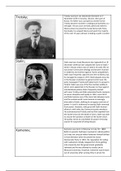
A totalitarian state, is a where the central government of a state does not tolerate any parties with opposing views and exercises complete dictatorial rule over all or most aspects of life. Lenin, the leader of the Bolsheviks, took many measures in an attempt to create a totalitarian state, including the dissolution of Constituent Assembly, the use of decrees and the establishment of a secret police group called the Cheka. However there were also some ways in which he failed to achieve full tot...
- Book
- Resumen
- • 3 páginas's •
-
CIE•Unit 4a - Europe of the Dictators, 1918-1941
-
Lenin • Victor Sebestyen• ISBN 9789000354535
A totalitarian state, is a where the central government of a state does not tolerate any parties with opposing views and exercises complete dictatorial rule over all or most aspects of life. Lenin, the leader of the Bolsheviks, took many measures in an attempt to create a totalitarian state, including the dissolution of Constituent Assembly, the use of decrees and the establishment of a secret police group called the Cheka. However there were also some ways in which he failed to achieve full tot...
- Book
- Ensayo
- • 5 páginas's •
-
CIE•Unit 4a - Europe of the Dictators, 1918-1941
-
Lenin • Victor Sebestyen• ISBN 9789000354535
A totalitarian state, is a where the central government of a state does not tolerate any parties with opposing views and exercises complete dictatorial rule over all or most aspects of life. Lenin, the leader of the Bolsheviks, took many measures in an attempt to create a totalitarian state, including the dissolution of Constituent Assembly, the use of decrees and the establishment of a secret police group called the Cheka. However there were also some ways in which he failed to achieve full tot...
- Book
- Notas de lectura
- • 2 páginas's •
-
CIE•Unit 4a - Europe of the Dictators, 1918-1941
-
The State and Revolution • Vladimir Lenin, V I Lenin• ISBN 9780140184358
The ruler of Russia was Tsar Nicholas II. He was an absolute monarch, meaning that he had total power in Russia. Nicholas was a weak man. He used his secret police, the Okrana, to persecute opponents. Books and newspapers were censored. The Church supported the Tsar – the ‘Little Father of the Russian people’. Nicholas II ruled a vast country that was almost medieval in comparison to other countries. The Tsar’s undemocratic government was a major cause of the revolution
- Book
- Presentación
- • 25 páginas's •
-
CIE•Unit 4a - Europe of the Dictators, 1918-1941
-
Communism in Russia • Richard Sakwa• ISBN 9780333606797
Simple format information
- Package deal
- Resumen
- • 4 páginas's •
-
CIE•Unit 4a - Europe of the Dictators, 1918-1941
-
CIE History 9389 BUNDLE - HITLER• Porraulpatel10
Simple format information
- Package deal
- Resumen
- • 2 páginas's •
-
CIE•Unit 4a - Europe of the Dictators, 1918-1941
-
CIE History 9389 BUNDLE - HITLER• Porraulpatel10