NUR 2063
Las últimas cargas en NUR 2063. ¿Buscando notas en NUR 2063? Tenemos muchas notas, guias de estudio y notas de estudio disponsible para tu escuela.
-
1082
-
1
-
106
All courses for NUR 2063
-
NUR 2063 1085
-
Nur 2063 / 4
-
NUR 2063, 1
Último contenido NUR 2063
(ANS - is the study of what happens when the normal anatomy and physiology go wrong, causing disorder and disease process of the human body. 
 
What 4 things does pathophysiology include? 
(ANS - Etiology, Pathogenesis, Clinical Manifestations, and Treatment Implications 
 
What is etiology 
(ANS - study of causes or reasons for phenomena. Includes Idiopathic conditions that have an unknown origin or cause. 
 
What is pathogenesis? 
(ANS - development or evolution of disease from initial stimulu...
- Examen
- • 29 páginas's •
-
NUR 2063•NUR 2063
Vista previa 3 fuera de 29 páginas
Preparando tu documento...
(ANS - is the study of what happens when the normal anatomy and physiology go wrong, causing disorder and disease process of the human body. 
 
What 4 things does pathophysiology include? 
(ANS - Etiology, Pathogenesis, Clinical Manifestations, and Treatment Implications 
 
What is etiology 
(ANS - study of causes or reasons for phenomena. Includes Idiopathic conditions that have an unknown origin or cause. 
 
What is pathogenesis? 
(ANS - development or evolution of disease from initial stimulu...
MEDIATORS OF STRESS, E.G. NOREPINEPHRINE, EPINEPHRINE, CORTISOL – WHAT DO THEY DO? 
Norepinephrine (Catecholamines) – released during alarm stage; constricts blood vessels and raises blood pressure; reduces gastric secretions and increases night and far vision 
Epinephrine (Catecholamines) – released during the alarm stage; enhances myocardial contractibility, increases heart rate, and increases cardiac output; causes bronchodilation; 
 
increases the release of glucose from the liver(gly...
- Examen
- • 22 páginas's •
-
NUR 2063•NUR 2063
Vista previa 3 fuera de 22 páginas
Preparando tu documento...
MEDIATORS OF STRESS, E.G. NOREPINEPHRINE, EPINEPHRINE, CORTISOL – WHAT DO THEY DO? 
Norepinephrine (Catecholamines) – released during alarm stage; constricts blood vessels and raises blood pressure; reduces gastric secretions and increases night and far vision 
Epinephrine (Catecholamines) – released during the alarm stage; enhances myocardial contractibility, increases heart rate, and increases cardiac output; causes bronchodilation; 
 
increases the release of glucose from the liver(gly...
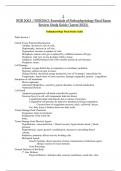
Question Hyperemesis gravidarum causes excessive nausea and vomiting during pregnancy. What can the mother expect to have if hyperemesis gravidarum is left untreated? 
 
Answer Electrolyte imbalances and dehydration 
 
Question Hyperglycemia is concerning when complications arise. Which disorder is related to breaking down fats for energy in patients with type 1 diabetes? 
 
 
Answer Diabetic ketoacidosis 
 
 
Question Which of the following symptoms describe complications of compartment syndrom...
- Examen
- • 25 páginas's •
-
NUR 2063•NUR 2063
Vista previa 3 fuera de 25 páginas
Preparando tu documento...
Question Hyperemesis gravidarum causes excessive nausea and vomiting during pregnancy. What can the mother expect to have if hyperemesis gravidarum is left untreated? 
 
Answer Electrolyte imbalances and dehydration 
 
Question Hyperglycemia is concerning when complications arise. Which disorder is related to breaking down fats for energy in patients with type 1 diabetes? 
 
 
Answer Diabetic ketoacidosis 
 
 
Question Which of the following symptoms describe complications of compartment syndrom...
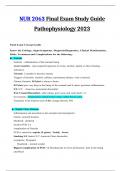
Patho Section 1 
 
Cell & Tissue Function/Dysfunction Atrophy: decrease in size of cells. Hypertrophy: increase in cell size. 
Hyperplasia: increase in number of cells. 
Metaplasia: mature cell type is replaced by a different mature cell type. Dysplasia: cells vary in size & shape within a tissue. 
Anaplasia: undifferentiated cells with variable nuclear & cell structure. Neoplasm: tumor. 
Cell Damage 
Ischemia: oxygen deficit due to respiratory or circulatory problems. Hypoxia: reduced oxygen in...
- Examen
- • 47 páginas's •
-
NUR 2063•NUR 2063
Vista previa 4 fuera de 47 páginas
Preparando tu documento...
Patho Section 1 
 
Cell & Tissue Function/Dysfunction Atrophy: decrease in size of cells. Hypertrophy: increase in cell size. 
Hyperplasia: increase in number of cells. 
Metaplasia: mature cell type is replaced by a different mature cell type. Dysplasia: cells vary in size & shape within a tissue. 
Anaplasia: undifferentiated cells with variable nuclear & cell structure. Neoplasm: tumor. 
Cell Damage 
Ischemia: oxygen deficit due to respiratory or circulatory problems. Hypoxia: reduced oxygen in...
to become chronic 
Triggers of Gastritis: Alcohol, caffeine, autoimmune disease, viral or bacteria Chronic Gastritis: H Pylori is always a factor 
H Pylori goes very deep in the lining of the stomach and It causes persistent inflammation 
S/S: N/V – Anorexia- postcranial discomfort 
Post Cranial Discomfort- after eating- goes away and come back 1-2 hrs Gastritis- hematemesis- blood in the vomit- coffee brown color Treatment: Treat H pylori treat GERD, change lifestyle, PPI 
 
▪	Peptic Ulcer ...
- Examen
- • 53 páginas's •
-
NUR 2063•NUR 2063
Vista previa 4 fuera de 53 páginas
Preparando tu documento...
to become chronic 
Triggers of Gastritis: Alcohol, caffeine, autoimmune disease, viral or bacteria Chronic Gastritis: H Pylori is always a factor 
H Pylori goes very deep in the lining of the stomach and It causes persistent inflammation 
S/S: N/V – Anorexia- postcranial discomfort 
Post Cranial Discomfort- after eating- goes away and come back 1-2 hrs Gastritis- hematemesis- blood in the vomit- coffee brown color Treatment: Treat H pylori treat GERD, change lifestyle, PPI 
 
▪	Peptic Ulcer ...
What findings would you expect in someone with an anaphylactic reaction? - 
Answer Bronchodilation, airway constriction, 
Manifestations of a type 1 hypersensitivity – answer GI allergy 
Nausea, vomiting, diarrhea, abdominal pain 
Skin manifestations 
Urticaria (hives) 
Mucosa allergens 
Conjunctivitis, rhinitis, asthma 
Lung allergens 
Bronchospasm, edema, thick secretions 
· Manifestations of fight/flight response - answerIncrease HR, increased respirations, diaphoresis, 
pupil d...
- Package deal
- Otro
- • 16 páginas's •
-
NUR 2063•NUR 2063
-
NUR2063 Essentials of Pathophysiology Exams 2025| 2026 LATEST• Por ScoreSmart
Vista previa 3 fuera de 16 páginas
Preparando tu documento...
What findings would you expect in someone with an anaphylactic reaction? - 
Answer Bronchodilation, airway constriction, 
Manifestations of a type 1 hypersensitivity – answer GI allergy 
Nausea, vomiting, diarrhea, abdominal pain 
Skin manifestations 
Urticaria (hives) 
Mucosa allergens 
Conjunctivitis, rhinitis, asthma 
Lung allergens 
Bronchospasm, edema, thick secretions 
· Manifestations of fight/flight response - answerIncrease HR, increased respirations, diaphoresis, 
pupil d...
What is the difference between a sign and a symptom? – answer Sign - Objective (Erythema, 
Edema, lesion) 
 Symptom - Subjective (Headache, sore, tired) 
Na - Sodium - answer136-144 mEq 
Hyponatremia - anorexia, gastrointestinal upset, poor skin turgor, dry mucous membranes, blood 
pressure changes, pulse changes, edema, headache, lethargy, confusion, diminished deep tendon 
reflexes, muscle weakness, seizures, and coma | 
Hypernatremia - increased temperature, warm and flushed skin, dr...
- Examen
- • 16 páginas's •
-
NUR 2063•NUR 2063
Vista previa 3 fuera de 16 páginas
Preparando tu documento...
What is the difference between a sign and a symptom? – answer Sign - Objective (Erythema, 
Edema, lesion) 
 Symptom - Subjective (Headache, sore, tired) 
Na - Sodium - answer136-144 mEq 
Hyponatremia - anorexia, gastrointestinal upset, poor skin turgor, dry mucous membranes, blood 
pressure changes, pulse changes, edema, headache, lethargy, confusion, diminished deep tendon 
reflexes, muscle weakness, seizures, and coma | 
Hypernatremia - increased temperature, warm and flushed skin, dr...
1.	Which of the following assessment findings indicates an alteration in homeostatic control mechanisms? 
 
-	Fever 
 
 
2.	Injury that occurs when blood flow is diminished to tissue is called	injury. 
 
-	ischemic 
 
 
3.	The cancer growth continuum is divided into which of the following stages? 
 
-	Initiation, promotion, progression 
 
 
4.	The activities of the cell are directed by which cell structure? 
 
-	Cytoplasm 
 
 
5.	Enzymes that use oxidation to convert food materials into energy a...
- Package deal
- Examen
- • 23 páginas's •
-
NUR 2063•NUR 2063
-
NUR2063 Essentials of Pathophysiology Exams 2025| 2026 LATEST• Por ScoreSmart
Vista previa 3 fuera de 23 páginas
Preparando tu documento...
1.	Which of the following assessment findings indicates an alteration in homeostatic control mechanisms? 
 
-	Fever 
 
 
2.	Injury that occurs when blood flow is diminished to tissue is called	injury. 
 
-	ischemic 
 
 
3.	The cancer growth continuum is divided into which of the following stages? 
 
-	Initiation, promotion, progression 
 
 
4.	The activities of the cell are directed by which cell structure? 
 
-	Cytoplasm 
 
 
5.	Enzymes that use oxidation to convert food materials into energy a...
2.	Causes of chronic kidney disease: - Outcome of progressive and irrevocable loss of functional nephrons. 
-	Due to kidney not recovering 
•	Can lead up to end-stage renal disease (ESRD) which requires dialysis 
3.	Risk Factors of chronic kidney disease: - Diabetes 
-	Hypertension 
-	Recurrent pyelonephritis 
-	Polycystic kidney disease 
-	History of exposure to toxins 
-	Age over 65 
-	Ethnicity (African American male higher risk) 
4.	complications of chronic kidney disease: - hypertension a...
- Otro
- • 15 páginas's •
-
NUR 2063•NUR 2063
Vista previa 2 fuera de 15 páginas
Preparando tu documento...
2.	Causes of chronic kidney disease: - Outcome of progressive and irrevocable loss of functional nephrons. 
-	Due to kidney not recovering 
•	Can lead up to end-stage renal disease (ESRD) which requires dialysis 
3.	Risk Factors of chronic kidney disease: - Diabetes 
-	Hypertension 
-	Recurrent pyelonephritis 
-	Polycystic kidney disease 
-	History of exposure to toxins 
-	Age over 65 
-	Ethnicity (African American male higher risk) 
4.	complications of chronic kidney disease: - hypertension a...
Patho Section 1 
 
Cell & Tissue Function/Dysfunction Atrophy: decrease in size of cells. Hypertrophy: increase in cell size. 
Hyperplasia: increase in number of cells. 
Metaplasia: mature cell type is replaced by a different mature cell type. Dysplasia: cells vary in size & shape within a tissue. 
Anaplasia: undifferentiated cells with variable nuclear & cell structure. Neoplasm: tumor. 
Cell Damage 
Ischemia: oxygen deficit due to respiratory or circulatory problems. Hypoxia: reduced oxygen in...
- Resumen
- • 46 páginas's •
-
NUR 2063•NUR 2063
Vista previa 4 fuera de 46 páginas
Preparando tu documento...
Patho Section 1 
 
Cell & Tissue Function/Dysfunction Atrophy: decrease in size of cells. Hypertrophy: increase in cell size. 
Hyperplasia: increase in number of cells. 
Metaplasia: mature cell type is replaced by a different mature cell type. Dysplasia: cells vary in size & shape within a tissue. 
Anaplasia: undifferentiated cells with variable nuclear & cell structure. Neoplasm: tumor. 
Cell Damage 
Ischemia: oxygen deficit due to respiratory or circulatory problems. Hypoxia: reduced oxygen in...