

NR 328
Las últimas cargas en NR 328. ¿Buscando notas en NR 328? Tenemos muchas notas, guias de estudio y notas de estudio disponsible para tu escuela.
-
392
- 0
-
45
All courses for NR 328
-
NR 328 392
-
NR 328 / 3
-
NR 328: 1
-
NR-328 2
Último contenido NR 328
nurse in the emergency department is caring for a 2-year-old child who was found by his parents crying and holding a container of toilet bowl cleaner. The child's lips are edematous and inflamed, and he is drooling. Which of the following is the priority action by the nurse? a. Remove the child's contaminated clothing. b. Check the child's respiratory status. c. Administer an antidote to the child. d. Establish IV access for the child. Rationale: The nurse should apply the ABC priori...
- Examen
- • 19 páginas's •
-
NR 328•NR 328
Vista previa 3 fuera de 19 páginas
Preparando tu documento...
nurse in the emergency department is caring for a 2-year-old child who was found by his parents crying and holding a container of toilet bowl cleaner. The child's lips are edematous and inflamed, and he is drooling. Which of the following is the priority action by the nurse? a. Remove the child's contaminated clothing. b. Check the child's respiratory status. c. Administer an antidote to the child. d. Establish IV access for the child. Rationale: The nurse should apply the ABC priori...
the emergency department is caring for a 2-year-old child who was found by his parents crying and holding a container of toilet bowl cleaner. The child's lips are edematous and inflamed, and he is drooling. Which of the following is the priority action by the nurse? a. Remove the child's contaminated clothing. b. Check the child's respiratory status. c. Administer an antidote to the child. d. Establish IV access for the child. Rationale: The nurse should apply the ABC priority-settin...
- Examen
- • 19 páginas's •
-
NR 328•NR 328
Vista previa 3 fuera de 19 páginas
Preparando tu documento...
the emergency department is caring for a 2-year-old child who was found by his parents crying and holding a container of toilet bowl cleaner. The child's lips are edematous and inflamed, and he is drooling. Which of the following is the priority action by the nurse? a. Remove the child's contaminated clothing. b. Check the child's respiratory status. c. Administer an antidote to the child. d. Establish IV access for the child. Rationale: The nurse should apply the ABC priority-settin...
Which topics should the nurse discuss with the parents of a young child to promote health in their child? a. Dental care needs to be started by age 7. b. Immunization schedule and the importance of immunizations. c. Human milk or iron fortified formula for the first 4 months of life. d. Positioning the car seat in the front passenger seat. Answer: B Rationale: Immunizations have made a major impact in the prevention of disease in children. The nurse should review individual imm...
- Examen
- • 36 páginas's •
-
NR 328•NR 328
Vista previa 4 fuera de 36 páginas
Preparando tu documento...
Which topics should the nurse discuss with the parents of a young child to promote health in their child? a. Dental care needs to be started by age 7. b. Immunization schedule and the importance of immunizations. c. Human milk or iron fortified formula for the first 4 months of life. d. Positioning the car seat in the front passenger seat. Answer: B Rationale: Immunizations have made a major impact in the prevention of disease in children. The nurse should review individual imm...
What is the normal fluid output for a child? 1-2 mL/kg/hr What causes increased requirements for maintaining water balance? What can this lead to? •Fever, tachypnea, radiant warmer •Vomiting & diarrhea, DI, acidosis •Shock, burns, postoperative bowel surgery *Can lead to dehydration What causes decreased requirements for maintaining water balance? What can this lead to? •Heart failure, •Increased ICP •Renal failure *Can lead to fluid overload Generally...
- Examen
- • 4 páginas's •
-
NR 328•NR 328
Vista previa 1 fuera de 4 páginas
Preparando tu documento...
What is the normal fluid output for a child? 1-2 mL/kg/hr What causes increased requirements for maintaining water balance? What can this lead to? •Fever, tachypnea, radiant warmer •Vomiting & diarrhea, DI, acidosis •Shock, burns, postoperative bowel surgery *Can lead to dehydration What causes decreased requirements for maintaining water balance? What can this lead to? •Heart failure, •Increased ICP •Renal failure *Can lead to fluid overload Generally...
What is one important thing to assess with health hx of the renal system? -Urinary hygiene (i.e., wiping front to back) -Patterns of elimination (i.e., constipation, holding it too long) Signs and symptoms of UTIs -N/V, anorexia, chills, nocturia, urinary frequency, urgency -Suprapubic or lower back pain, bladder spasms, dysuria, burning on urination -Objective data: fever; hematuria; foul-smelling urine; tender, enlarged kidney; leukocytosis; positive findings for bacteria ...
- Examen
- • 4 páginas's •
-
NR 328•NR 328
Vista previa 1 fuera de 4 páginas
Preparando tu documento...
What is one important thing to assess with health hx of the renal system? -Urinary hygiene (i.e., wiping front to back) -Patterns of elimination (i.e., constipation, holding it too long) Signs and symptoms of UTIs -N/V, anorexia, chills, nocturia, urinary frequency, urgency -Suprapubic or lower back pain, bladder spasms, dysuria, burning on urination -Objective data: fever; hematuria; foul-smelling urine; tender, enlarged kidney; leukocytosis; positive findings for bacteria ...
What factor predisposes an infant to fluid imbalances? a. Immature kidney functioning b. Decreased surface area c. Lower metabolic rate d. Decreased daily exchange of extracellular fluid Answer: A Rationale: The infant’s kidneys are functionally immature at birth and are inefficient in excreting waste products of metabolism. Infants have a relatively high body surface area (BSA) compared with adults. This allows a higher loss of fluid to the environment. A higher metabolic r...
- Examen
- • 33 páginas's •
-
NR 328•NR 328
Vista previa 4 fuera de 33 páginas
Preparando tu documento...
What factor predisposes an infant to fluid imbalances? a. Immature kidney functioning b. Decreased surface area c. Lower metabolic rate d. Decreased daily exchange of extracellular fluid Answer: A Rationale: The infant’s kidneys are functionally immature at birth and are inefficient in excreting waste products of metabolism. Infants have a relatively high body surface area (BSA) compared with adults. This allows a higher loss of fluid to the environment. A higher metabolic r...
NR 328 EXAM #2 PRACTICE QUESTIONS AND ANSWERS 2025
- Examen
- • 33 páginas's •
-
NR 328•NR 328
Vista previa 4 fuera de 33 páginas
Preparando tu documento...
NR 328 EXAM #2 PRACTICE QUESTIONS AND ANSWERS 2025
NR 328 PEDS STUDY GUIDE 1 CHAPTER 1: PERSPECTIVES OF PEDIATRIC NURSING Health Care for Children • Healthy People 2020 o Framework for identifying essential components for child health promotion programs o Designed to prevent future health problems in children o Goal to increase quality and length of healthy life and eliminate health disparities • Substance abuse • Dental caries---single most common chronic disease of childhood o Begins practicing dental hygiene beginning w/ the ...
- Examen
- • 52 páginas's •
-
NR 328•NR 328
Vista previa 4 fuera de 52 páginas
Preparando tu documento...
NR 328 PEDS STUDY GUIDE 1 CHAPTER 1: PERSPECTIVES OF PEDIATRIC NURSING Health Care for Children • Healthy People 2020 o Framework for identifying essential components for child health promotion programs o Designed to prevent future health problems in children o Goal to increase quality and length of healthy life and eliminate health disparities • Substance abuse • Dental caries---single most common chronic disease of childhood o Begins practicing dental hygiene beginning w/ the ...
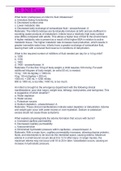
What factor predisposes an infant to fluid imbalances? a. Immature kidney functioning b. Decreased surface area c. Lower metabolic rate d. Decreased daily exchange of extracellular fluid Answer: A Rationale: The infant’s kidneys are functionally immature at birth and are inefficient in excreting waste products of metabolism. Infants have a relatively high body surface area (BSA) compared with adults. This allows a higher loss of fluid to the environment. A higher metabolic r...
- Examen
- • 33 páginas's •
-
NR 328•NR 328
Vista previa 4 fuera de 33 páginas
Preparando tu documento...
What factor predisposes an infant to fluid imbalances? a. Immature kidney functioning b. Decreased surface area c. Lower metabolic rate d. Decreased daily exchange of extracellular fluid Answer: A Rationale: The infant’s kidneys are functionally immature at birth and are inefficient in excreting waste products of metabolism. Infants have a relatively high body surface area (BSA) compared with adults. This allows a higher loss of fluid to the environment. A higher metabolic r...
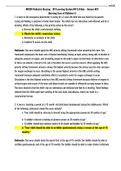
1. A nurse in the emergency department is caring for a 2-year-old child who was found by his parents crying and holding a container of toilet bowl cleaner. The child's lips are edematous and inflamed, and he is drooling. Which of the following is the priority action by the nurse? a. Remove the child's contaminated clothing. b. Check the child's respiratory status. c. Administer an antidote to the child. d. Establish IV access for the child. Rationale: The nurse should apply the ABC pri...
- Examen
- • 18 páginas's •
-
NR 328•NR 328
Vista previa 3 fuera de 18 páginas
Preparando tu documento...
1. A nurse in the emergency department is caring for a 2-year-old child who was found by his parents crying and holding a container of toilet bowl cleaner. The child's lips are edematous and inflamed, and he is drooling. Which of the following is the priority action by the nurse? a. Remove the child's contaminated clothing. b. Check the child's respiratory status. c. Administer an antidote to the child. d. Establish IV access for the child. Rationale: The nurse should apply the ABC pri...