
Forestry
Las últimas cargas en Forestry. ¿Buscando notas en Forestry? Tenemos muchas notas, guias de estudio y notas de estudio disponsible para tu escuela.
-
249
- 0
-
8
All courses for Forestry
-
Forestry 249
Último contenido Forestry
Forest Management Exam #1Questions and Answers
- Examen
- • 2 páginas's •
-
Forestry•Forestry
Forest Management Exam -1 with Answers-2
- Examen
- • 2 páginas's •
-
Forestry•Forestry
Forest Conservation Exam Questions and Answers
- Examen
- • 2 páginas's •
-
Forestry•Forestry
Certified Forester Exam Questions and Answers
- Examen
- • 15 páginas's •
-
Forestry•Forestry
Forest genetics focuses on the genetic composition, variation, and heredity within tree populations. It involves understanding how genetic factors influence the characteristics and behaviors of trees, including their growth rate, resistance to diseases, adaptability to different environments, and wood quality. Tree improvement, on the other hand, is the application of genetic principles and techniques to enhance desirable traits in trees. This field aims to develop superior tree varieties tha...
- Notas de lectura
- • 12 páginas's •
-
Forestry•Forestry
Urban forestry is a holistic approach to managing and cultivating trees and vegetation within urban environments. It involves planting, maintaining, and protecting trees and green spaces in cities to enhance environmental quality, improve residents' well-being, and promote sustainability. Urban forestry addresses various challenges such as pollution, limited space, and climate change, while providing numerous benefits, including cleaner air, cooler temperatures, increased property values, and a...
- Notas de lectura
- • 3 páginas's •
-
Forestry•Forestry
Forest policy and governance refer to the principles, regulations, and decision-making processes that guide the management and conservation of forest resources. These policies and governance mechanisms are essential for ensuring the sustainable use of forests while considering ecological, economic, and social factors. They aim to balance the needs of various stakeholders, including governments, local communities, and industry, to promote responsible and equitable forest management, address defor...
- Notas de lectura
- • 3 páginas's •
-
Forestry•Forestry
Forest ecology is the study of the relationships and interactions among the various organisms and their environment within a forest ecosystem. It focuses on understanding the complex web of life in forests, including the roles of trees, plants, animals, microorganisms, and abiotic factors like soil, climate, and topography. Forest ecologists investigate how these components function together, how energy and nutrients are cycled, and how disturbances, such as wildfires or logging, impact the ecos...
- Notas de lectura
- • 3 páginas's •
-
Forestry•Forestry
Forest conservation involves the deliberate and responsible management of forests to protect their ecological, economic, and social value. It focuses on preventing deforestation, promoting sustainable practices like selective logging, reforestation, and protecting forested areas from illegal activities. The goal is to maintain biodiversity, preserve essential ecosystem services, combat climate change by sequestering carbon, and ensure the long-term well-being of forests for the benefit of both n...
- Examen
- • 12 páginas's •
-
Forestry•Forestry
Forest conservation involves the deliberate and responsible management of forests to protect their ecological, economic, and social value. It focuses on preventing deforestation, promoting sustainable practices like selective logging, reforestation, and protecting forested areas from illegal activities. The goal is to maintain biodiversity, preserve essential ecosystem services, combat climate change by sequestering carbon, and ensure the long-term well-being of forests for the benefit of both n...
- Resumen
- • 4 páginas's •
-
Forestry•Forestry
Forest management refers to the strategic and sustainable planning, utilization, and conservation of forest resources. It involves a range of practices aimed at maintaining the health and productivity of forests while meeting various ecological, economic, and social objectives. Forest management typically includes activities such as timber harvesting, reforestation, wildlife habitat conservation, and the protection of water resources. The primary goal is to balance the utilization of forest reso...
- Resumen
- • 4 páginas's •
-
Forestry•Forestry
Forest management refers to the strategic and sustainable planning, utilization, and conservation of forest resources. It involves a range of practices aimed at maintaining the health and productivity of forests while meeting various ecological, economic, and social objectives. Forest management typically includes activities such as timber harvesting, reforestation, wildlife habitat conservation, and the protection of water resources. The primary goal is to balance the utilization of forest reso...
- Examen
- • 12 páginas's •
-
Forestry•Forestry
Forest ecology is the scientific study of the interactions between living organisms and their physical environment within forested ecosystems. It seeks to understand the complex relationships and processes that shape forests, including the diverse plant and animal species they support, the flow of energy and nutrients, and the influence of factors like climate, soil, and topography. Forest ecology is essential for comprehending the ecological, environmental, and societal importance of forests, a...
- Notas de lectura
- • 3 páginas's •
-
Forestry•Forestry
Forest ecology is the scientific study of forests as complex ecosystems, focusing on the interactions between living organisms (plants, animals, microorganisms) and their physical environment within wooded areas. This field of ecology explores the diverse relationships, processes, and functions that govern forest ecosystems, including nutrient cycling, energy flow, biodiversity, and the impact of natural and human disturbances. Understanding forest ecology is crucial for managing and conserving ...
- Examen
- • 5 páginas's •
-
Forestry•Forestry
A forest type refers to a specific category or classification of a forest ecosystem based on its predominant tree species, climate, soil, and ecological characteristics. Forest types vary widely around the world and can include coniferous forests dominated by pine or spruce trees, deciduous forests with hardwood trees like oak and maple, tropical rainforests with lush vegetation and diverse plant and animal species, and many others. Forest types play a crucial role in biodiversity, climate regul...
- Notas de lectura
- • 1 páginas's •
-
Forestry•Forestry
A forest type refers to a specific category or classification of a forest ecosystem based on its predominant tree species, climate, soil, and ecological characteristics. Forest types vary widely around the world and can include coniferous forests dominated by pine or spruce trees, deciduous forests with hardwood trees like oak and maple, tropical rainforests with lush vegetation and diverse plant and animal species, and many others. Forest types play a crucial role in biodiversity, climate regul...
- Resumen
- • 1 páginas's •
-
Forestry•Forestry
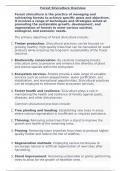
Forest silviculture is the science and practice of managing and cultivating forests to achieve specific ecological, economic, and social objectives. It involves a range of activities aimed at promoting the growth, health, and sustainability of forest ecosystems. Silviculture techniques include tree planting, thinning, harvesting, and regeneration to optimize timber production, enhance biodiversity, and mitigate environmental impacts. This discipline also considers factors such as soil health, wi...
- Resumen
- • 2 páginas's •
-
Forestry•Forestry
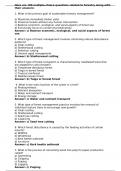
Forestry is the science and practice of managing and caring for forests and wooded areas. It encompasses a wide range of activities aimed at promoting sustainable forest ecosystems and the responsible use of forest resources. Forestry involves activities such as tree planting, timber harvesting, wildfire prevention, wildlife habitat management, and conservation efforts. It plays a crucial role in maintaining the ecological balance, providing renewable wood products, preserving biodiversity, and ...
- Examen
- • 13 páginas's •
-
Forestry•Forestry
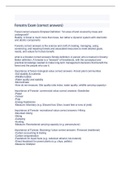
Forest correct answers Simplest Definition: "An area of land covered by trees and undergrowth" Reality: A forest is much more than trees, but rather a dynamic system with vital biotic and abiotic components Forestry correct answers is the science and craft of creating, managing, using, conserving, and repairing forests and associated resources to meet desired goals, needs, and values for human benefit. what is a forester correct answers Simple definition: A person who is trained in forest...
- Examen
- • 16 páginas's •
-
Forestry•Forestry