

Dysrhythmia
Las últimas cargas en Dysrhythmia. ¿Buscando notas en Dysrhythmia? Tenemos muchas notas, guias de estudio y notas de estudio disponsible para tu escuela.
-
223
- 0
-
36
All courses for Dysrhythmia
-
Dysrhythmia 223
-
Dysrhythmia | 1
Último contenido Dysrhythmia
Basic Dysrhythmia-Relias ACTUAL QUESTIONS AND CORRECT ANSWERS normal sinus rhythm - CORRECT ANSWERS heart rhythm originating in the sinoatrial node with a rate in patients at rest of 60 to 100 beats per minute Sinus Arrhythmia - CORRECT ANSWERS NORMAL: Respiratory - Circulatory interaction Rate INCREASES with INSPIRATION (IN=IN)
- Examen
- • 5 páginas's •
-
Dysrhythmia•Dysrhythmia
Basic Dysrhythmia-Relias UPDATED Study Guide QUESTIONS AND CORRECT ANSWERS normal sinus rhythm - CORRECT ANSWERS Heart rhythm: regular Bpm: 60-100 P-waves, QRS complex, T-waves are typically upright, uniform, similar in size and narrow(QRS complex).
- Examen
- • 5 páginas's •
-
Dysrhythmia•Dysrhythmia
Basic Dysrhythmia-Relias ACTUAL QUESTIONS AND CORRECT ANSWERS normal sinus rhythm - CORRECT ANSWERS heart rhythm originating in the sinoatrial node with a rate in patients at rest of 60 to 100 beats per minute
- Examen
- • 3 páginas's •
-
Dysrhythmia•Dysrhythmia
Master cardiac dysrhythmia interpretation with this comprehensive 100-question practice test. Includes correct answers to help you prepare for exams like the ACLS, NCLEX, or other cardiology certifications. Identify EKG rhythms, test your knowledge, and boost your confidence.
- Book
- Examen
- • 23 páginas's •
-
Dysrhythmia•Dysrhythmia
-
Introduction to Basic Cardiac Dysrhythmias • Sandra Atwood, Cheryl Stanton, Jenny Storey-Davenport• ISBN 9780323085328
Prepare for the Dysrhythmia Basic A Competency Exam Relias 2025–2026 with this comprehensive study resource. Featuring complete and up-to-date exam questions, verified answers, and clear explanations, this guide is designed to help nursing students and healthcare professionals master essential ECG rhythm interpretation skills. Learn to identify common cardiac arrhythmias, calculate heart rates, and analyze PR, QRS, and QT intervals with confidence. Perfect for exam preparation, clinical traini...
- Examen
- • 18 páginas's •
-
Dysrhythmia•Dysrhythmia
Dysrhythmia Questions and Answers
- Examen
- • 6 páginas's •
-
Dysrhythmia•Dysrhythmia
BASIC EKG TEST UPDATED QUESTION AND ANSWERS | UPDATED 2024
- Examen
- • 17 páginas's •
-
Dysrhythmia•Dysrhythmia
Dysrhythmia QUIZ WITH VERIFIED ANSWERS 2024
- Examen
- • 7 páginas's •
-
Dysrhythmia•Dysrhythmia
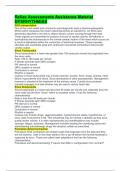
Relias Assessments Assistance Material DYSRHYTHMIAS EKG interpretation One of the most useful and commonly used diagnostic tools is electrocardiography (EKG) which measures the heart's electrical activity as waveforms. An EKG uses electrodes attached to the skin to detect electric current moving through the heart. These signals are transmitted to produce a record of cardiac activity. Arrhythmia or dysrhythmia are disturbances in the normal cardiac rhythm of the heart which occurs as a result ...
- Examen
- • 5 páginas's •
-
DYSRHYTHMIA•DYSRHYTHMIA
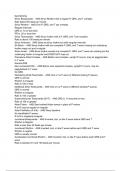
Before next expected complex, QRS is wide and often the R wave and the T wave are oppositely deflected making it look weird and bizarre QRS is greater than .12
- Examen
- • 3 páginas's •
-
Dysrhythmia•Dysrhythmia
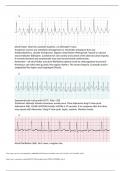
The Dysrhythmia-quiz with answers__1_2023
- Examen
- • 6 páginas's •
-
Dysrhythmia•Dysrhythmia
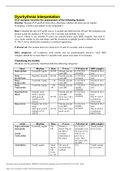
Dysrhythmia Interpretation ECG analysis involves the assessment of the following factors: Rhythm: Measure P-P and R-R intervals to determine whether the intervals are regular. If irregular, is there some pattern to the irregularity? Rate: Calculate the rate of P and R waves. A normal rate falls between 60 and 100 complexes per minute (count the number of R waves over 6 seconds and multiply by ten). P waves: Check to see whether P waves are present before each QRS complex, that each P wave ...
- Examen
- • 3 páginas's •
-
Dysrhythmia•Dysrhythmia