

History
Las últimas cargas en History. ¿Buscando notas en History? Tenemos muchas notas, guias de estudio y notas de estudio disponsible para tu escuela.
-
1820
-
2
-
73
All courses for History
-
History 1820
-
History: 7
Último contenido History
Nazism and the rise of hitler
- Examen
- • 15 páginas's •
-
History•History
Vista previa 2 fuera de 15 páginas
Preparando tu documento...
Nazism and the rise of hitler
These notes provide a detailed and exam-oriented summary of Mesopotamian Culture. Topics include the geography of the Fertile Crescent, rise of cities like Ur and Babylon, social hierarchy, polytheistic religion, major gods, ziggurats, and phases of Mesopotamian belief. The notes also cover key inventions such as the wheel, time division, maps, mathematics, ceramics, cylinder seals, and mass-produced bricks. Additional sections include cuneiform writing, Edubba schools, the Epic of Gilgamesh, Ha...
- Examen
- • 13 páginas's •
-
History•History
Vista previa 2 fuera de 13 páginas
Preparando tu documento...
These notes provide a detailed and exam-oriented summary of Mesopotamian Culture. Topics include the geography of the Fertile Crescent, rise of cities like Ur and Babylon, social hierarchy, polytheistic religion, major gods, ziggurats, and phases of Mesopotamian belief. The notes also cover key inventions such as the wheel, time division, maps, mathematics, ceramics, cylinder seals, and mass-produced bricks. Additional sections include cuneiform writing, Edubba schools, the Epic of Gilgamesh, Ha...

These notes provide a clear, structured and exam-focused summary of Chinese Civilization. Topics include the geography of the Yellow and Yangtze Rivers, Xia, Shang and Zhou dynasties, the Mandate of Heaven, Qin unification, Han Empire, Confucianism, Daoism, Legalism, writing system, centralized bureaucracy, social structure, art, literature, and the Four Great Inventions (paper, printing, compass, gunpowder). Also covers agriculture, Silk Road trade, achievements in science and medicine, archite...
- Examen
- • 11 páginas's •
-
History•History
Vista previa 2 fuera de 11 páginas
Preparando tu documento...
These notes provide a clear, structured and exam-focused summary of Chinese Civilization. Topics include the geography of the Yellow and Yangtze Rivers, Xia, Shang and Zhou dynasties, the Mandate of Heaven, Qin unification, Han Empire, Confucianism, Daoism, Legalism, writing system, centralized bureaucracy, social structure, art, literature, and the Four Great Inventions (paper, printing, compass, gunpowder). Also covers agriculture, Silk Road trade, achievements in science and medicine, archite...
These notes give a clear and exam-oriented summary of Egyptian Civilization. Topics include the rise of ancient Egypt along the Nile, the Old, Middle and New Kingdoms, pharaonic rule, social structure, economy and trade, religion and major deities, pyramids, temples, hieroglyphic writing, the Rosetta Stone, achievements in mathematics, medicine, calendar and irrigation, as well as the Sphinx and reasons for the decline of the civilisation. Suitable for BA History, Ancient History, World Civilisa...
- Examen
- • 16 páginas's •
-
History•History
Vista previa 3 fuera de 16 páginas
Preparando tu documento...
These notes give a clear and exam-oriented summary of Egyptian Civilization. Topics include the rise of ancient Egypt along the Nile, the Old, Middle and New Kingdoms, pharaonic rule, social structure, economy and trade, religion and major deities, pyramids, temples, hieroglyphic writing, the Rosetta Stone, achievements in mathematics, medicine, calendar and irrigation, as well as the Sphinx and reasons for the decline of the civilisation. Suitable for BA History, Ancient History, World Civilisa...
These notes explain the major causes behind the crisis and decline of Ancient Rome. Topics include political instability after Marcus Aurelius, the Crisis of the Third Century, corruption, economic decline, heavy taxation, currency debasement, collapse of trade, social tensions, spread of Christianity, and increasing class divisions. External pressures such as Germanic invasions, the Huns, Persian wars, the Battle of Adrianople, the sack of Rome (410 & 455 CE), and the fall of the Western Empire...
- Examen
- • 8 páginas's •
-
History•History
Vista previa 2 fuera de 8 páginas
Preparando tu documento...
These notes explain the major causes behind the crisis and decline of Ancient Rome. Topics include political instability after Marcus Aurelius, the Crisis of the Third Century, corruption, economic decline, heavy taxation, currency debasement, collapse of trade, social tensions, spread of Christianity, and increasing class divisions. External pressures such as Germanic invasions, the Huns, Persian wars, the Battle of Adrianople, the sack of Rome (410 & 455 CE), and the fall of the Western Empire...
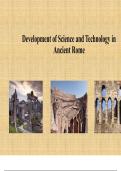
These notes provide a detailed overview of the development of science and technology in Ancient Rome. Topics include Roman engineering (roads, bridges, aqueducts, sewers), architecture (arches, domes, concrete), military technology, transportation, communication systems, medicine (Galen), natural sciences (Pliny the Elder), mathematics, astronomy, daily-life technologies (hypocausts, glassmaking), mining, metallurgy, and major Roman innovations. Suitable for BA History, Ancient History, Archaeol...
- Examen
- • 11 páginas's •
-
History•History
Vista previa 2 fuera de 11 páginas
Preparando tu documento...
These notes provide a detailed overview of the development of science and technology in Ancient Rome. Topics include Roman engineering (roads, bridges, aqueducts, sewers), architecture (arches, domes, concrete), military technology, transportation, communication systems, medicine (Galen), natural sciences (Pliny the Elder), mathematics, astronomy, daily-life technologies (hypocausts, glassmaking), mining, metallurgy, and major Roman innovations. Suitable for BA History, Ancient History, Archaeol...
These notes provide a detailed overview of Roman society, culture, and the institution of slavery. Topics include the social hierarchy (patricians, plebeians, equestrians, freedmen, slaves), the Roman family and paterfamilias, citizenship, patron–client system, housing, religion, art, architecture, literature, entertainment, law, education, and science. The document also explains the nature of slavery, roles of slaves, manumission, and revolts such as Spartacus. Ideal for BA History, Ancient H...
- Examen
- • 14 páginas's •
-
History•History
Vista previa 2 fuera de 14 páginas
Preparando tu documento...
These notes provide a detailed overview of Roman society, culture, and the institution of slavery. Topics include the social hierarchy (patricians, plebeians, equestrians, freedmen, slaves), the Roman family and paterfamilias, citizenship, patron–client system, housing, religion, art, architecture, literature, entertainment, law, education, and science. The document also explains the nature of slavery, roles of slaves, manumission, and revolts such as Spartacus. Ideal for BA History, Ancient H...
These notes provide a detailed and exam-focused explanation of Rome’s transformation from the Republic to the Principate and the Empire. Topics include the Roman Republic’s political structure, the Struggle of the Orders, Punic Wars, crisis of the Republic, Julius Caesar’s rise and assassination, the Second Triumvirate, Augustus and the formation of the Principate, Pax Romana, the High Empire, the Crisis of the Third Century, Diocletian’s reforms and Constantine’s rule. Ideal for BA Hi...
- Examen
- • 7 páginas's •
-
History•History
Vista previa 2 fuera de 7 páginas
Preparando tu documento...
These notes provide a detailed and exam-focused explanation of Rome’s transformation from the Republic to the Principate and the Empire. Topics include the Roman Republic’s political structure, the Struggle of the Orders, Punic Wars, crisis of the Republic, Julius Caesar’s rise and assassination, the Second Triumvirate, Augustus and the formation of the Principate, Pax Romana, the High Empire, the Crisis of the Third Century, Diocletian’s reforms and Constantine’s rule. Ideal for BA Hi...

These notes explain the agrarian foundations of Ancient Rome and the growth of urbanisation across the Empire. Topics include early small peasant farms, latifundia, slave labour, tenant farmers (coloni), key agricultural techniques, crops, social and economic effects of landholding changes, rise of major Roman cities, public buildings, housing (domus and insulae), aqueducts, sewers, trade, and problems of urbanisation. Suitable for BA History, Ancient History, World History and university exam p...
- Examen
- • 10 páginas's •
-
History•History
Vista previa 2 fuera de 10 páginas
Preparando tu documento...
These notes explain the agrarian foundations of Ancient Rome and the growth of urbanisation across the Empire. Topics include early small peasant farms, latifundia, slave labour, tenant farmers (coloni), key agricultural techniques, crops, social and economic effects of landholding changes, rise of major Roman cities, public buildings, housing (domus and insulae), aqueducts, sewers, trade, and problems of urbanisation. Suitable for BA History, Ancient History, World History and university exam p...
These notes provide a clear, simple, and exam-focused explanation of the Roman Monarchy period (753–509 BCE). Topics include the legendary foundation of Rome, archaeological evidence, the seven kings of Rome, major political, religious, and military developments, reforms of Servius Tullius, the tyranny of Tarquinius Superbus, and the transition to the Roman Republic. Useful for BA History, Ancient History, World History, and competitive exam preparation.
- Examen
- • 6 páginas's •
-
History•History
Vista previa 2 fuera de 6 páginas
Preparando tu documento...
These notes provide a clear, simple, and exam-focused explanation of the Roman Monarchy period (753–509 BCE). Topics include the legendary foundation of Rome, archaeological evidence, the seven kings of Rome, major political, religious, and military developments, reforms of Servius Tullius, the tyranny of Tarquinius Superbus, and the transition to the Roman Republic. Useful for BA History, Ancient History, World History, and competitive exam preparation.