100% de satisfacción garantizada Inmediatamente disponible después del pago Tanto en línea como en PDF No estas atado a nada 4.2 TrustPilot
logo-home
Notas de lectura

CHEM 2810 class/textbook notes pg 1-160

Puntuación
-
Vendido
-
Páginas
160
Subido en
27-12-2025
Escrito en
2025/2026

This course focuses on the reactivity, mechanisms, and synthesis of organic molecules, building on foundational concepts from Organic Chemistry I. Emphasis is placed on understanding how functional groups behave, how reactions proceed step by step, and how chemists use these reactions to construct more complex molecules. Students learn to predict reaction outcomes, explain mechanisms using electron flow, and design multistep syntheses. The course begins with analytical tools such as mass spectrometry and then moves into the chemistry of alcohols, including substitution, elimination, and oxidation reactions. Students study how reaction conditions control whether alcohols undergo SN1, SN2, E1, or E2 pathways and how different oxidizing agents selectively convert alcohols into aldehydes, ketones, or carboxylic acids. Epoxide formation and ring-opening reactions are explored to illustrate regioselectivity and nucleophilic behavior under acidic and basic conditions. A major portion of the course is devoted to carbonyl chemistry. This includes aldehydes, ketones, carboxylic acids, and their derivatives, with attention to nucleophilic addition and nucleophilic acyl substitution mechanisms. Students learn the relative reactivity of acyl derivatives and how they interconvert through hydrolysis, esterification, aminolysis, and reduction. Protecting groups such as acetals and thioacetals are introduced to control reactivity during multistep synthesis. Reduction and oxidation methods are emphasized, including hydride reagents, catalytic hydrogenation, and classical transformations such as Wolff–Kishner and Clemmensen reductions. The course also covers amines and nitrogen-containing compounds, focusing on their basicity, synthesis, and reactions. Topics include alkylation reactions, Hofmann elimination, imine and enamine formation, and diazonium chemistry, which allows aromatic amines to be transformed into a wide variety of substituted benzene derivatives. Sulfur analogs such as thiols and sulfides are introduced as related functional groups with distinctive nucleophilic properties. A significant component of the course centers on forming carbon–carbon bonds. Students learn how organometallic reagents such as Grignard reagents and organocuprates react with carbonyl compounds, epoxides, and carbon dioxide to build larger carbon frameworks. Modern coupling reactions, including Suzuki and Heck reactions, as well as alkene metathesis, are presented as powerful synthetic tools. The course also explores conjugate addition, Michael reactions, aldol and Claisen condensations, Dieckmann cyclizations, and Robinson annulation, highlighting how enolates enable chain extension and ring formation. Aromatic chemistry is another major theme, with detailed treatment of electrophilic aromatic substitution reactions such as nitration, halogenation, sulfonation, and Friedel–Crafts reactions. Students learn how substituents influence both the rate and regioselectivity of aromatic substitution through activating and deactivating effects. The course also examines strategies for converting aromatic amines into other functional groups via diazonium intermediates. Throughout the course, strong emphasis is placed on reaction mechanisms, regio- and stereochemical control, and strategic synthesis planning. By the end, students are expected to integrate multiple reactions into coherent synthetic pathways, interpret reaction outcomes, and apply mechanistic reasoning to unfamiliar problems. Overall, the course provides a comprehensive foundation in modern organic reactivity and prepares students for advanced study or laboratory work in chemistry and related fields.

Mostrar más Leer menos
Institución
Grado


Ups! No podemos cargar tu documento ahora. Inténtalo de nuevo o contacta con soporte.

Libro relacionado

Escuela, estudio y materia

Institución
Grado

Información del documento

Subido en
27 de diciembre de 2025
Número de páginas
160
Escrito en
2025/2026
Tipo
Notas de lectura
Profesor(es)
Laura serbulea
Contiene
Todas las clases

Temas

Vista previa del contenido

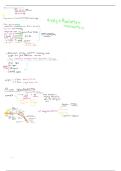
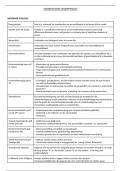
⭐Mass Spectrometry, IR and UV/VIS Spectroscopy- Chapter 12


Monday, August 25, 2025 10:11 PM


Screen clipping taken: 8/26/2025 8:38 AM


PL and Class notes Page 1

,PL and Class notes Page 2

, Screen clipping taken: 8/26/2025 9:02 AM


Screen clipping taken: 8/26/2025 9:05 AM


PL and Class notes Page 3

, PL and Class notes Page 4
$8.09
Accede al documento completo:

100% de satisfacción garantizada
Inmediatamente disponible después del pago
Tanto en línea como en PDF
No estas atado a nada

Conoce al vendedor
Seller avatar
nicolelane3

Documento también disponible en un lote

Conoce al vendedor

Seller avatar
nicolelane3 University Of Virginia
Seguir Necesitas iniciar sesión para seguir a otros usuarios o asignaturas
Vendido
Nuevo en Stuvia
Miembro desde
5 días
Número de seguidores
0
Documentos
4
Última venta
-

0.0

0 reseñas

5
0
4
0
3
0
2
0
1
0

Recientemente visto por ti

Por qué los estudiantes eligen Stuvia

Creado por compañeros estudiantes, verificado por reseñas

Calidad en la que puedes confiar: escrito por estudiantes que aprobaron y evaluado por otros que han usado estos resúmenes.

¿No estás satisfecho? Elige otro documento

¡No te preocupes! Puedes elegir directamente otro documento que se ajuste mejor a lo que buscas.

Paga como quieras, empieza a estudiar al instante

Sin suscripción, sin compromisos. Paga como estés acostumbrado con tarjeta de crédito y descarga tu documento PDF inmediatamente.

Student with book image

“Comprado, descargado y aprobado. Así de fácil puede ser.”

Alisha Student

Preguntas frecuentes