Biology
Year 3
Quarter 2
2020
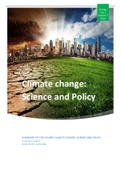
Climate change:
Science and Policy
SUMMARY OF THE COURSE CLIMATE CHANGE: SCIENCE AND POLICY
ELISE REUVEKAMP
EXAM DATE: 13/01/2021
,Content
Week 1..................................................................................................................................................... 2
Lecture: Climate change, human influence, Paris agreement, IPPC ................................................... 2
Reading material: Global climate change NASA .................................................................................. 5
Reading material: IPCC Special Report: Global warming of 1.5°C ....................................................... 7
Reading material: Carbon brief: clear on climate ............................................................................... 8
Week 2:.................................................................................................................................................. 13
Lecture: Science, carbo budget integrated assessment models ....................................................... 13
Reading material: IPCC report: Global warming of 1.5°C .................................................................. 20
Reading material: PBL report ............................................................................................................ 21
Week 3................................................................................................................................................... 22
Lecture: The IPCC special report on 1.5C and how we can accelerate systems transitions ............. 22
Reading material: SR1.5 4.2 Pathways compatible with 1.5°C ......................................................... 26
Reading material: SR1.5 4.4 Implementing Far-reaching and rapid change ..................................... 26
Week 4:.................................................................................................................................................. 27
Lecture: System transitions and carbon dioxide removal ................................................................. 27
Reading material: IPCC SR1.5 ............................................................................................................ 31
Week 5:.................................................................................................................................................. 33
Lecture: Dutch Climate Policy ........................................................................................................... 33
Reading material: PBL Report............................................................................................................ 36
Week 6:.................................................................................................................................................. 37
Lecture: Climate negotiations for real............................................................................................... 37
Week 7:.................................................................................................................................................. 40
Lecture: Rising risks ........................................................................................................................... 40
,Climate change: Science & Policy
Week 1
Lecture: Climate change, human influence, Paris agreement, IPPC
Human activity is changing the climate, because
1) Temperatures are rising
2) CO2 concentration (and other GHG’s) are rising steadily (which is
mainly due to the use of fossil fuels)
3) The atmosphere traps heat
4) Temperatures and GHG concentrations are strongly correlated
5) We can only simulate our current climate change if we include
anthropogenic GHG emissions (see figure).
3) UV radiation from the sun
arrives at the Earth’s surface,
loses energy and is converted
into infrared radiation. GHG
1) Temperature rise relative to 2) Atmospheric CO2 rising absorb infrared radiation
1961-1990 steadily (not UV) and lead to heating.
4) The current
climate can only
be simulated if
we include
5) CO2, CH4 (GHG) and anthropogenic
temperature are strongly factors (red)
correlated
Human-induced climate change is a global problem in terms of both causes and impacts and thus
international effort on climate change needed. Every country has its own story but most of them:
- Rely heavily on fossil fuels as their energy source
- Are not aware of their population’s vulnerability for climate change
- Climate change mitigation is often seen as a burden on the economy
- Politically unattractive: short-term cost for long-term gain
Intergovernmental panel on climate change (IPCC), reports neutral policy ideas and are thus not
prescriptive.
, International climate agreements over time
1992: the united nations conventions on climate change (UNFCCC)
- Ultimate target → stabilize GHG concentrations in the atmosphere (that prevents dangerous
anthropogenic interference with the climate system)
1997: Kyoto agreement (first climate treaty)
- Emissions reduction targets for rich countries
- Emissions trading
- Treaty not very effective in achieving emission reductions (China was not included)
2009: Copenhagen
- Goal was new climate treaty
- No agreement reached, summit failed
- But 2 degrees target was agreed
2015: COP 21 in Paris
- New climate treaty was urgently needed
- Countries contribute what they want: Intended nationally determined contributions (NDC)
before Paris negotiations.
- The negotiations included: Long-term temperature goals, Mitigation, Adaptation, Finance,
technology, capacity and Legal status
Structure of the deal in Paris:
- It involves National determined contributions (NDC), that include countries pledge
contributions such as absolute emission reduction targets or relative targets or some other
kind of effort. It can be based on future predictions or history measures
- The NDCs are monitored, reported and verified
- It also involves Enabling instruments (especially important for developing countries), such as
financing (Green Climate Fund) or national adaptation plans to help enable developing
countries to achieve their NDC’s
Conference of the Parties (COP) decided to adopt the Paris agreement, as it was noted that greater
emission reduction efforts were required than those associated with the NDCs to reach the target.
In the Paris agreement, it was stated that not 2°C (Copenhagen), but below 2°C must be strived or
even 1.5°C. To achieve a balance between anthropogenic emissions by sources and removals by sinks
of GHG in the second half of this century. A legally binding five year review by 55 parties is needed.
When we start later with climate change measures (in grey) you
see that we need in the end we need stronger negative
emissions of CO2 (removal), in order to reach the limit of global
warming to 1.5°C, which thus involves an overshoot.
If we don’t want to overshoot we should start acting fast. The
overshoot is unwanted (even if eventually similar result of
1.5°C), however we need to be able to achieve these negative
emissions and there can be irreversible impacts from this
overshoot (such as extinction of species/ coral reefs).
Year 3
Quarter 2
2020
Climate change:
Science and Policy
SUMMARY OF THE COURSE CLIMATE CHANGE: SCIENCE AND POLICY
ELISE REUVEKAMP
EXAM DATE: 13/01/2021
,Content
Week 1..................................................................................................................................................... 2
Lecture: Climate change, human influence, Paris agreement, IPPC ................................................... 2
Reading material: Global climate change NASA .................................................................................. 5
Reading material: IPCC Special Report: Global warming of 1.5°C ....................................................... 7
Reading material: Carbon brief: clear on climate ............................................................................... 8
Week 2:.................................................................................................................................................. 13
Lecture: Science, carbo budget integrated assessment models ....................................................... 13
Reading material: IPCC report: Global warming of 1.5°C .................................................................. 20
Reading material: PBL report ............................................................................................................ 21
Week 3................................................................................................................................................... 22
Lecture: The IPCC special report on 1.5C and how we can accelerate systems transitions ............. 22
Reading material: SR1.5 4.2 Pathways compatible with 1.5°C ......................................................... 26
Reading material: SR1.5 4.4 Implementing Far-reaching and rapid change ..................................... 26
Week 4:.................................................................................................................................................. 27
Lecture: System transitions and carbon dioxide removal ................................................................. 27
Reading material: IPCC SR1.5 ............................................................................................................ 31
Week 5:.................................................................................................................................................. 33
Lecture: Dutch Climate Policy ........................................................................................................... 33
Reading material: PBL Report............................................................................................................ 36
Week 6:.................................................................................................................................................. 37
Lecture: Climate negotiations for real............................................................................................... 37
Week 7:.................................................................................................................................................. 40
Lecture: Rising risks ........................................................................................................................... 40
,Climate change: Science & Policy
Week 1
Lecture: Climate change, human influence, Paris agreement, IPPC
Human activity is changing the climate, because
1) Temperatures are rising
2) CO2 concentration (and other GHG’s) are rising steadily (which is
mainly due to the use of fossil fuels)
3) The atmosphere traps heat
4) Temperatures and GHG concentrations are strongly correlated
5) We can only simulate our current climate change if we include
anthropogenic GHG emissions (see figure).
3) UV radiation from the sun
arrives at the Earth’s surface,
loses energy and is converted
into infrared radiation. GHG
1) Temperature rise relative to 2) Atmospheric CO2 rising absorb infrared radiation
1961-1990 steadily (not UV) and lead to heating.
4) The current
climate can only
be simulated if
we include
5) CO2, CH4 (GHG) and anthropogenic
temperature are strongly factors (red)
correlated
Human-induced climate change is a global problem in terms of both causes and impacts and thus
international effort on climate change needed. Every country has its own story but most of them:
- Rely heavily on fossil fuels as their energy source
- Are not aware of their population’s vulnerability for climate change
- Climate change mitigation is often seen as a burden on the economy
- Politically unattractive: short-term cost for long-term gain
Intergovernmental panel on climate change (IPCC), reports neutral policy ideas and are thus not
prescriptive.
, International climate agreements over time
1992: the united nations conventions on climate change (UNFCCC)
- Ultimate target → stabilize GHG concentrations in the atmosphere (that prevents dangerous
anthropogenic interference with the climate system)
1997: Kyoto agreement (first climate treaty)
- Emissions reduction targets for rich countries
- Emissions trading
- Treaty not very effective in achieving emission reductions (China was not included)
2009: Copenhagen
- Goal was new climate treaty
- No agreement reached, summit failed
- But 2 degrees target was agreed
2015: COP 21 in Paris
- New climate treaty was urgently needed
- Countries contribute what they want: Intended nationally determined contributions (NDC)
before Paris negotiations.
- The negotiations included: Long-term temperature goals, Mitigation, Adaptation, Finance,
technology, capacity and Legal status
Structure of the deal in Paris:
- It involves National determined contributions (NDC), that include countries pledge
contributions such as absolute emission reduction targets or relative targets or some other
kind of effort. It can be based on future predictions or history measures
- The NDCs are monitored, reported and verified
- It also involves Enabling instruments (especially important for developing countries), such as
financing (Green Climate Fund) or national adaptation plans to help enable developing
countries to achieve their NDC’s
Conference of the Parties (COP) decided to adopt the Paris agreement, as it was noted that greater
emission reduction efforts were required than those associated with the NDCs to reach the target.
In the Paris agreement, it was stated that not 2°C (Copenhagen), but below 2°C must be strived or
even 1.5°C. To achieve a balance between anthropogenic emissions by sources and removals by sinks
of GHG in the second half of this century. A legally binding five year review by 55 parties is needed.
When we start later with climate change measures (in grey) you
see that we need in the end we need stronger negative
emissions of CO2 (removal), in order to reach the limit of global
warming to 1.5°C, which thus involves an overshoot.
If we don’t want to overshoot we should start acting fast. The
overshoot is unwanted (even if eventually similar result of
1.5°C), however we need to be able to achieve these negative
emissions and there can be irreversible impacts from this
overshoot (such as extinction of species/ coral reefs).