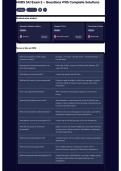
NURS 341 Exam 2 – Questions With Complete Solutions
Save
Students also studied
Sherpath: Diabetes Mellitus Chapter 21 Test Case Study 4 (Short
30 terms 24 terms 22 terms
jesssbee Preview kenanderson2017 Preview Brittany182
Terms in this set (195)
What is the sequence of the cardiac SA node → AV node → Bundle of His → Bundle branches →
conduction system? Purkinje fibers.
What are the components analyzed in an Heart rate, rhythm, P waves, PR interval, QRS duration, ST/T
ECG rhythm analysis? wave, QT interval.
What defines sinus tachycardia? A heart rate greater than 100 bpm.
What are the causes of sinus bradycardia? Excessive vagal stimulation, carotid sinus massage, vomiting,
suctioning, Valsalva maneuver, pain, hypoxia, and certain
medications.
How is sinus bradycardia treated? With IV atropine, transcutaneous pacing, or transvenous
pacing.
What is atrial fibrillation and its risks? Atrial fibrillation is characterized by a loss of atrial kick and
irregular rhythm, leading to blood pooling, increasing the risk
for emboli and heart failure.
What is the treatment for atrial fibrillation? Patients must be on anticoagulants and usually a dysrhythmia
medication; treatment may include cardioversion.
What defines ventricular tachycardia (VT)? A heart rate of 140-180 bpm that can be life-threatening.
What are the causes of ventricular Digoxin toxicity, electrolyte imbalances, myocardial infarction,
tachycardia? coronary artery disease, genetics, hypokalemia, hypotension,
and hypomagnesemia.
What is ventricular fibrillation (VF)? A chaotic rhythm with no cardiac output, requiring emergency
defibrillation.
What is ventricular asystole (VA)? The complete absence of ventricular rhythm, with no
electrical impulse, requiring CPR and airway maintenance.
What is supraventricular tachycardia (SVT)? A rapid heart rate of 100-280 bpm occurring in healthy young
individuals, often treated with vagal maneuvers and
medications.
, What is pulseless electrical activity (PEA)? A condition where electrical conduction occurs, but the
myocardium does not pump effectively.
What distinguishes atrial fibrillation from Atrial fibrillation shows an absence of normal P waves and an
normal sinus rhythm on an ECG? irregular ventricular response.
Why are patients with atrial fibrillation at risk Blood pools in the atria due to ineffective atrial contraction,
for embolus formation? increasing the risk of clot formation.
What is the first nursing action for a patient If alert, try a vagal maneuver while preparing to administer IV
presenting with SVT and hypotension? adenosine and check LOC.
How do premature ventricular complexes PVCs originate in the ventricles and show wide, bizarre QRS
(PVCs) differ from premature atrial complexes without P waves, while PACs originate in the atria
complexes (PACs)? and show early P waves with regular QRS.
Which rhythm requires immediate Ventricular fibrillation requires immediate defibrillation to
defibrillation: VT or VF? prevent death.
What defines hypertension? Sustained blood pressure of ≥140/90 mmHg for those under
60 years, or ≥150/90 mmHg for those 60 years and older.
What are major risk factors for Obesity, smoking, stress, genetics, chronic kidney disease, and
hypertension? hyperlipidemia.
What complications can arise from Arterial damage and hypertensive crisis, which is a medical
hypertension? emergency with BP readings >180/120 mmHg.
What are the four systems that regulate The arterial baroreceptor system, regulation of body fluid
blood pressure? volume, the RAAS, and vascular autoregulation.
What symptoms might indicate a Morning headaches, blurred vision, dyspnea, and elevated BP
hypertensive crisis? readings of 180/120 mmHg or greater.
Why is adherence to antihypertensive Patients may experience troublesome side effects or feel well
medication often difficult? and stop taking them.
What is atherosclerosis? Plaque buildup in arteries, a leading risk factor for
cardiovascular disease (CVD).
What are the symptoms of Peripheral Diminished pulses, hair loss, cool extremities, and may include
Arterial Disease (PAD)? sores or wounds that won't heal.
What is an abdominal aortic aneurysm A pulsating abdominal mass with a risk of rupture.
(AAA) and its risk?
What is Virchow's triad in the context of Stasis, endothelial injury, and hypercoagulability.
DVT?
What are the '6 Ps' of arterial insufficiency? Pain, pallor, pulselessness, paresthesia, paralysis,
poikilothermia (coolness).
What is the difference between Arteriosclerosis is the thickening or hardening of arterial walls,
arteriosclerosis and atherosclerosis? while atherosclerosis involves plaque formation within the
arterial wall.
Save
Students also studied
Sherpath: Diabetes Mellitus Chapter 21 Test Case Study 4 (Short
30 terms 24 terms 22 terms
jesssbee Preview kenanderson2017 Preview Brittany182
Terms in this set (195)
What is the sequence of the cardiac SA node → AV node → Bundle of His → Bundle branches →
conduction system? Purkinje fibers.
What are the components analyzed in an Heart rate, rhythm, P waves, PR interval, QRS duration, ST/T
ECG rhythm analysis? wave, QT interval.
What defines sinus tachycardia? A heart rate greater than 100 bpm.
What are the causes of sinus bradycardia? Excessive vagal stimulation, carotid sinus massage, vomiting,
suctioning, Valsalva maneuver, pain, hypoxia, and certain
medications.
How is sinus bradycardia treated? With IV atropine, transcutaneous pacing, or transvenous
pacing.
What is atrial fibrillation and its risks? Atrial fibrillation is characterized by a loss of atrial kick and
irregular rhythm, leading to blood pooling, increasing the risk
for emboli and heart failure.
What is the treatment for atrial fibrillation? Patients must be on anticoagulants and usually a dysrhythmia
medication; treatment may include cardioversion.
What defines ventricular tachycardia (VT)? A heart rate of 140-180 bpm that can be life-threatening.
What are the causes of ventricular Digoxin toxicity, electrolyte imbalances, myocardial infarction,
tachycardia? coronary artery disease, genetics, hypokalemia, hypotension,
and hypomagnesemia.
What is ventricular fibrillation (VF)? A chaotic rhythm with no cardiac output, requiring emergency
defibrillation.
What is ventricular asystole (VA)? The complete absence of ventricular rhythm, with no
electrical impulse, requiring CPR and airway maintenance.
What is supraventricular tachycardia (SVT)? A rapid heart rate of 100-280 bpm occurring in healthy young
individuals, often treated with vagal maneuvers and
medications.
, What is pulseless electrical activity (PEA)? A condition where electrical conduction occurs, but the
myocardium does not pump effectively.
What distinguishes atrial fibrillation from Atrial fibrillation shows an absence of normal P waves and an
normal sinus rhythm on an ECG? irregular ventricular response.
Why are patients with atrial fibrillation at risk Blood pools in the atria due to ineffective atrial contraction,
for embolus formation? increasing the risk of clot formation.
What is the first nursing action for a patient If alert, try a vagal maneuver while preparing to administer IV
presenting with SVT and hypotension? adenosine and check LOC.
How do premature ventricular complexes PVCs originate in the ventricles and show wide, bizarre QRS
(PVCs) differ from premature atrial complexes without P waves, while PACs originate in the atria
complexes (PACs)? and show early P waves with regular QRS.
Which rhythm requires immediate Ventricular fibrillation requires immediate defibrillation to
defibrillation: VT or VF? prevent death.
What defines hypertension? Sustained blood pressure of ≥140/90 mmHg for those under
60 years, or ≥150/90 mmHg for those 60 years and older.
What are major risk factors for Obesity, smoking, stress, genetics, chronic kidney disease, and
hypertension? hyperlipidemia.
What complications can arise from Arterial damage and hypertensive crisis, which is a medical
hypertension? emergency with BP readings >180/120 mmHg.
What are the four systems that regulate The arterial baroreceptor system, regulation of body fluid
blood pressure? volume, the RAAS, and vascular autoregulation.
What symptoms might indicate a Morning headaches, blurred vision, dyspnea, and elevated BP
hypertensive crisis? readings of 180/120 mmHg or greater.
Why is adherence to antihypertensive Patients may experience troublesome side effects or feel well
medication often difficult? and stop taking them.
What is atherosclerosis? Plaque buildup in arteries, a leading risk factor for
cardiovascular disease (CVD).
What are the symptoms of Peripheral Diminished pulses, hair loss, cool extremities, and may include
Arterial Disease (PAD)? sores or wounds that won't heal.
What is an abdominal aortic aneurysm A pulsating abdominal mass with a risk of rupture.
(AAA) and its risk?
What is Virchow's triad in the context of Stasis, endothelial injury, and hypercoagulability.
DVT?
What are the '6 Ps' of arterial insufficiency? Pain, pallor, pulselessness, paresthesia, paralysis,
poikilothermia (coolness).
What is the difference between Arteriosclerosis is the thickening or hardening of arterial walls,
arteriosclerosis and atherosclerosis? while atherosclerosis involves plaque formation within the
arterial wall.