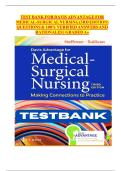
TEST BANK FOR DAVIS ADVANTAGE FOR
MEDICAL‑SURGICAL NURSING (3RD EDITION)
QUESTIONS & 100% VERIFIED ANSWERS AND
RATIONALES | GRADED A+
, TABLE OF CONTENTS
Part 1: Foundations of Nursing Practice
Chapter 1: Introduction to Medical-Surgical Nursing
Chapter 2: Nursing Process and Clinical Judgment
Chapter 3: Health Assessment
Chapter 4: Nursing Care Across the Lifespan
Chapter 5: Legal and Ethical Issues in Nursing
Chapter 6: Evidence-Based Practice and Nursing Research
Chapter 7: Safety and Infection Control
Part 2: Adult Health: Physiologic Foundations
Chapter 8: Fluid, Electrolyte, and Acid-Base Balance
Chapter 9: Hemodynamic and Cardiovascular Function
Chapter 10: Respiratory Function
Chapter 11: Hematologic Function
Chapter 12: Immunologic Function
Chapter 13: Endocrine Function
Chapter 14: Neurologic Function
Chapter 15: Musculoskeletal Function
Chapter 16: Integumentary Function
Chapter 17: Sensory Function
Chapter 18: Nutrition and Metabolism
Part 3: Adult Health: Disorders of Systems
Chapter 19: Cardiovascular Disorders
Chapter 20: Hypertension and Shock
Chapter 21: Heart Failure and Cardiomyopathy
Chapter 22: Coronary Artery Disease and Myocardial Infarction
Chapter 23: Peripheral Vascular Disorders
Chapter 24: Respiratory Disorders
Chapter 25: Pulmonary Infections
Chapter 26: Chronic Pulmonary Disorders
Chapter 27: Gastrointestinal Disorders
Chapter 28: Hepatic and Pancreatic Disorders
Chapter 29: Biliary Disorders
Chapter 30: Renal and Urinary Disorders
Chapter 31: Fluid and Electrolyte Imbalances
Chapter 32: Endocrine Disorders
Chapter 33: Diabetes Mellitus
Chapter 34: Thyroid and Parathyroid Disorders
Chapter 35: Adrenal Disorders
Chapter 36: Reproductive System Disorders
, Chapter 37: Musculoskeletal Disorders
Chapter 38: Neurologic Disorders
Chapter 39: Stroke and Cerebrovascular Disorders
Chapter 40: Seizure Disorders
Chapter 41: Head Injury and Spinal Cord Injury
Chapter 42: Pain and Pain Management
Chapter 43: Integumentary Disorders
Chapter 44: Burns and Wound Care
Chapter 45: Sensory Disorders: Eye
Chapter 46: Sensory Disorders: Ear
Part 4: Perioperative, Critical, and Emergency Care
Chapter 47: Preoperative Nursing
Chapter 48: Intraoperative Nursing
Chapter 49: Postoperative Nursing
Chapter 50: Shock and Multisystem Failure
Chapter 51: Trauma Nursing
Chapter 52: Emergency Nursing
Chapter 53: Critical Care Nursing
Part 5: Special Populations and Considerations
Chapter 54: Oncology Nursing
Chapter 55: Hematologic Cancers
Chapter 56: Solid Tumors
Chapter 57: Palliative Care and End-of-Life Nursing
Chapter 58: Geriatric Nursing
Chapter 59: Cognitive and Neurodegenerative Disorders
Chapter 60: Psychiatric and Mental Health Considerations
Chapter 61: Substance Use Disorders
Chapter 62: Pain and Symptom Management in Special Populations
Chapter 63: Rehabilitation and Restorative Nursing
Chapter 64: Complementary and Alternative Therapies
Chapter 65: Patient Education and Health Promotion
Chapter 66: Community and Public Health Nursing
Chapter 67: Cultural Considerations in Nursing Care
Chapter 68: Leadership and Management in Nursing
Chapter 69: Quality Improvement and Patient Safety
Chapter 70: Informatics and Technology in Nursing
Chapter 71: Professional Development and Lifelong Learning
, CHAPTER 1: INTRODUCTION TO MEDICAL-SURGICAL NURSING
1. Which of the following best describes the role of a medical-surgical nurse?
A. Focuses only on surgical patients in the hospital
B. Provides comprehensive care for adults with acute and chronic illnesses
C. Primarily administers medications and performs procedures
D. Provides care exclusively in outpatient settings
Answer: B
Rationale: Medical-surgical nurses provide holistic care for adult patients with a
variety of acute and chronic health conditions in multiple settings, not just surgical
or outpatient care.
2. What is the primary goal of medical-surgical nursing?
A. To prevent disease
B. To promote recovery and enhance quality of life
C. To replace the physician in care decisions
D. To perform diagnostic tests
Answer: B
Rationale: The primary goal is to help patients recover from illness or surgery and
improve their overall well-being and quality of life.
3. Which competency is essential for medical-surgical nurses?
A. Advanced surgical techniques
B. Critical thinking and clinical judgment
C. Research and publication skills
D. Only technical skills such as IV insertion
Answer: B
Rationale: Critical thinking and clinical judgment are essential because medical-
surgical nurses care for patients with complex and evolving conditions, requiring
assessment, prioritization, and decision-making.
MEDICAL‑SURGICAL NURSING (3RD EDITION)
QUESTIONS & 100% VERIFIED ANSWERS AND
RATIONALES | GRADED A+
, TABLE OF CONTENTS
Part 1: Foundations of Nursing Practice
Chapter 1: Introduction to Medical-Surgical Nursing
Chapter 2: Nursing Process and Clinical Judgment
Chapter 3: Health Assessment
Chapter 4: Nursing Care Across the Lifespan
Chapter 5: Legal and Ethical Issues in Nursing
Chapter 6: Evidence-Based Practice and Nursing Research
Chapter 7: Safety and Infection Control
Part 2: Adult Health: Physiologic Foundations
Chapter 8: Fluid, Electrolyte, and Acid-Base Balance
Chapter 9: Hemodynamic and Cardiovascular Function
Chapter 10: Respiratory Function
Chapter 11: Hematologic Function
Chapter 12: Immunologic Function
Chapter 13: Endocrine Function
Chapter 14: Neurologic Function
Chapter 15: Musculoskeletal Function
Chapter 16: Integumentary Function
Chapter 17: Sensory Function
Chapter 18: Nutrition and Metabolism
Part 3: Adult Health: Disorders of Systems
Chapter 19: Cardiovascular Disorders
Chapter 20: Hypertension and Shock
Chapter 21: Heart Failure and Cardiomyopathy
Chapter 22: Coronary Artery Disease and Myocardial Infarction
Chapter 23: Peripheral Vascular Disorders
Chapter 24: Respiratory Disorders
Chapter 25: Pulmonary Infections
Chapter 26: Chronic Pulmonary Disorders
Chapter 27: Gastrointestinal Disorders
Chapter 28: Hepatic and Pancreatic Disorders
Chapter 29: Biliary Disorders
Chapter 30: Renal and Urinary Disorders
Chapter 31: Fluid and Electrolyte Imbalances
Chapter 32: Endocrine Disorders
Chapter 33: Diabetes Mellitus
Chapter 34: Thyroid and Parathyroid Disorders
Chapter 35: Adrenal Disorders
Chapter 36: Reproductive System Disorders
, Chapter 37: Musculoskeletal Disorders
Chapter 38: Neurologic Disorders
Chapter 39: Stroke and Cerebrovascular Disorders
Chapter 40: Seizure Disorders
Chapter 41: Head Injury and Spinal Cord Injury
Chapter 42: Pain and Pain Management
Chapter 43: Integumentary Disorders
Chapter 44: Burns and Wound Care
Chapter 45: Sensory Disorders: Eye
Chapter 46: Sensory Disorders: Ear
Part 4: Perioperative, Critical, and Emergency Care
Chapter 47: Preoperative Nursing
Chapter 48: Intraoperative Nursing
Chapter 49: Postoperative Nursing
Chapter 50: Shock and Multisystem Failure
Chapter 51: Trauma Nursing
Chapter 52: Emergency Nursing
Chapter 53: Critical Care Nursing
Part 5: Special Populations and Considerations
Chapter 54: Oncology Nursing
Chapter 55: Hematologic Cancers
Chapter 56: Solid Tumors
Chapter 57: Palliative Care and End-of-Life Nursing
Chapter 58: Geriatric Nursing
Chapter 59: Cognitive and Neurodegenerative Disorders
Chapter 60: Psychiatric and Mental Health Considerations
Chapter 61: Substance Use Disorders
Chapter 62: Pain and Symptom Management in Special Populations
Chapter 63: Rehabilitation and Restorative Nursing
Chapter 64: Complementary and Alternative Therapies
Chapter 65: Patient Education and Health Promotion
Chapter 66: Community and Public Health Nursing
Chapter 67: Cultural Considerations in Nursing Care
Chapter 68: Leadership and Management in Nursing
Chapter 69: Quality Improvement and Patient Safety
Chapter 70: Informatics and Technology in Nursing
Chapter 71: Professional Development and Lifelong Learning
, CHAPTER 1: INTRODUCTION TO MEDICAL-SURGICAL NURSING
1. Which of the following best describes the role of a medical-surgical nurse?
A. Focuses only on surgical patients in the hospital
B. Provides comprehensive care for adults with acute and chronic illnesses
C. Primarily administers medications and performs procedures
D. Provides care exclusively in outpatient settings
Answer: B
Rationale: Medical-surgical nurses provide holistic care for adult patients with a
variety of acute and chronic health conditions in multiple settings, not just surgical
or outpatient care.
2. What is the primary goal of medical-surgical nursing?
A. To prevent disease
B. To promote recovery and enhance quality of life
C. To replace the physician in care decisions
D. To perform diagnostic tests
Answer: B
Rationale: The primary goal is to help patients recover from illness or surgery and
improve their overall well-being and quality of life.
3. Which competency is essential for medical-surgical nurses?
A. Advanced surgical techniques
B. Critical thinking and clinical judgment
C. Research and publication skills
D. Only technical skills such as IV insertion
Answer: B
Rationale: Critical thinking and clinical judgment are essential because medical-
surgical nurses care for patients with complex and evolving conditions, requiring
assessment, prioritization, and decision-making.