NUR 211 Midterm Exam Study Guide: Cardiovascular & Respiratory Study Guid
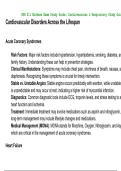
Cardiovascular Disorders Across the Lifespan
Acute Coronary Syndromes
Risk Factors: Major risk factors include hypertension, hyperlipidemia, smoking, diabetes, an
family history. Understanding these can help in prevention strategies.
Clinical Manifestations: Symptoms may include chest pain, shortness of breath, nausea, an
diaphoresis. Recognizing these symptoms is crucial for timely intervention.
Stable vs. Unstable Angina: Stable angina occurs predictably with exertion, while unstable
is unpredictable and may occur at rest, indicating a higher risk of myocardial infarction.
Diagnostics: Common diagnostic tools include ECG, troponin levels, and stress testing to a
heart function and ischemia.
Treatment: Immediate treatment may involve medications such as aspirin and nitroglycerin,
long-term management may include lifestyle changes and medications.
Medical Management (MONA): MONA stands for Morphine, Oxygen, Nitroglycerin, and Asp
which are critical in the management of acute coronary syndromes.
Heart Failure
, NUR 211 Midterm Exam Study Guide: Cardiovascular & Respiratory Study Guid
Clinical Manifestations: Symptoms vary by type; left-sided heart failure may present with
pulmonary congestion, while right-sided heart failure may cause peripheral edema.
Age-related Assessment Findings: Assessment findings differ across ages; for example, to
may present with failure to thrive, while geriatric patients may show confusion or fatigue.
Diagnostics: Key diagnostic tools include echocardiograms, BNP levels, and chest X-rays to
evaluate heart function and fluid status.
Treatment: Treatment may involve diuretics, ACE inhibitors, and lifestyle modifications to ma
symptoms and improve quality of life.
Medical Management: Ongoing management includes monitoring for exacerbations and ad
medications as needed.
Patient Education: Educating patients on recognizing symptoms of worsening heart failure a
importance of adherence to medication regimens.
Congenital Heart Disease
Clinical Manifestations: Symptoms can include cyanosis, difficulty breathing, and poor weig
gain in infants. Early recognition is vital for management.
Patient Assessment: Comprehensive assessment includes auscultation for murmurs, monit
vital signs, and assessing growth patterns.
Common Conditions: Conditions such as Atrial Septal Defect (ASD), Ventricular Septal Def
(VSD), and Tetralogy of Fallot require specific management strategies.
Cardiovascular Disorders Across the Lifespan
Acute Coronary Syndromes
Risk Factors: Major risk factors include hypertension, hyperlipidemia, smoking, diabetes, an
family history. Understanding these can help in prevention strategies.
Clinical Manifestations: Symptoms may include chest pain, shortness of breath, nausea, an
diaphoresis. Recognizing these symptoms is crucial for timely intervention.
Stable vs. Unstable Angina: Stable angina occurs predictably with exertion, while unstable
is unpredictable and may occur at rest, indicating a higher risk of myocardial infarction.
Diagnostics: Common diagnostic tools include ECG, troponin levels, and stress testing to a
heart function and ischemia.
Treatment: Immediate treatment may involve medications such as aspirin and nitroglycerin,
long-term management may include lifestyle changes and medications.
Medical Management (MONA): MONA stands for Morphine, Oxygen, Nitroglycerin, and Asp
which are critical in the management of acute coronary syndromes.
Heart Failure
, NUR 211 Midterm Exam Study Guide: Cardiovascular & Respiratory Study Guid
Clinical Manifestations: Symptoms vary by type; left-sided heart failure may present with
pulmonary congestion, while right-sided heart failure may cause peripheral edema.
Age-related Assessment Findings: Assessment findings differ across ages; for example, to
may present with failure to thrive, while geriatric patients may show confusion or fatigue.
Diagnostics: Key diagnostic tools include echocardiograms, BNP levels, and chest X-rays to
evaluate heart function and fluid status.
Treatment: Treatment may involve diuretics, ACE inhibitors, and lifestyle modifications to ma
symptoms and improve quality of life.
Medical Management: Ongoing management includes monitoring for exacerbations and ad
medications as needed.
Patient Education: Educating patients on recognizing symptoms of worsening heart failure a
importance of adherence to medication regimens.
Congenital Heart Disease
Clinical Manifestations: Symptoms can include cyanosis, difficulty breathing, and poor weig
gain in infants. Early recognition is vital for management.
Patient Assessment: Comprehensive assessment includes auscultation for murmurs, monit
vital signs, and assessing growth patterns.
Common Conditions: Conditions such as Atrial Septal Defect (ASD), Ventricular Septal Def
(VSD), and Tetralogy of Fallot require specific management strategies.