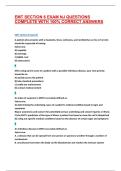
EMT SECTION 6 EXAM NJ QUESTIONS
COMPLETE WITH 100% CORRECT ANSWERS
EMT Section 6 Exam NJ
A patient who presents with a headache, fever, confusion, and red blotches on his or her skin
should be suspected of having:
Select one:
A) hepatitis
B) meningis
C) MERS- CoV
D) tuberculosis
B
After sizing up the scene of a patient with a possible infectious disease, your next priority
should be to:
A) quickly access the patient
B) take standard precautions
C) notify law enforcement
D) contact medical control
B
An index of suspicion is MOST accurately defined as:
Select one:
A) determining the underlying cause of a patient's medical condition based in signs and
symptoms
B)your awareness and concern for potentially serious underlying and unseen injuries or illness
C) the EMT's prediction of the type of illness a patient has based on how the call is dispatched
D) ruling out specific medical conditions based on the absence of certain signs and symptoms
B
An infectious disease is MOST accurately defined as:
Select one:
A. a disease that can be spread from one person or species to another through a number of
mechanisms.
B. any disease that enters the body via the bloodstream and renders the immune system
,nonfunctional.
C. a medical condition caused by the growth and spread of small, harmful organisms within
the body.
D. the invasion of the human body by a bacterium that cannot be destroyed by antibiotics or
other drugs.
C
Factors that increase the risk for developing methicillin-resistant Staphylococcus aureus
(MRSA) include:
Select one:
A. a history of a respiratory illness within the past 6 to 8 weeks.
B. prolonged hospitalization, especially in an intensive care unit.
C. failure to be vaccinated against any strain of hepatitis.
D. prior exposure to Mycobacterium tuberculosis.
B
Hepatitis B is more virulent than hepatitis C, which means that it:
Select one:
A. is less resistant to treatment.
B. has a greater ability to produce disease.
C. is a more contagious type of disease.
D. leads to chronic infection after exposure.
B
In addition to obtaining a SAMPLE history and asking questions related to the chief complaint,
what else should you specifically inquire about when assessing a patient with & potentially
infectious disease?
Select one:
A. HIV status
B. Drug allergies
C. Sexual practices
D. Recent travel
D
In contrast to the assessment of a trauma patient, assessment of a medical patient:
Select one:
A. is not as complex for the EMT because most patients typically present with classic
symptoms.
, B. requires a thorough head-to-toe exam that involves a detailed assessment of all body
systems.
C. is focused on the nature of illness, the patient's chief complaint, and his or her symptoms.
D. almost exclusively focuses on physical signs that indicate the patient is experiencing a
problem.
C
It is especially important to assess pulse, sensation, and movement in all extremities as well
as pupillary reactions in patients with a suspected
problem.
Select one:
A. respiratory
B. endocrine
C. neurologic
D. cardiac
C
Patients with tuberculosis pose the greatest risk for transmitting the disease when they:
Select one:
A. vomit.
B. cough.
C. are bleeding.
D. have a fever.
B
Reassessment of a patient with a medical complaint should begin by: Select one:
A. reassessing the nature of illness.
B. reviewing all treatment performed.
C. repeating the primary assessment.
D. taking another set of vital signs.
C
The BEST way to prevent infection from whooping cough is to:
Select one:
A. routinely place a surgical mask on all respiratory patients.
B. ask all patients if they have recently traveled abroad.
C. get vaccinated against diphtheria, tetanus, and pertussis.
D. wear a HEPA mask when treating any respiratory patient.
COMPLETE WITH 100% CORRECT ANSWERS
EMT Section 6 Exam NJ
A patient who presents with a headache, fever, confusion, and red blotches on his or her skin
should be suspected of having:
Select one:
A) hepatitis
B) meningis
C) MERS- CoV
D) tuberculosis
B
After sizing up the scene of a patient with a possible infectious disease, your next priority
should be to:
A) quickly access the patient
B) take standard precautions
C) notify law enforcement
D) contact medical control
B
An index of suspicion is MOST accurately defined as:
Select one:
A) determining the underlying cause of a patient's medical condition based in signs and
symptoms
B)your awareness and concern for potentially serious underlying and unseen injuries or illness
C) the EMT's prediction of the type of illness a patient has based on how the call is dispatched
D) ruling out specific medical conditions based on the absence of certain signs and symptoms
B
An infectious disease is MOST accurately defined as:
Select one:
A. a disease that can be spread from one person or species to another through a number of
mechanisms.
B. any disease that enters the body via the bloodstream and renders the immune system
,nonfunctional.
C. a medical condition caused by the growth and spread of small, harmful organisms within
the body.
D. the invasion of the human body by a bacterium that cannot be destroyed by antibiotics or
other drugs.
C
Factors that increase the risk for developing methicillin-resistant Staphylococcus aureus
(MRSA) include:
Select one:
A. a history of a respiratory illness within the past 6 to 8 weeks.
B. prolonged hospitalization, especially in an intensive care unit.
C. failure to be vaccinated against any strain of hepatitis.
D. prior exposure to Mycobacterium tuberculosis.
B
Hepatitis B is more virulent than hepatitis C, which means that it:
Select one:
A. is less resistant to treatment.
B. has a greater ability to produce disease.
C. is a more contagious type of disease.
D. leads to chronic infection after exposure.
B
In addition to obtaining a SAMPLE history and asking questions related to the chief complaint,
what else should you specifically inquire about when assessing a patient with & potentially
infectious disease?
Select one:
A. HIV status
B. Drug allergies
C. Sexual practices
D. Recent travel
D
In contrast to the assessment of a trauma patient, assessment of a medical patient:
Select one:
A. is not as complex for the EMT because most patients typically present with classic
symptoms.
, B. requires a thorough head-to-toe exam that involves a detailed assessment of all body
systems.
C. is focused on the nature of illness, the patient's chief complaint, and his or her symptoms.
D. almost exclusively focuses on physical signs that indicate the patient is experiencing a
problem.
C
It is especially important to assess pulse, sensation, and movement in all extremities as well
as pupillary reactions in patients with a suspected
problem.
Select one:
A. respiratory
B. endocrine
C. neurologic
D. cardiac
C
Patients with tuberculosis pose the greatest risk for transmitting the disease when they:
Select one:
A. vomit.
B. cough.
C. are bleeding.
D. have a fever.
B
Reassessment of a patient with a medical complaint should begin by: Select one:
A. reassessing the nature of illness.
B. reviewing all treatment performed.
C. repeating the primary assessment.
D. taking another set of vital signs.
C
The BEST way to prevent infection from whooping cough is to:
Select one:
A. routinely place a surgical mask on all respiratory patients.
B. ask all patients if they have recently traveled abroad.
C. get vaccinated against diphtheria, tetanus, and pertussis.
D. wear a HEPA mask when treating any respiratory patient.