Week 1: Introduction: Overview & New Wars Theory
What is conflict?
● European immigration crisis: different interests
● Brexit: different perspectives
● Syria civil war; WW1 and WW2; Shia and sunni muslims; Iran and the US; War on terror;
Border disputes; Gang violence / cartel wars; Conflicts between governments and citizens;
Colonialism; Balkans
Conflict is a very broad and vague term
● Domestic, national vs international issues
● Not necessarily violent
Conflict: the pursuit of incompatible goals by different actors
Bosnia Sarajevo siege
● Hills outside of city
● Many bosnian muslims living in city, serbs living outside of the city
● Shooting into city
● Sniper alleyways
Conflict analysis models
● Models to analyse/understand conflicts
● Difference in focus
● Always a simplified version of reality
5 models: Levy, Jeong, Galfung, DFID, Azar
New and Old Wars
● Kaldor: characteristics that distinguish new wars from old wars
● Old wars:
○ 1648: end of 30 year war and 80 year war. Came to an end with two peace
agreements signed in Westphalia. This started the emergence of the international
system of states. These peace agreements included a set of regulations to curb
anarchy, this covered territorial integrity, sovereignty, and equality. These still
dominate international relations today. States were no longer allowed to mingle in
the affairs of other states.
■ Agreed upon borders
■ Within these borders people were sovereign
■ States were equal
○ The emergence of states:
■ The main (re)distributor of welfare and social justice
■ As the political representation of its constituents
■ The main provider of security
○ Charles Tilly: protection rackets
■ Protection: Eurocentric theory: states are basically protection rackets -> you
pay taxes, and in return you get police, judiciary system etc… As a citizens
you are obligated to do this
■ War made states: conflict over resources between polities.
● State institutions, centralisation , taxation.
● Innovations: expensive: big politics remained
1 of 19
, ○ Max weber (20th century): an entity is a state “if and insofar as its administration
staff successfully upholds a claim on the ‘monopoly of the legitimate use of physical
force’ in the enforcement of its order”
○ Ibn Khaldun (14th century):...
○ For a long time, armed conflict (war) has been waged by states (or state actors). It
has increasingly been regulated, but
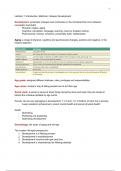
● Old (Clausewitzian) wars
■ Actors: national armies or state-financed rebels/mercenaries
■ Motivation:
■ Spatial context:
■ Human impact (victims):
■ Economics:
■ Time frame:
● New wars:
○ Actors: more non-state actors
○ Motivation: identity politics, religion, personal financial gain
○ Spatial context: everywhere, guerilla warfare
○ Human impact (victims): majority civilians
○ Economics: warlords, illicit trade, smuggling
○ Time frame: open-ended
○ Means: more advanced versus more rudimentary
Criticism of ‘new wars’ thesis
● Are new wars really ‘new’?
● Are new wars
New Wars
● But, after criticism, Kaldor acknowledges
● ‘Contest of wills <-> ‘mutual enterprise’
● Sometimes actors do not want to win the conflict, but just have it continue because they
benefit from it in some way
● Balkan wars ->
● Greed or Grievance (Paul Collier)
● Ethnic Entrepreneurs (Walter Kemp)
Added value?
● Different theories and models provide scholars, students, practitioners with different
insights
● Theory influencers practise and vice versa
Seminar 1
QARQs
● Hand in before lecture
● Most important quote
● Give argument of text
● Draw a relation between different texts we have already read -> this class or other classes
2 of 19
, ● Come up with a questions
● 1 A4
● 6 QARQs in total
● Not graded
Old wars
● Battles, soldiers belonging to state armies, clear battlefields
● Main actors are states, so entities that have a monopoly on force
● Geopolitics is what motivates these wars
● Funded by taxes
● Clear winner at the end of the war
● No-man's land concept
New wars
● Civilian victims: sometimes actors target civilians, or sometimes civilians are part of the
opposing forces
● At least one, or only non-state actors involved
● This blurs the lines between wars and crimes
● Funding is different -> crime
● Urban battles, no real front lines
● Kaldor: long wars that just keep going, there is no real winner, the only way to end a
conflict is through mediation
Charles Tilly: states are protection rackets -> state provides protection at a certain price
● If you don’t pay your taxes you go to jail
● State is like organised crime but with the benefit of legitimacy
● Borders are respected by others, internal monopoly on violence
● States make wars and wars make states
○ Without wars there is no need for a state since this is what protects the people
within its boundaries
○ 1648: Westphalian Treaties -> new idea of international system of states in which
all states were meant to be equal and have territorial sovereignty
○ Principle of non-interference
○ Before we had states, war enabled state-formation because the external enemy
slowly drove people to organise themselves more effectively
○ Eurocentric point of view
Clausewitzian wars
● Actors: national armies or state-financed mercenaries
● Motivation: geopolitical (security, guardian borders), expanding territory, ideology,
resources to support public / growth, strengthening war economy
● Spatial context: battlefield (trenches)
● Human impact: mainly soldiers
● Economics: paid for by tax money
● Time frame: declaration of war, conflict, military defeat, peace
New wars
● Actors: more non-state actors
● Motivation: identity politics, religion, personal financial gain
● Spatial context: everywhere, guerilla warfare
● Human impact: roughly 90% civilians
3 of 19
What is conflict?
● European immigration crisis: different interests
● Brexit: different perspectives
● Syria civil war; WW1 and WW2; Shia and sunni muslims; Iran and the US; War on terror;
Border disputes; Gang violence / cartel wars; Conflicts between governments and citizens;
Colonialism; Balkans
Conflict is a very broad and vague term
● Domestic, national vs international issues
● Not necessarily violent
Conflict: the pursuit of incompatible goals by different actors
Bosnia Sarajevo siege
● Hills outside of city
● Many bosnian muslims living in city, serbs living outside of the city
● Shooting into city
● Sniper alleyways
Conflict analysis models
● Models to analyse/understand conflicts
● Difference in focus
● Always a simplified version of reality
5 models: Levy, Jeong, Galfung, DFID, Azar
New and Old Wars
● Kaldor: characteristics that distinguish new wars from old wars
● Old wars:
○ 1648: end of 30 year war and 80 year war. Came to an end with two peace
agreements signed in Westphalia. This started the emergence of the international
system of states. These peace agreements included a set of regulations to curb
anarchy, this covered territorial integrity, sovereignty, and equality. These still
dominate international relations today. States were no longer allowed to mingle in
the affairs of other states.
■ Agreed upon borders
■ Within these borders people were sovereign
■ States were equal
○ The emergence of states:
■ The main (re)distributor of welfare and social justice
■ As the political representation of its constituents
■ The main provider of security
○ Charles Tilly: protection rackets
■ Protection: Eurocentric theory: states are basically protection rackets -> you
pay taxes, and in return you get police, judiciary system etc… As a citizens
you are obligated to do this
■ War made states: conflict over resources between polities.
● State institutions, centralisation , taxation.
● Innovations: expensive: big politics remained
1 of 19
, ○ Max weber (20th century): an entity is a state “if and insofar as its administration
staff successfully upholds a claim on the ‘monopoly of the legitimate use of physical
force’ in the enforcement of its order”
○ Ibn Khaldun (14th century):...
○ For a long time, armed conflict (war) has been waged by states (or state actors). It
has increasingly been regulated, but
● Old (Clausewitzian) wars
■ Actors: national armies or state-financed rebels/mercenaries
■ Motivation:
■ Spatial context:
■ Human impact (victims):
■ Economics:
■ Time frame:
● New wars:
○ Actors: more non-state actors
○ Motivation: identity politics, religion, personal financial gain
○ Spatial context: everywhere, guerilla warfare
○ Human impact (victims): majority civilians
○ Economics: warlords, illicit trade, smuggling
○ Time frame: open-ended
○ Means: more advanced versus more rudimentary
Criticism of ‘new wars’ thesis
● Are new wars really ‘new’?
● Are new wars
New Wars
● But, after criticism, Kaldor acknowledges
● ‘Contest of wills <-> ‘mutual enterprise’
● Sometimes actors do not want to win the conflict, but just have it continue because they
benefit from it in some way
● Balkan wars ->
● Greed or Grievance (Paul Collier)
● Ethnic Entrepreneurs (Walter Kemp)
Added value?
● Different theories and models provide scholars, students, practitioners with different
insights
● Theory influencers practise and vice versa
Seminar 1
QARQs
● Hand in before lecture
● Most important quote
● Give argument of text
● Draw a relation between different texts we have already read -> this class or other classes
2 of 19
, ● Come up with a questions
● 1 A4
● 6 QARQs in total
● Not graded
Old wars
● Battles, soldiers belonging to state armies, clear battlefields
● Main actors are states, so entities that have a monopoly on force
● Geopolitics is what motivates these wars
● Funded by taxes
● Clear winner at the end of the war
● No-man's land concept
New wars
● Civilian victims: sometimes actors target civilians, or sometimes civilians are part of the
opposing forces
● At least one, or only non-state actors involved
● This blurs the lines between wars and crimes
● Funding is different -> crime
● Urban battles, no real front lines
● Kaldor: long wars that just keep going, there is no real winner, the only way to end a
conflict is through mediation
Charles Tilly: states are protection rackets -> state provides protection at a certain price
● If you don’t pay your taxes you go to jail
● State is like organised crime but with the benefit of legitimacy
● Borders are respected by others, internal monopoly on violence
● States make wars and wars make states
○ Without wars there is no need for a state since this is what protects the people
within its boundaries
○ 1648: Westphalian Treaties -> new idea of international system of states in which
all states were meant to be equal and have territorial sovereignty
○ Principle of non-interference
○ Before we had states, war enabled state-formation because the external enemy
slowly drove people to organise themselves more effectively
○ Eurocentric point of view
Clausewitzian wars
● Actors: national armies or state-financed mercenaries
● Motivation: geopolitical (security, guardian borders), expanding territory, ideology,
resources to support public / growth, strengthening war economy
● Spatial context: battlefield (trenches)
● Human impact: mainly soldiers
● Economics: paid for by tax money
● Time frame: declaration of war, conflict, military defeat, peace
New wars
● Actors: more non-state actors
● Motivation: identity politics, religion, personal financial gain
● Spatial context: everywhere, guerilla warfare
● Human impact: roughly 90% civilians
3 of 19