8.10.2019
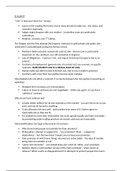
“Tort” is Norman French for “wrong”.
Cases on the reading list for the course must be learnt inside out – the nexus, and
resolution especially.
Judges might disagree with one another – borderline cases are particularly
contentious.
Kendrick, Contract Law 7th Edition.
The Diegest was the first attempt (by Emperor Justinian) to split private and public law –
achieved in Constantinople during the Roman revival.
Northern Italian scholars revived old contract law – Roman Law is particularly
important on the continent, but still somewhat in England.
Law of Obligations – Contract, Tort, and Unjust Enrichment (property law to an
extent).
Contracts of employment (general rules of contract etc) are covered, no specific
contracts. EMPLOYMENT LAW IS A SPECIAL RULE OF LAW.
Human rights law did not exist in Roman Law, but is now a modern presence.
Contracts with more than two parties become quite complex.
Intermediaries do not affect a contract; it is merely between the two parties transacting (or
agreeing).
Standard form contracts are commonplace.
Take it or leave it contracts are non-negotiable – either you agree, or you don’t –
“adhesion” contract.
Why do we have contract law?
Creates better welfare for all and maintains a free market – you are free to do as you
wish, and not be forced to anything.
It also allocates risk very well – both parties bear some of it. Parties agree to
share/split risk as they see fit.
For markets to work well, information has to be spread equally and fairly accessible –
by preventing unfair trading practices we ensure contracts are reasonable.
Moral justifications for legal enforcement of contracts:
Why do we hold people accountable for their promises?
Philosophers attempt to explain this – “you promised” (Kant – categorical
imperatives) – but the law doesn’t expect you to keep your promises.
Only promises of which have things returned are enforceable – the idea of morally
being held accountable is null.
“pacta sunt servanda” – you should keep your word (or rather, your promises).
Reliance theory is just another version of the harm principle – what counts as
reliance? What counts as disappointment? It attempts to protect people from harm.
“Tort” is Norman French for “wrong”.
Cases on the reading list for the course must be learnt inside out – the nexus, and
resolution especially.
Judges might disagree with one another – borderline cases are particularly
contentious.
Kendrick, Contract Law 7th Edition.
The Diegest was the first attempt (by Emperor Justinian) to split private and public law –
achieved in Constantinople during the Roman revival.
Northern Italian scholars revived old contract law – Roman Law is particularly
important on the continent, but still somewhat in England.
Law of Obligations – Contract, Tort, and Unjust Enrichment (property law to an
extent).
Contracts of employment (general rules of contract etc) are covered, no specific
contracts. EMPLOYMENT LAW IS A SPECIAL RULE OF LAW.
Human rights law did not exist in Roman Law, but is now a modern presence.
Contracts with more than two parties become quite complex.
Intermediaries do not affect a contract; it is merely between the two parties transacting (or
agreeing).
Standard form contracts are commonplace.
Take it or leave it contracts are non-negotiable – either you agree, or you don’t –
“adhesion” contract.
Why do we have contract law?
Creates better welfare for all and maintains a free market – you are free to do as you
wish, and not be forced to anything.
It also allocates risk very well – both parties bear some of it. Parties agree to
share/split risk as they see fit.
For markets to work well, information has to be spread equally and fairly accessible –
by preventing unfair trading practices we ensure contracts are reasonable.
Moral justifications for legal enforcement of contracts:
Why do we hold people accountable for their promises?
Philosophers attempt to explain this – “you promised” (Kant – categorical
imperatives) – but the law doesn’t expect you to keep your promises.
Only promises of which have things returned are enforceable – the idea of morally
being held accountable is null.
“pacta sunt servanda” – you should keep your word (or rather, your promises).
Reliance theory is just another version of the harm principle – what counts as
reliance? What counts as disappointment? It attempts to protect people from harm.