HESI Adaptive Quizzes
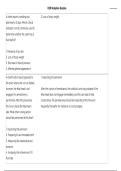
A client reports vomiting and 2. Loss of body weight
diarrhea for 3 days. Which clinical
indicator is most commonly used to
determine whether the client has a
fluid deficit?
1. Presence of dry skin
2. Loss of body weight
3. Decrease in blood pressure
4. Altered general appearance
A client's labor has progressed to 1. Inspecting the perineum
the point where she is 6 cm dilated;
however, the fetal head is not After the rupture of membranes, the umbilical cord may prolapse if the
engaged. An amniotomy is fetal head does not engage immediately, and this can lead to fetal
performed. After this procedure, compromise. The perineal area should be inspected at this time and
the nurse checks the fetal heart frequently thereafter for evidence of cord prolapse.
rate. What other nursing action
should be performed at this time?
1. Inspecting the perineum
2. Preparing for an immediate birth
3. Measuring the maternal blood
pressure
4. Increasing the intravenous (IV)
fluid rate
, HESI Adaptive Quizzes
The nurse is caring for an African 4. Magicoreligious belief
American client with renal failure.
The client states that the illness is a An African American client may have magicoreligious beliefs, which
punishment for sins. Which cultural focuses on hexes or supernatural forces that cause illness.
health belief does the client
communicate?
1. Yin/Yang balance
2. Biomedical belief
3. Determinism belief
4. Magicoreligious belief
The nurse places fetal and uterine 3. Uteroplacental insufficiency
monitors on the abdomen of a
client in labor. While observing the Late decelerations, suggestive of fetal hypoxia, occur in the setting of
relationship between the fetal heart uteroplacental insufficiency. Head compression results in early
rate and uterine contractions, the decelerations; this finding is considered benign.
nurse identifies four late
decelerations. Which condition is
most commonly associated with
late decelerations?
1. Head compression
2. Maternal hypothyroidism
3. Uteroplacental insufficiency
4. Umbilical cord compression
A client reports vomiting and 2. Loss of body weight
diarrhea for 3 days. Which clinical
indicator is most commonly used to
determine whether the client has a
fluid deficit?
1. Presence of dry skin
2. Loss of body weight
3. Decrease in blood pressure
4. Altered general appearance
A client's labor has progressed to 1. Inspecting the perineum
the point where she is 6 cm dilated;
however, the fetal head is not After the rupture of membranes, the umbilical cord may prolapse if the
engaged. An amniotomy is fetal head does not engage immediately, and this can lead to fetal
performed. After this procedure, compromise. The perineal area should be inspected at this time and
the nurse checks the fetal heart frequently thereafter for evidence of cord prolapse.
rate. What other nursing action
should be performed at this time?
1. Inspecting the perineum
2. Preparing for an immediate birth
3. Measuring the maternal blood
pressure
4. Increasing the intravenous (IV)
fluid rate
, HESI Adaptive Quizzes
The nurse is caring for an African 4. Magicoreligious belief
American client with renal failure.
The client states that the illness is a An African American client may have magicoreligious beliefs, which
punishment for sins. Which cultural focuses on hexes or supernatural forces that cause illness.
health belief does the client
communicate?
1. Yin/Yang balance
2. Biomedical belief
3. Determinism belief
4. Magicoreligious belief
The nurse places fetal and uterine 3. Uteroplacental insufficiency
monitors on the abdomen of a
client in labor. While observing the Late decelerations, suggestive of fetal hypoxia, occur in the setting of
relationship between the fetal heart uteroplacental insufficiency. Head compression results in early
rate and uterine contractions, the decelerations; this finding is considered benign.
nurse identifies four late
decelerations. Which condition is
most commonly associated with
late decelerations?
1. Head compression
2. Maternal hypothyroidism
3. Uteroplacental insufficiency
4. Umbilical cord compression