The Affects of Anxiety in Eyewitness
Testimonies
Anxiety
An unpleasant emotional state where we fear that something bad is about
to happen.
People often become anxious when they are in stressful situations.
This anxiety tends to be accompanied with physiological arousal
(increased heart rate, shallow breathing, etc).
Much of the research in eyewitness testimony is now focused around the
effects of arousal.
What Does The Research Say?
Deffendbacher et al.
Meta-analysis, which found the high levels of stress impacted on the
accuracy of the eyewitness testimony.
Christianson & Hubinette
Questioned real victims of a bank robbery. They found that those who had
actually been threatened were more accurate in their recall, compared to
those who were onlooker. This continued to be true 15 months later.
Loftus et al.
Studied the Weapon-Focus Effect.
This is where in violent crimes, arousal may focus the witness on more
central details of the attack (ie. weapon) than the more peripheral details
(ie. what else was going on and what the perpetrator looked like).
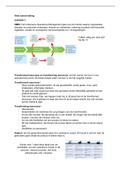
, Deffenbacher explains the differences using the Yerkes-Dodson Law
(1908)
How would this explain the conflicting research?
The relationship between the emotional arousal and performance is in the
shape of an ‘inverted U’. The lower levels of anxiety produce lower levels
of recall accuracy, but the memories become more accurate as the levels
of anxiety increases. However, there is a point where the optimal level of
anxiety is reached, which is where maximum accuracy occurs. If an
eyewitness experiences any more stress, then their recall of the event
suffers a decline.
Johnson & Scott (1976)
Researched how anxiety has a negative effect on recall.
Procedure
They led participants to believe they were going to take part in a lab study.
Testimonies
Anxiety
An unpleasant emotional state where we fear that something bad is about
to happen.
People often become anxious when they are in stressful situations.
This anxiety tends to be accompanied with physiological arousal
(increased heart rate, shallow breathing, etc).
Much of the research in eyewitness testimony is now focused around the
effects of arousal.
What Does The Research Say?
Deffendbacher et al.
Meta-analysis, which found the high levels of stress impacted on the
accuracy of the eyewitness testimony.
Christianson & Hubinette
Questioned real victims of a bank robbery. They found that those who had
actually been threatened were more accurate in their recall, compared to
those who were onlooker. This continued to be true 15 months later.
Loftus et al.
Studied the Weapon-Focus Effect.
This is where in violent crimes, arousal may focus the witness on more
central details of the attack (ie. weapon) than the more peripheral details
(ie. what else was going on and what the perpetrator looked like).
, Deffenbacher explains the differences using the Yerkes-Dodson Law
(1908)
How would this explain the conflicting research?
The relationship between the emotional arousal and performance is in the
shape of an ‘inverted U’. The lower levels of anxiety produce lower levels
of recall accuracy, but the memories become more accurate as the levels
of anxiety increases. However, there is a point where the optimal level of
anxiety is reached, which is where maximum accuracy occurs. If an
eyewitness experiences any more stress, then their recall of the event
suffers a decline.
Johnson & Scott (1976)
Researched how anxiety has a negative effect on recall.
Procedure
They led participants to believe they were going to take part in a lab study.