CCMA EXAM
STUDY GUIDE
[Document subtitle]
, CCMA Exam Study Guide
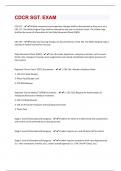
1. What does the abbreviation SOB stand for in clinical note?: Shortness of breath
2. What is the "definition" of a Medical Assistant: -individual that graduated/completed an accredited MA edu. program;
-who is employed in the medical practice of a licensed provider;
-who performs basic admin., clerical, & clinical duties authorized by/ & under the direct supervision of a licensed provider
3. What is a medical assistant's main duties in a clinical setting?: -To room patients
-check pt. vitals
-record pt. demographics
-document current meds/allergies
-set up exam rooms (& any necessary instruments/equipment)
-simple wound dressings; and obtain wound cultures
-remove sutures/staples from superficial incisions/lacerations
-administer meds. IM, SC, PO, topically
-immunizations
-filing/book keeping -process
insurance claims -book appts.
-call in RX orders/refills- only as ordered & approved by physician, NP, or PA (but NEVER for narcotics)
4. What are some of the things that are OUT of the scope of practice for a Medical Assistant?: MA's CANNOT:
-phone triage (bc MA's can't interpret data OR dx symptoms) -independently treat/dx
pts.
-give IV meds
-advise pts. about their condition or tx
5. What are the wellness exam supplies/ prep. of those items?: The supplies that an MA will use vary depending on what type
of office/clinic they work in.
6. What is HIPPA? What does it do?: Health Insurance Portability and Accounting Act, which protects the privacy of individually
identifiable health information.
According to HIPAA, patients have a right to:
• See and copy their health record • Update their health record
• Get a list of the disclosures that a health care institution has made independent of disclosures made for the purposes of treatment
payment, and health care operations • Request a restriction on certain uses or disclosures
• Choose how to receive health information
7. Differentiate between Ambulatory Care & Acute Care facilities: -Ambulatory care= outpatient (eg.- urgent care, clinics,
healthcare centers, and ambulatory surgery centers) -Acute care= inpatient (ED, Hospital stays/surgery admit's, home health
agency, hospice)
STUDY GUIDE
[Document subtitle]
, CCMA Exam Study Guide
1. What does the abbreviation SOB stand for in clinical note?: Shortness of breath
2. What is the "definition" of a Medical Assistant: -individual that graduated/completed an accredited MA edu. program;
-who is employed in the medical practice of a licensed provider;
-who performs basic admin., clerical, & clinical duties authorized by/ & under the direct supervision of a licensed provider
3. What is a medical assistant's main duties in a clinical setting?: -To room patients
-check pt. vitals
-record pt. demographics
-document current meds/allergies
-set up exam rooms (& any necessary instruments/equipment)
-simple wound dressings; and obtain wound cultures
-remove sutures/staples from superficial incisions/lacerations
-administer meds. IM, SC, PO, topically
-immunizations
-filing/book keeping -process
insurance claims -book appts.
-call in RX orders/refills- only as ordered & approved by physician, NP, or PA (but NEVER for narcotics)
4. What are some of the things that are OUT of the scope of practice for a Medical Assistant?: MA's CANNOT:
-phone triage (bc MA's can't interpret data OR dx symptoms) -independently treat/dx
pts.
-give IV meds
-advise pts. about their condition or tx
5. What are the wellness exam supplies/ prep. of those items?: The supplies that an MA will use vary depending on what type
of office/clinic they work in.
6. What is HIPPA? What does it do?: Health Insurance Portability and Accounting Act, which protects the privacy of individually
identifiable health information.
According to HIPAA, patients have a right to:
• See and copy their health record • Update their health record
• Get a list of the disclosures that a health care institution has made independent of disclosures made for the purposes of treatment
payment, and health care operations • Request a restriction on certain uses or disclosures
• Choose how to receive health information
7. Differentiate between Ambulatory Care & Acute Care facilities: -Ambulatory care= outpatient (eg.- urgent care, clinics,
healthcare centers, and ambulatory surgery centers) -Acute care= inpatient (ED, Hospital stays/surgery admit's, home health
agency, hospice)