Page 1 of 102
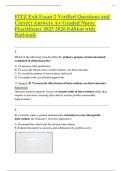
FITZ EXIT EXAM COMPLETE 300 QUESTIONS AND
VERIFIED SOLUTIONS 2026-2027 LATEST UPDATE
THIS YEAR
QUESTION: **A 66-year-old woman being managed for Addison's disease presents for follow-
up evaluation. Findings consistent with an excessive dose of the medication taken for this
condition would include:
A. Diffuse hyperpigmentation.
B. Blood pressure of 168/98 mm Hg.
C. Loss of axillary hair.
D. A white blood cell count of 6,000/mm3. - ANSWER-B. Blood pressure of 168/98 mm Hg.
The first-line medication for Addison's disease is the use of a systemic corticosteroid such as
oral prednisone; the goal is to replace endogenous cortisol in a manner that is consistent with
the normal, physiologic diurnal variation. A typical starting dose is 15 mg q AM and 10 mg q PM.
If the dose of prednisone is too high for this patient, she can demonstrate signs and symptoms
of hypercortisolism, such as hypertension.
,Page 2 of 102
QUESTION: Mrs. Jansen is a 61-year-old patient who has difficult-to-manage type 2 diabetes
mellitus. After trials of several oral and injectable medication combinations including insulin
releasers, with adherence, her A1c remained significantly above goal. Three months ago, the
nurse practitioner adjusted Mrs. Jansen's regimen to include basal and mealtime insulin and
advised the continuation of metformin. Today Mrs. Jansen's A1c is 6.8%. The appropriate
response is to:
A. Increase the insulin by 20%.
B. Consider discontinuing metformin.
C. Continue the present regimen.
D. Repeat the A1c in one month. - ANSWER-C. Continue the present regimen.
therapeutic goal of management as an A1c of <7%. At 6.8%, Mrs. Jansen has attained the
therapeutic goal, and the appropriate response is to continue her present regimen.
QUESTION: A 49-year-old female of European ancestry with type 2 diabetes mellitus was
started on lisinopril 20 mg tablet daily 6 weeks ago for the management of hypertension. Today
,Page 3 of 102
her blood pressure is 128/78 mm Hg and the patient is feeling well. The appropriate action at
this time would be to:
A. Order a white blood cell count to assess for neutropenia.
B. Continue on her current medication regimen.
C. Add oral HCTZ 12.5 mg to enhance HTN control.
D. Assess renal function. - ANSWER-B. Continue on her current medication regimen.
Lisinopril, an angiotensin-converting enzyme inhibitor, is the appropriate class of medication in
the patient with diabetes and comorbid hypertension according to the Joint National
Committee 8 (JNC-8) report. Given her age and DM, her blood pressure goal is <140/90 mm Hg.
She also meets the blood pressure goal per ACC/AHA guidelines that recommend <130/80 mm
Hg for those with type 2 diabetes mellitus.
Q; Which of the following would be the least likely candidate for weight loss surgery?
A. A 43-year-old man with BMI of 42 kg/m2
, Page 4 of 102
B. A 38-year-old with BMI 37 kg/m2 and type 2 diabetes mellitus
C. A 29-year-old with BMI of 35 kg/m2 and who has been unable to sustain healthy weight loss
with multiple prior weight loss efforts
D. A 24-year-old with BMI of 31 kg/m2 who does not believe current weight is of concern -
ANSWER-D. A 24-year-old with BMI of 31 kg/m2 who does not believe current weight is of
concern
ideal candidates for weight loss surgery include those with a BMI=40 kg/m2 or over 100 pounds
overweight, those with a BMI=35 kg/m2 and with at least one obesity-related comorbidity
(such as type 2 diabetes, hypertension, sleep apnea, heart disease, etc.), or individuals who
have been unable to achieve a healthy weight loss for sustained periods of time with prior
weight loss efforts.
QUESTION: Which of the following describes, in part, metformin's mechanism of action?
A. Reduces insulin resistance
B. Facilitates renal glucose excretion
FITZ EXIT EXAM COMPLETE 300 QUESTIONS AND
VERIFIED SOLUTIONS 2026-2027 LATEST UPDATE
THIS YEAR
QUESTION: **A 66-year-old woman being managed for Addison's disease presents for follow-
up evaluation. Findings consistent with an excessive dose of the medication taken for this
condition would include:
A. Diffuse hyperpigmentation.
B. Blood pressure of 168/98 mm Hg.
C. Loss of axillary hair.
D. A white blood cell count of 6,000/mm3. - ANSWER-B. Blood pressure of 168/98 mm Hg.
The first-line medication for Addison's disease is the use of a systemic corticosteroid such as
oral prednisone; the goal is to replace endogenous cortisol in a manner that is consistent with
the normal, physiologic diurnal variation. A typical starting dose is 15 mg q AM and 10 mg q PM.
If the dose of prednisone is too high for this patient, she can demonstrate signs and symptoms
of hypercortisolism, such as hypertension.
,Page 2 of 102
QUESTION: Mrs. Jansen is a 61-year-old patient who has difficult-to-manage type 2 diabetes
mellitus. After trials of several oral and injectable medication combinations including insulin
releasers, with adherence, her A1c remained significantly above goal. Three months ago, the
nurse practitioner adjusted Mrs. Jansen's regimen to include basal and mealtime insulin and
advised the continuation of metformin. Today Mrs. Jansen's A1c is 6.8%. The appropriate
response is to:
A. Increase the insulin by 20%.
B. Consider discontinuing metformin.
C. Continue the present regimen.
D. Repeat the A1c in one month. - ANSWER-C. Continue the present regimen.
therapeutic goal of management as an A1c of <7%. At 6.8%, Mrs. Jansen has attained the
therapeutic goal, and the appropriate response is to continue her present regimen.
QUESTION: A 49-year-old female of European ancestry with type 2 diabetes mellitus was
started on lisinopril 20 mg tablet daily 6 weeks ago for the management of hypertension. Today
,Page 3 of 102
her blood pressure is 128/78 mm Hg and the patient is feeling well. The appropriate action at
this time would be to:
A. Order a white blood cell count to assess for neutropenia.
B. Continue on her current medication regimen.
C. Add oral HCTZ 12.5 mg to enhance HTN control.
D. Assess renal function. - ANSWER-B. Continue on her current medication regimen.
Lisinopril, an angiotensin-converting enzyme inhibitor, is the appropriate class of medication in
the patient with diabetes and comorbid hypertension according to the Joint National
Committee 8 (JNC-8) report. Given her age and DM, her blood pressure goal is <140/90 mm Hg.
She also meets the blood pressure goal per ACC/AHA guidelines that recommend <130/80 mm
Hg for those with type 2 diabetes mellitus.
Q; Which of the following would be the least likely candidate for weight loss surgery?
A. A 43-year-old man with BMI of 42 kg/m2
, Page 4 of 102
B. A 38-year-old with BMI 37 kg/m2 and type 2 diabetes mellitus
C. A 29-year-old with BMI of 35 kg/m2 and who has been unable to sustain healthy weight loss
with multiple prior weight loss efforts
D. A 24-year-old with BMI of 31 kg/m2 who does not believe current weight is of concern -
ANSWER-D. A 24-year-old with BMI of 31 kg/m2 who does not believe current weight is of
concern
ideal candidates for weight loss surgery include those with a BMI=40 kg/m2 or over 100 pounds
overweight, those with a BMI=35 kg/m2 and with at least one obesity-related comorbidity
(such as type 2 diabetes, hypertension, sleep apnea, heart disease, etc.), or individuals who
have been unable to achieve a healthy weight loss for sustained periods of time with prior
weight loss efforts.
QUESTION: Which of the following describes, in part, metformin's mechanism of action?
A. Reduces insulin resistance
B. Facilitates renal glucose excretion