

KIN 2504 Sontag Topic 1
Study online at https://quizlet.com/_gfrnri
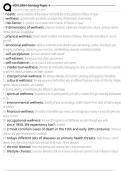
1. health: overall condition of the body or mind and also to the presence of illness or injury
2. wellness: optimal health and vitality, encompassing all dimensions of well-being
3. risk-factor: a condition that increases one's chances of disease or injury
4. 9 dimensions of wellness: physical, emotional, intellectual, interpersonal, cultural, spiritual, environ-
mental, financial, occupational
5. physical wellness: body's overall condition and absence of disease, fitness level and ability to care for
yourself
6. emotional wellness: ability to understand and attend to your own feelings, involves listening to your
thoughts and feelings, monitoring your reactions, and identifying obstacles to emotional stability
7. self-acceptance: personal satisfaction with oneself
8. self-esteem: the way you think others perceive you
9. self-confidence: can be a part of both acceptance and esteem
10. intellectual wellness: develops by continually challenging the mind, an active curious mind is essential
to wellness, detects problems and seeks solutions
11. interpersonal wellness: the ability to develop and maintain satisfying and supportive friendships
12. cultural wellness: the way you interact with others who are different from you in terms of ethnicity, religion,
gender, sexual orientation, and customs.
accepting, valuing, and celebrating the different cultural ways
13. spiritual wellness: to possess a set of guiding beliefs, principles, or values that give meaning and purpose
to life
14. environmental wellness: livability of your surroundings, health of planet from safety of food to degree
of violence
15. financial wellness: the ability to live within your means and manage your money in a way that gives you
peace of mind
16. occupational wellness: the level of happiness and fulfillment you gain through your work
17. since 1850, life expectancy has?: doubled
18. 2 most common cases of death in the 19th and early 20th centuries: infectious
disease and poor environmental conditions
19. todays different sets of diseases as primary health threats: heart disease, cancer,
obesity and poor eating habits that contribute to all major chronic diseases
20. chronic disease: those that develop and continue over a long period of time
21. lifestyle choices: conscious behaviors that can increase or decrease a person's risk of disease or injury
1/2
Study online at https://quizlet.com/_gfrnri
1. health: overall condition of the body or mind and also to the presence of illness or injury
2. wellness: optimal health and vitality, encompassing all dimensions of well-being
3. risk-factor: a condition that increases one's chances of disease or injury
4. 9 dimensions of wellness: physical, emotional, intellectual, interpersonal, cultural, spiritual, environ-
mental, financial, occupational
5. physical wellness: body's overall condition and absence of disease, fitness level and ability to care for
yourself
6. emotional wellness: ability to understand and attend to your own feelings, involves listening to your
thoughts and feelings, monitoring your reactions, and identifying obstacles to emotional stability
7. self-acceptance: personal satisfaction with oneself
8. self-esteem: the way you think others perceive you
9. self-confidence: can be a part of both acceptance and esteem
10. intellectual wellness: develops by continually challenging the mind, an active curious mind is essential
to wellness, detects problems and seeks solutions
11. interpersonal wellness: the ability to develop and maintain satisfying and supportive friendships
12. cultural wellness: the way you interact with others who are different from you in terms of ethnicity, religion,
gender, sexual orientation, and customs.
accepting, valuing, and celebrating the different cultural ways
13. spiritual wellness: to possess a set of guiding beliefs, principles, or values that give meaning and purpose
to life
14. environmental wellness: livability of your surroundings, health of planet from safety of food to degree
of violence
15. financial wellness: the ability to live within your means and manage your money in a way that gives you
peace of mind
16. occupational wellness: the level of happiness and fulfillment you gain through your work
17. since 1850, life expectancy has?: doubled
18. 2 most common cases of death in the 19th and early 20th centuries: infectious
disease and poor environmental conditions
19. todays different sets of diseases as primary health threats: heart disease, cancer,
obesity and poor eating habits that contribute to all major chronic diseases
20. chronic disease: those that develop and continue over a long period of time
21. lifestyle choices: conscious behaviors that can increase or decrease a person's risk of disease or injury
1/2

