NRS 232 Final Exam Questions and Answers
New Update 2026 A+
What happens if there is an obstructed vein?
-Veins carry blood to the heart
-Venous congestion and fluid buildup can cause increased hydrostatic
pressure and edema
-Less blood flow to the heart
Virchow's Triad
-Factors that increase risk of thrombus formation in arteries, veins, and
within heart chambers:
1. Stasis (pooling) of blood
2. Endothelial injury (this can lead to atherosclerosis)
3. Hypercoagulability
Arteriosclerosis versus Atherosclerosis
-Arteriosclerosis is hardening of the arteries that can occur through many
different physiological processes
-Atherosclerosis is a specific pathophysiological process involving large
and medium-sized arteries. It leads to obstructed arterial flow, which can
cause ischemia and eventual necrosis.
Normal Endothelial Function
-Lines arteries and secretes nitric oxide (NO)
-NO acts as a vasodilator to relax smooth muscles. NO also calms White
Blood Cells and makes them "less sticky" and inhibits platelet
aggregation/secretion
Endothelial Dysfunction
-Endothelial dysfunction is a key contributor to atherosclerosis, which is a
high risk factor for heart attack and stroke.
-Endothelial damage may be caused by chronic conditions such as
hypertension and diabetes. Exercise is a protective factor against
,endothelial damage since it increases nitric oxide (NO) production of
endothelial cells over time.
-When damaged, endothelial cells produce less NO, which causes:
1. Decreased dilation of blood vessel...decreased space for blood to flow.
2.Increased stickiness of endothelium...endothelium becomes more
permeable to LDL cholesterol, which moves from the arterial space into the
tunica intima. The endothelium also allows more White Blood Cells to
adhere and transmigrate from blood into the tunica intima.
3. LDL is engulfed by resident macrophages within the tunica intima, which
signal an alarm by sending cytokines and other proinflammatory mediators.
These mediators cause upregulation of selectin and integrin on the
endothelium, which captures monocytes in the blood and causes them to
roll, adhere, and transmigrate into the tunica intima.
4. Monocytes become macrophages within the tunica intima and engulf
more LDL. As they engulf more LDL, they become foam cells and form fatty
streaks.
5. Macrophages release cytokines and growth factors, which induces
smooth muscle cell migration into the intima lamina. Macrophages also
attract fibroblasts that produce collagen. Fibroblasts produce a collagen
cap on fatty streaks. This causes obstructed blood flow in the vessel!
6. At this point, the fibrous plaque is stable, but has a necrotic core.
7. As the plaque grows, the arterial space becomes more obstructed.
8. Macrophages produce enzymes to break down the plaque, which causes
it to rupture and spill its necrotic core.
9. Clotting cascade activated and thrombus forms
Embolus versus Thrombus
,-A clot that stays in place is a thrombus
-A clot that travels is an embolus
Review of Endothelium
-The endothelium is a single layer of cells lining the inside of blood vessels
and the lymphatic system, which allows for selective movement of cells and
chemicals
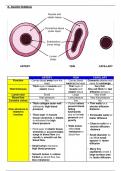
-Layers of blood vessels from inner (exposed to blood) to outer:
1. Endothelium
2. Tunica intima
3. Tunica media
4. Tunica externa
Chronic Arterial Insufficiency
-Intermittent claudication; Pain while walking that resides when resting
-Ischemia (lack of blood flow) which causes decreased/absent pulses, cool
skin, pale skin, and muscle atrophy
-No edema
-Skin appears shiny and hairless
-Thick nails
-Ulcers and gangrene development
-Postural color changes (leg appears pale when elevated)
Chronic Venous Insufficiency
-Often painful, even at rest
-Swelling and edema due to increased venous congestion and hydrostatic
pressure of veins
-Brown pigmentation of skin
-Pulses present and normal
, -Normal temperature of skin
Chronic Ischemia Vs. Acute Ischemia in Legs
-Chronic arterial insufficiency happens over time and can be accompanied
by intermittent claudication (pain while walking). Other symptoms include
muscle atrophy, pale/shiny/cool skin, thick nails, lack of hair growth, and
reduced pulses
-Acute arterial occlusion occurs suddenly and can be followed by sudden
acute pain. Other symptoms include pale/cool skin, no pulse, muscle
weakness, and paresthesia (tingling/numbing sensation). Atrophy does not
occur at this stage since that is a chronic sign of ischemia.
Superficial Vs. Deep Vein Thrombosis (DVT)
-Superficial vein thrombosis may occur in varicose veins or other superficial
veins. Symptoms include visible redness along the vein, heat, tenderness,
and aching
-Deep vein thrombosis occurs in deep veins (especially in legs). Symptoms
include edema, increased leg circumference, pain, tenderness, and
distention of superficial veins. A low grade fever may develop, and patients
are at risk of a pulmonary embolism if the clot breaks and travels to the
lungs. Approximately 50% of patients with DVT show symptoms.
Alterations in venous flow
-Obstructed veins can cause brown pigmentation, swelling, and constant
pain
-Veins have valves that work with muscles to deliver blood to the heart
-Valvular incompetence, varicose veins, and chronic venous insufficiency
can cause venous congestion, stasis of blood, and thrombus formation.
-Approximately 40% of adults over the age of 50 develop chronic venous
insufficiency. Other factors that increase risk include smoking, obesity,
pregnancy, leg injuries, immobility, and lack of exercise
Modifiable and Non-Modifiable Risk Factors of Atherosclerosis
-Modifiable risk factors include smoking, metabolic syndrome,
hypertension, diabetes, and physical inactivity
New Update 2026 A+
What happens if there is an obstructed vein?
-Veins carry blood to the heart
-Venous congestion and fluid buildup can cause increased hydrostatic
pressure and edema
-Less blood flow to the heart
Virchow's Triad
-Factors that increase risk of thrombus formation in arteries, veins, and
within heart chambers:
1. Stasis (pooling) of blood
2. Endothelial injury (this can lead to atherosclerosis)
3. Hypercoagulability
Arteriosclerosis versus Atherosclerosis
-Arteriosclerosis is hardening of the arteries that can occur through many
different physiological processes
-Atherosclerosis is a specific pathophysiological process involving large
and medium-sized arteries. It leads to obstructed arterial flow, which can
cause ischemia and eventual necrosis.
Normal Endothelial Function
-Lines arteries and secretes nitric oxide (NO)
-NO acts as a vasodilator to relax smooth muscles. NO also calms White
Blood Cells and makes them "less sticky" and inhibits platelet
aggregation/secretion
Endothelial Dysfunction
-Endothelial dysfunction is a key contributor to atherosclerosis, which is a
high risk factor for heart attack and stroke.
-Endothelial damage may be caused by chronic conditions such as
hypertension and diabetes. Exercise is a protective factor against
,endothelial damage since it increases nitric oxide (NO) production of
endothelial cells over time.
-When damaged, endothelial cells produce less NO, which causes:
1. Decreased dilation of blood vessel...decreased space for blood to flow.
2.Increased stickiness of endothelium...endothelium becomes more
permeable to LDL cholesterol, which moves from the arterial space into the
tunica intima. The endothelium also allows more White Blood Cells to
adhere and transmigrate from blood into the tunica intima.
3. LDL is engulfed by resident macrophages within the tunica intima, which
signal an alarm by sending cytokines and other proinflammatory mediators.
These mediators cause upregulation of selectin and integrin on the
endothelium, which captures monocytes in the blood and causes them to
roll, adhere, and transmigrate into the tunica intima.
4. Monocytes become macrophages within the tunica intima and engulf
more LDL. As they engulf more LDL, they become foam cells and form fatty
streaks.
5. Macrophages release cytokines and growth factors, which induces
smooth muscle cell migration into the intima lamina. Macrophages also
attract fibroblasts that produce collagen. Fibroblasts produce a collagen
cap on fatty streaks. This causes obstructed blood flow in the vessel!
6. At this point, the fibrous plaque is stable, but has a necrotic core.
7. As the plaque grows, the arterial space becomes more obstructed.
8. Macrophages produce enzymes to break down the plaque, which causes
it to rupture and spill its necrotic core.
9. Clotting cascade activated and thrombus forms
Embolus versus Thrombus
,-A clot that stays in place is a thrombus
-A clot that travels is an embolus
Review of Endothelium
-The endothelium is a single layer of cells lining the inside of blood vessels
and the lymphatic system, which allows for selective movement of cells and
chemicals
-Layers of blood vessels from inner (exposed to blood) to outer:
1. Endothelium
2. Tunica intima
3. Tunica media
4. Tunica externa
Chronic Arterial Insufficiency
-Intermittent claudication; Pain while walking that resides when resting
-Ischemia (lack of blood flow) which causes decreased/absent pulses, cool
skin, pale skin, and muscle atrophy
-No edema
-Skin appears shiny and hairless
-Thick nails
-Ulcers and gangrene development
-Postural color changes (leg appears pale when elevated)
Chronic Venous Insufficiency
-Often painful, even at rest
-Swelling and edema due to increased venous congestion and hydrostatic
pressure of veins
-Brown pigmentation of skin
-Pulses present and normal
, -Normal temperature of skin
Chronic Ischemia Vs. Acute Ischemia in Legs
-Chronic arterial insufficiency happens over time and can be accompanied
by intermittent claudication (pain while walking). Other symptoms include
muscle atrophy, pale/shiny/cool skin, thick nails, lack of hair growth, and
reduced pulses
-Acute arterial occlusion occurs suddenly and can be followed by sudden
acute pain. Other symptoms include pale/cool skin, no pulse, muscle
weakness, and paresthesia (tingling/numbing sensation). Atrophy does not
occur at this stage since that is a chronic sign of ischemia.
Superficial Vs. Deep Vein Thrombosis (DVT)
-Superficial vein thrombosis may occur in varicose veins or other superficial
veins. Symptoms include visible redness along the vein, heat, tenderness,
and aching
-Deep vein thrombosis occurs in deep veins (especially in legs). Symptoms
include edema, increased leg circumference, pain, tenderness, and
distention of superficial veins. A low grade fever may develop, and patients
are at risk of a pulmonary embolism if the clot breaks and travels to the
lungs. Approximately 50% of patients with DVT show symptoms.
Alterations in venous flow
-Obstructed veins can cause brown pigmentation, swelling, and constant
pain
-Veins have valves that work with muscles to deliver blood to the heart
-Valvular incompetence, varicose veins, and chronic venous insufficiency
can cause venous congestion, stasis of blood, and thrombus formation.
-Approximately 40% of adults over the age of 50 develop chronic venous
insufficiency. Other factors that increase risk include smoking, obesity,
pregnancy, leg injuries, immobility, and lack of exercise
Modifiable and Non-Modifiable Risk Factors of Atherosclerosis
-Modifiable risk factors include smoking, metabolic syndrome,
hypertension, diabetes, and physical inactivity