WEEK 1
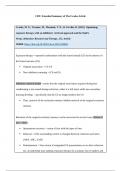
Individual Theories: NOREEN M. CLARK MARY R. JANEVIC
The Handbook of Health Behavior Change, 4th Edition, edited by Kristin A. Riekert, et al., Springer
Publishing Company, Incorporated, 2013. ProQuest Ebook Central,
http://ebookcentral.proquest.com/lib/uunl/detail.action?docID=1564374.
The extensive documentation of low public participation in preventive health efforts and poor
adherence to prescribed medical therapies indicates a widespread challenge in maintaining required
behaviors. In response, behavioral scientists have devoted significant effort to developing and
applying numerous individual-level behavior-change theories over the past four decades. These
theories typically focus on cognitive variables, such as attitudes, beliefs, and expectations, based on
the assumption that individuals aim to maximize positive health outcomes. While multi-level
frameworks are gaining attention, individual theories remain the most widely used tool for predicting
future health actions and serving as blueprints for intervention development. However, the field is
often characterized by considerable overlap in theoretical constructs and incomplete evidence
regarding the utility of each theory for specific behaviors.
One of the most robust frameworks is the Social Cognitive Theory (SCT), which posits that behavior
arises from the reciprocal interactions of personal factors, existing behaviors, and the social and
physical environments. Behavior change and maintenance are primarily functions of two expectations:
outcome expectations (beliefs that specific behaviors will lead to certain outcomes) and efficacy
expectations (beliefs in one's capability to execute the necessary behavior). Self-efficacy, which
relates to performing specific behaviors in particular situations, is highly influential, affecting the
acquisition, inhibition, and persistence of behaviors, as well as emotional reactions. Efficacy
expectations are learned from four main sources: performance accomplishments (the most potent
source), vicarious experience (observing models), verbal persuasion, and physiological state. While
highly regarded for its explanatory power, SCT has faced criticism for emphasizing individual
cognition and perception over broader ecological determinants, such as social, economic, and political
factors.
Closely linked to SCT is the Self-Regulation Model (SRM), which focuses on how individuals
develop their outcome and efficacy expectations. Leventhal and colleagues view self-regulation as a
feedback system wherein the individual functions as an active problem solver. This process involves
four components: extracting information, generating an illness representation, planning and acting, and
monitoring how coping reactions affect the environment and the individual. Clark and colleagues
adapted the SRM for chronic disease management, viewing self-regulation as the means by which
patients determine effective strategies based on goals, social context, and available resources. The
continuous process relies on observation, judgment, and reactions, particularly outcome expectations
and self-efficacy. Similar to critiques of SCT, self-regulation models tend to focus heavily on factors
within an individual’s immediate control rather than wider influences like community infrastructure or
health policies.
The Health Belief Model (HBM) was developed to address the failure of people to adopt preventive
measures. It is rooted in the notion that health behavior depends on the value placed on avoiding
illness and the belief that a specific action will successfully reduce the threat. The model’s central
dimensions are Perceived susceptibility, Perceived severity, Perceived benefits, and Perceived
barriers (found to be the most significantly associated predictor in reviews). Although demographic
factors influence behavior, the HBM suggests they operate through their effects on individual
perceptions. The HBM is commonly applied to preventive behaviors, but is limited in accounting for
variance in outcomes because it often neglects habitual behaviors, non-health motivations (like social
approval), and economic constraints.
,The Theory of Planned Behavior (TPB) and its predecessor, the Theory of Reasoned Action, focus
on predicting behavioral intentions as the direct antecedent to behavior. Intention is determined by
three sets of beliefs: the individual’s Attitudes toward the behavior, the Subjective norm (perceived
expectations of significant others, including "descriptive norms"), and Perceived behavioral control
(the person's perceived ability to execute the behavior, similar to self-efficacy). TPB is extensively
used in health research, explaining 44.3% of the variance in intention.
The Transtheoretical Model (TTM), or Stages of Change model, views behavior change as a six-
stage process: precontemplation, contemplation, preparation, action, maintenance, and termination.
The model emphasizes that interventions are most effective when they are "stage-matched," utilizing
appropriate processes of change for the individual's current stage. However, the TTM has inspired
significant criticism concerning the weak empirical evidence for stage-based interventions, arbitrary
stage lengths, and the lack of conclusive proof that moving forward in stages actually results in
sustained behavior change.
Finally, the Relapse Prevention (RP) Model is a cognitive-behavioral framework focused on the
challenge of maintaining behavior change over the long term, particularly for addictive behaviors. RP
frames relapse not as an end state, but as a transitional process. Relapse is triggered by immediate
determinants (like high-risk situations, poor coping, and the abstinence violation effect) and broader,
subtle covert antecedents (lifestyle factors).
A current challenge in the field is the heavy reliance on the correlational approach to theory testing,
which risks inflating associations because the relationship between cognition and behavior is often
bidirectional. To move the field forward, researchers propose using multi-methodological theory
testing, combining methods like randomized lab experiments and mediation analysis to allow for
greater causal inference. There is also a recognized need to shift emphasis from individual decisions to
incorporating the complex social and environmental context (e.g., policies, material conditions) that
shapes health behaviors. The question of how to effectively apply these theories to interventions
targeting multiple health behaviors remains a critical area for future exploration.
, Huber, M., Knottnerus, J. A., Green, L., Horst, H. V. D., Jadad, A. R., Kromhout, D., Leonard,
B., Lorig, K., Loureiro, M. I., Meer, J. W. M. V. D., Schnabel, P., Smith, R., Weel, C. V., & Smid,
H. (2011). How should we define health? BMJ, 343(jul26 2), d4163.
https://doi.org/10.1136/bmj.d4163
The current World Health Organization (WHO) definition of health, formulated in 1948, describes it as
“a state of complete physical, mental and social well-being and not merely the absence of disease or
infirmity”. While groundbreaking at the time for including physical, mental, and social domains, this
definition is now facing intensifying criticism and may be counterproductive, especially given the rise
of chronic disease and aging populations. Huber and colleagues propose shifting the focus of health
toward the ability to adapt and self manage in the face of social, physical, and emotional challenges.
The main limitations of the existing WHO definition revolve around the absoluteness of the word
“complete” in relation to wellbeing. Firstly, this requirement unintentionally contributes to the
medicalisation of society, as requiring complete health would leave most people unhealthy most of the
time. This absoluteness supports tendencies within the medical technology, drug industries, and
professional organizations to redefine diseases, expand healthcare scope, and lower thresholds for
intervention (such as for blood pressure or lipids). The persistent emphasis on complete physical
wellbeing can lead large groups of people to become eligible for expensive screening or interventions,
potentially resulting in higher levels of medical dependency and risk.
Secondly, demographic shifts and disease patterns have changed significantly since 1948, when acute
diseases presented the main burden of illness. Due to public health measures and powerful healthcare
interventions, the number of people globally living with chronic diseases for decades is increasing,
becoming the norm. Chronic diseases now account for the majority of healthcare expenditures,
pressuring the system’s sustainability. In this context, the WHO definition is counterproductive
because it declares individuals with chronic diseases and disabilities as definitively ill . It minimizes
the essential human capacity to cope autonomously with life’s changing challenges, and to function
with fulfillment and a feeling of wellbeing even while managing a chronic disease. The third major
problem is operationalization: the definition remains "impracticable" because "complete" is neither
operational nor measurable, despite WHO having developed systems to classify diseases and describe
aspects of functioning, disability, and quality of life.
Due to these limitations, international health experts convened at a conference in the Netherlands,
leading to broad support for moving away from the static WHO formulation toward a dynamic concept
based on resilience: the capacity to cope, and to maintain and restore one’s integrity, equilibrium, and
sense of wellbeing. The preferred view of health became "the ability to adapt and to self manage".
Participants suggested replacing the term "definition" with "concept or conceptual framework," since a
definition implies fixed boundaries, whereas a concept represents a general, agreed-upon direction.
The concept of health determines outcome measures in policy and prevention programs; for example,
an increase in coping capacity may be more relevant than complete recovery, and societal participation
may be more valuable than survival years.
To utilize the concept of health as the ability to adapt and to self-manage, it must be characterized
across the three domains of health: physical, mental, and social. In the physical domain, a healthy
organism is characterized by allostasis: the capacity to maintain physiological homoeostasis through
changing circumstances. A healthy organism responds to physiological stress protectively, reduces
potential harm, and restores an adapted equilibrium; failure in this strategy results in "allostatic load"
and potential illness. In the mental domain, a factor contributing to successful coping and recovery
from psychological stress is the sense of coherence. This includes the subjective faculties that enhance
the comprehensibility, manageability, and meaningfulness of difficult situations. A strengthened
capacity to adapt often improves subjective wellbeing, exemplified by patients with chronic fatigue
syndrome who reported positive effects on symptoms and wellbeing following cognitive behavioural
therapy, which was associated with an increase in brain grey matter volume. Social health involves a
dynamic balance between opportunities and limitations. It includes the ability of people to fulfill their
Individual Theories: NOREEN M. CLARK MARY R. JANEVIC
The Handbook of Health Behavior Change, 4th Edition, edited by Kristin A. Riekert, et al., Springer
Publishing Company, Incorporated, 2013. ProQuest Ebook Central,
http://ebookcentral.proquest.com/lib/uunl/detail.action?docID=1564374.
The extensive documentation of low public participation in preventive health efforts and poor
adherence to prescribed medical therapies indicates a widespread challenge in maintaining required
behaviors. In response, behavioral scientists have devoted significant effort to developing and
applying numerous individual-level behavior-change theories over the past four decades. These
theories typically focus on cognitive variables, such as attitudes, beliefs, and expectations, based on
the assumption that individuals aim to maximize positive health outcomes. While multi-level
frameworks are gaining attention, individual theories remain the most widely used tool for predicting
future health actions and serving as blueprints for intervention development. However, the field is
often characterized by considerable overlap in theoretical constructs and incomplete evidence
regarding the utility of each theory for specific behaviors.
One of the most robust frameworks is the Social Cognitive Theory (SCT), which posits that behavior
arises from the reciprocal interactions of personal factors, existing behaviors, and the social and
physical environments. Behavior change and maintenance are primarily functions of two expectations:
outcome expectations (beliefs that specific behaviors will lead to certain outcomes) and efficacy
expectations (beliefs in one's capability to execute the necessary behavior). Self-efficacy, which
relates to performing specific behaviors in particular situations, is highly influential, affecting the
acquisition, inhibition, and persistence of behaviors, as well as emotional reactions. Efficacy
expectations are learned from four main sources: performance accomplishments (the most potent
source), vicarious experience (observing models), verbal persuasion, and physiological state. While
highly regarded for its explanatory power, SCT has faced criticism for emphasizing individual
cognition and perception over broader ecological determinants, such as social, economic, and political
factors.
Closely linked to SCT is the Self-Regulation Model (SRM), which focuses on how individuals
develop their outcome and efficacy expectations. Leventhal and colleagues view self-regulation as a
feedback system wherein the individual functions as an active problem solver. This process involves
four components: extracting information, generating an illness representation, planning and acting, and
monitoring how coping reactions affect the environment and the individual. Clark and colleagues
adapted the SRM for chronic disease management, viewing self-regulation as the means by which
patients determine effective strategies based on goals, social context, and available resources. The
continuous process relies on observation, judgment, and reactions, particularly outcome expectations
and self-efficacy. Similar to critiques of SCT, self-regulation models tend to focus heavily on factors
within an individual’s immediate control rather than wider influences like community infrastructure or
health policies.
The Health Belief Model (HBM) was developed to address the failure of people to adopt preventive
measures. It is rooted in the notion that health behavior depends on the value placed on avoiding
illness and the belief that a specific action will successfully reduce the threat. The model’s central
dimensions are Perceived susceptibility, Perceived severity, Perceived benefits, and Perceived
barriers (found to be the most significantly associated predictor in reviews). Although demographic
factors influence behavior, the HBM suggests they operate through their effects on individual
perceptions. The HBM is commonly applied to preventive behaviors, but is limited in accounting for
variance in outcomes because it often neglects habitual behaviors, non-health motivations (like social
approval), and economic constraints.
,The Theory of Planned Behavior (TPB) and its predecessor, the Theory of Reasoned Action, focus
on predicting behavioral intentions as the direct antecedent to behavior. Intention is determined by
three sets of beliefs: the individual’s Attitudes toward the behavior, the Subjective norm (perceived
expectations of significant others, including "descriptive norms"), and Perceived behavioral control
(the person's perceived ability to execute the behavior, similar to self-efficacy). TPB is extensively
used in health research, explaining 44.3% of the variance in intention.
The Transtheoretical Model (TTM), or Stages of Change model, views behavior change as a six-
stage process: precontemplation, contemplation, preparation, action, maintenance, and termination.
The model emphasizes that interventions are most effective when they are "stage-matched," utilizing
appropriate processes of change for the individual's current stage. However, the TTM has inspired
significant criticism concerning the weak empirical evidence for stage-based interventions, arbitrary
stage lengths, and the lack of conclusive proof that moving forward in stages actually results in
sustained behavior change.
Finally, the Relapse Prevention (RP) Model is a cognitive-behavioral framework focused on the
challenge of maintaining behavior change over the long term, particularly for addictive behaviors. RP
frames relapse not as an end state, but as a transitional process. Relapse is triggered by immediate
determinants (like high-risk situations, poor coping, and the abstinence violation effect) and broader,
subtle covert antecedents (lifestyle factors).
A current challenge in the field is the heavy reliance on the correlational approach to theory testing,
which risks inflating associations because the relationship between cognition and behavior is often
bidirectional. To move the field forward, researchers propose using multi-methodological theory
testing, combining methods like randomized lab experiments and mediation analysis to allow for
greater causal inference. There is also a recognized need to shift emphasis from individual decisions to
incorporating the complex social and environmental context (e.g., policies, material conditions) that
shapes health behaviors. The question of how to effectively apply these theories to interventions
targeting multiple health behaviors remains a critical area for future exploration.
, Huber, M., Knottnerus, J. A., Green, L., Horst, H. V. D., Jadad, A. R., Kromhout, D., Leonard,
B., Lorig, K., Loureiro, M. I., Meer, J. W. M. V. D., Schnabel, P., Smith, R., Weel, C. V., & Smid,
H. (2011). How should we define health? BMJ, 343(jul26 2), d4163.
https://doi.org/10.1136/bmj.d4163
The current World Health Organization (WHO) definition of health, formulated in 1948, describes it as
“a state of complete physical, mental and social well-being and not merely the absence of disease or
infirmity”. While groundbreaking at the time for including physical, mental, and social domains, this
definition is now facing intensifying criticism and may be counterproductive, especially given the rise
of chronic disease and aging populations. Huber and colleagues propose shifting the focus of health
toward the ability to adapt and self manage in the face of social, physical, and emotional challenges.
The main limitations of the existing WHO definition revolve around the absoluteness of the word
“complete” in relation to wellbeing. Firstly, this requirement unintentionally contributes to the
medicalisation of society, as requiring complete health would leave most people unhealthy most of the
time. This absoluteness supports tendencies within the medical technology, drug industries, and
professional organizations to redefine diseases, expand healthcare scope, and lower thresholds for
intervention (such as for blood pressure or lipids). The persistent emphasis on complete physical
wellbeing can lead large groups of people to become eligible for expensive screening or interventions,
potentially resulting in higher levels of medical dependency and risk.
Secondly, demographic shifts and disease patterns have changed significantly since 1948, when acute
diseases presented the main burden of illness. Due to public health measures and powerful healthcare
interventions, the number of people globally living with chronic diseases for decades is increasing,
becoming the norm. Chronic diseases now account for the majority of healthcare expenditures,
pressuring the system’s sustainability. In this context, the WHO definition is counterproductive
because it declares individuals with chronic diseases and disabilities as definitively ill . It minimizes
the essential human capacity to cope autonomously with life’s changing challenges, and to function
with fulfillment and a feeling of wellbeing even while managing a chronic disease. The third major
problem is operationalization: the definition remains "impracticable" because "complete" is neither
operational nor measurable, despite WHO having developed systems to classify diseases and describe
aspects of functioning, disability, and quality of life.
Due to these limitations, international health experts convened at a conference in the Netherlands,
leading to broad support for moving away from the static WHO formulation toward a dynamic concept
based on resilience: the capacity to cope, and to maintain and restore one’s integrity, equilibrium, and
sense of wellbeing. The preferred view of health became "the ability to adapt and to self manage".
Participants suggested replacing the term "definition" with "concept or conceptual framework," since a
definition implies fixed boundaries, whereas a concept represents a general, agreed-upon direction.
The concept of health determines outcome measures in policy and prevention programs; for example,
an increase in coping capacity may be more relevant than complete recovery, and societal participation
may be more valuable than survival years.
To utilize the concept of health as the ability to adapt and to self-manage, it must be characterized
across the three domains of health: physical, mental, and social. In the physical domain, a healthy
organism is characterized by allostasis: the capacity to maintain physiological homoeostasis through
changing circumstances. A healthy organism responds to physiological stress protectively, reduces
potential harm, and restores an adapted equilibrium; failure in this strategy results in "allostatic load"
and potential illness. In the mental domain, a factor contributing to successful coping and recovery
from psychological stress is the sense of coherence. This includes the subjective faculties that enhance
the comprehensibility, manageability, and meaningfulness of difficult situations. A strengthened
capacity to adapt often improves subjective wellbeing, exemplified by patients with chronic fatigue
syndrome who reported positive effects on symptoms and wellbeing following cognitive behavioural
therapy, which was associated with an increase in brain grey matter volume. Social health involves a
dynamic balance between opportunities and limitations. It includes the ability of people to fulfill their