ICS
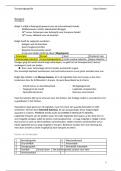
Introduction Ch 1,2,3 What is a theory?, Objective
vs Interpretive
Ipc and relationships Ch 5,10,12 Symbolic Interactionism, SIP,
CPM
Influence (individual/media) Ch 14,16,36 Social judgement, Cognitive
midterm topics dissonance, Cultivation
Theory
Groups and orhanization Ch 22,24 Cultural Approach to
Organizations, Critical
Theory of communication in
organizations
The public Ch 17,31,32 Rhetoric, Media
Ecology,Context Collapse
Genders and culture Ch 25,27,30 Communication
final topics accomodation theory, Co-
cultural theory, Muted group
Theory
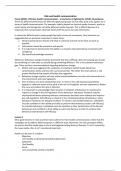
CHAPTER 1
LAUNCHING YOUR STUDY OF COMMUNICATION THEORY
Communication = the relational process of creating and interpreting messages that elicit a
response.
1) The creation of messages
The word creation implies that the content and form of messages are usually constructed,
invented, planned, crafted or adopted by the communicator.
Either conscious or unconscious. But they always have a meaning.
2) The message’s characteristics
Messages are the core of communication study and practice. The content level is the topic
addressed by the message. The relationship level communicates how each person thinks and
feels about the other.
,3) Interpretation and response
Interpretation = the process of deciding what a message means. The receiver has to decode the
message. Messages are polysemicàthey’re open to multiple interpretations.
What is a theory and what does it do?
A theory is a set of systematic, informed hunches about the way things work.
A set of hunches:
If a theory is a set of hunches, it means we aren’t yet sure we have the answer. Informed
hunches:
A theorist’s hunches should be informed. We’d be better of collecting data from several
different text messaging exchanges, from several different people, and looking for patterns.
That is research à the process of asking questions and finding answers.
Hunches that are systematic
Most scholars deserve the term theory for an integrated system of concepts. A theory not only lays out
multiple ideas, but also specifies the relationships among them. In common parlance, it connects the
dots.
Images of theory
Theories as nets: Theories as nets cast to catch what we call ‘the world’. We endeavor to
make the mesh ever finer and finer.
Theories as lenses Two theorists could analyze the same communication event – an argument
about politics, perhaps – and, depending on the lens each uses, one theorist may view the speech
act as a breakdown of communication or the breakup of a relationship, while the other theorist
will see it as democracy in action.
Theories as maps Within this analogy, a communication theory is a kind of map that’s
designed to help you navigate some part of the topography of human relationships.
Compared to other disciplines, communication science is
- Object oriented
- Inter-disciplinary
CHAPTER 2
OBJECTIVE AN INTERPRETIVE APPROACHES TO COMMUNICATION THEORY
Dimension 1) ways of knowing: discovering truth or creating multiple realities
Objective there is only one truth that only needs to be discovered
Epistemology = the study of the origin, nature, method, and limits of knowledge.
,Interpretive:
Deal with different questions
Truth is largely subjective and socially constructed
Dimension 2) human nature: determinism or free will?
Objective:
• Determinism focus on human behavior as a consequence of heredity and environment
Interpretive:
• Focus on the conscious made by people
• Human behavior is to a great extent voluntary
Dimension 3) the highest value: objectivity or emancipation
Objective:
It is about finding the truth
Objective testing hypothesis (a prediction; an educated guess about the way the world
works)
Empirical evidence
Trying to exclude own values
It is about what ‘’is’’
Interpretive:
It is about understanding
Includes ‘’own values’’ of what is right and wrong
Research is there to make ‘’the world a better place’’
It is about liberating and empowering people
It is about what ‘’ought to be’’
Dimension 4) purpose of theory: universal laws or interpretive guides
Objective:
Seeking for universal laws
There is never complete proof
Interpretive:
Interpreting particular ‘’text’’ and give meaning to them
It is not about ‘’proving’’ but it is about ‘’understanding’’
, CHAPTER 3
WEIGHING THE WORDS
What makes an objective theory good?
1) Prediction of future events
Objective theory predicts what will happen. Possible when dealing with things we can
see, hear, touch, smell, and taste over and over again
2) Explanation of the data
Objective theory ‘’draws order out of chaos’’. The theory provides us with an ‘’informed
hunch’’. We test this by gathering ‘’data’’ for all the people in our study.
3) Relative simplicity
Objective theory should be as simple as possible. Rule of parsimony – given two
plausible explanations for the same event, we should first accept and test the simpler
version.
4) Hypotheses that can be tested
Objective theory should be testable. Falsifiability – requirement that scientific theory
must be stated in a way that it can be tested a disproved if it is wrong.
5) Practical utility
Good objective theory is useful. There is nothing as practical as a good theory.
6) Quantitative research
Most objective research depends on a comparison of differences or testing relations.
Experiment research method that manipulates a variable in a tightly controlled
situation in order to find out if it has the predicted effect.
Survey research method that uses questionaries and structured interviews to collect
self-reported data that reflects what respondents think, feel, or intend to do.
What makes an interpretive theory good?
1) Clarification of values
Interpretive theory brings people’s values into the open. The theorist actively seeks to
acknowledge, identify, or unmask the ideology behind the message.
Introduction Ch 1,2,3 What is a theory?, Objective
vs Interpretive
Ipc and relationships Ch 5,10,12 Symbolic Interactionism, SIP,
CPM
Influence (individual/media) Ch 14,16,36 Social judgement, Cognitive
midterm topics dissonance, Cultivation
Theory
Groups and orhanization Ch 22,24 Cultural Approach to
Organizations, Critical
Theory of communication in
organizations
The public Ch 17,31,32 Rhetoric, Media
Ecology,Context Collapse
Genders and culture Ch 25,27,30 Communication
final topics accomodation theory, Co-
cultural theory, Muted group
Theory
CHAPTER 1
LAUNCHING YOUR STUDY OF COMMUNICATION THEORY
Communication = the relational process of creating and interpreting messages that elicit a
response.
1) The creation of messages
The word creation implies that the content and form of messages are usually constructed,
invented, planned, crafted or adopted by the communicator.
Either conscious or unconscious. But they always have a meaning.
2) The message’s characteristics
Messages are the core of communication study and practice. The content level is the topic
addressed by the message. The relationship level communicates how each person thinks and
feels about the other.
,3) Interpretation and response
Interpretation = the process of deciding what a message means. The receiver has to decode the
message. Messages are polysemicàthey’re open to multiple interpretations.
What is a theory and what does it do?
A theory is a set of systematic, informed hunches about the way things work.
A set of hunches:
If a theory is a set of hunches, it means we aren’t yet sure we have the answer. Informed
hunches:
A theorist’s hunches should be informed. We’d be better of collecting data from several
different text messaging exchanges, from several different people, and looking for patterns.
That is research à the process of asking questions and finding answers.
Hunches that are systematic
Most scholars deserve the term theory for an integrated system of concepts. A theory not only lays out
multiple ideas, but also specifies the relationships among them. In common parlance, it connects the
dots.
Images of theory
Theories as nets: Theories as nets cast to catch what we call ‘the world’. We endeavor to
make the mesh ever finer and finer.
Theories as lenses Two theorists could analyze the same communication event – an argument
about politics, perhaps – and, depending on the lens each uses, one theorist may view the speech
act as a breakdown of communication or the breakup of a relationship, while the other theorist
will see it as democracy in action.
Theories as maps Within this analogy, a communication theory is a kind of map that’s
designed to help you navigate some part of the topography of human relationships.
Compared to other disciplines, communication science is
- Object oriented
- Inter-disciplinary
CHAPTER 2
OBJECTIVE AN INTERPRETIVE APPROACHES TO COMMUNICATION THEORY
Dimension 1) ways of knowing: discovering truth or creating multiple realities
Objective there is only one truth that only needs to be discovered
Epistemology = the study of the origin, nature, method, and limits of knowledge.
,Interpretive:
Deal with different questions
Truth is largely subjective and socially constructed
Dimension 2) human nature: determinism or free will?
Objective:
• Determinism focus on human behavior as a consequence of heredity and environment
Interpretive:
• Focus on the conscious made by people
• Human behavior is to a great extent voluntary
Dimension 3) the highest value: objectivity or emancipation
Objective:
It is about finding the truth
Objective testing hypothesis (a prediction; an educated guess about the way the world
works)
Empirical evidence
Trying to exclude own values
It is about what ‘’is’’
Interpretive:
It is about understanding
Includes ‘’own values’’ of what is right and wrong
Research is there to make ‘’the world a better place’’
It is about liberating and empowering people
It is about what ‘’ought to be’’
Dimension 4) purpose of theory: universal laws or interpretive guides
Objective:
Seeking for universal laws
There is never complete proof
Interpretive:
Interpreting particular ‘’text’’ and give meaning to them
It is not about ‘’proving’’ but it is about ‘’understanding’’
, CHAPTER 3
WEIGHING THE WORDS
What makes an objective theory good?
1) Prediction of future events
Objective theory predicts what will happen. Possible when dealing with things we can
see, hear, touch, smell, and taste over and over again
2) Explanation of the data
Objective theory ‘’draws order out of chaos’’. The theory provides us with an ‘’informed
hunch’’. We test this by gathering ‘’data’’ for all the people in our study.
3) Relative simplicity
Objective theory should be as simple as possible. Rule of parsimony – given two
plausible explanations for the same event, we should first accept and test the simpler
version.
4) Hypotheses that can be tested
Objective theory should be testable. Falsifiability – requirement that scientific theory
must be stated in a way that it can be tested a disproved if it is wrong.
5) Practical utility
Good objective theory is useful. There is nothing as practical as a good theory.
6) Quantitative research
Most objective research depends on a comparison of differences or testing relations.
Experiment research method that manipulates a variable in a tightly controlled
situation in order to find out if it has the predicted effect.
Survey research method that uses questionaries and structured interviews to collect
self-reported data that reflects what respondents think, feel, or intend to do.
What makes an interpretive theory good?
1) Clarification of values
Interpretive theory brings people’s values into the open. The theorist actively seeks to
acknowledge, identify, or unmask the ideology behind the message.