CMN 552 Exam 1
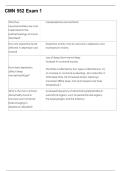
What two norepinephrine and serotonin
neurotransmitters are most
implicated in the
pathophysiology of mood
disorders?
How are dopamine levels Dopamine activity may be reduced in depression and
affected in depression and increased in mania
mania?
Loss of deep (slow-wave) sleep
Increase in nocturnal arousal.
How does depression
The latter is reflected by four types of disturbance: (1)
affect sleep
an increase in nocturnal awakenings, (2) a reduction in
neurophysiology?
total sleep time, (3) increased phasic rapid eye
movement (REM) sleep, and (4) increased core body
temperature. T
What is the most common Increased frequency of abnormal hyperintensities in
abnormality found in subcortical regions, such as periventricular regions,
structural and functional the basal ganglia, and the thalamus
brain imaging in
depressive disorders?
, (1) views about the self —a negative self-precept, (2)
What cognitive distortions
about the environment—a tendency to experience the
are commonly seen in
world as hostile and demanding, and (3) about the
depressed patients?
future—the expectation of suffering and failure
the hopelessness and passive resignation an animal or
What is learned
human learns when unable to avoid repeated aversive
helplessness?
events
What "specifiers" are used Table 8.1-7
to describe patients with
various mood disorders?
, MDD: The percentage of patients recovering after
repeated hospitalization decreases with passing time.
Generally, as a patient experiences more and more
depressive episodes, the time between the episodes
decreases, and the severity of each episode
increases.
Bipolar I: Have a poorer prognosis than do patients
with major depressive disorder. About 40 to 50
percent of patients with bipolar I disorder may have a
second manic episode within 2 years of the first
What factors are episode. poor occupational status, alcohol
associated with a poor dependence, psychotic features, depressive features,
prognosis for patients with interepisode depressive features, and male gender
mood disorders? were all factors that contributed a poor prognosis.
Short duration of manic episodes, advanced age of
onset, few suicidal thoughts, and few coexisting
psychiatric or medical problems predict a better
outcome.
Bipolar II: The course and prognosis of bipolar II
disorder indicate that the diagnosis is stable because
there is a high likelihood that patients with bipolar II
disorder will have the same diagnosis up to 5 years
later. Bipolar II disorder is a chronic disease that
warrants long-term treatment strategies.
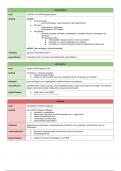
What is endogenous depression with no apparent cause
depression?
Catatonic features
What characteristics Postpartum onset
would the clinician see if a Rapid cycling
patient presented with Seasonal features
atypical features in a Significant weight gain
depressed patient? Hypersomnia
Leaden paralysis
, *Five (or more) of the following symptoms have been
present during the same 2-week period and represent
a change from previous functioning; at least one of
the symptoms is either (1) depressed mood or (2) loss
of interest or pleasure.
Depressed most of the day, nearly every day as
indicated by subjective report (e.g., feels sad, empty,
hopeless) or observation made by others (e.g.,
appears tearful)
Markedly diminished interest or pleasure in all, or
almost all, activities most of the day, nearly every day
(as indicated by subjective account or observation)
Significant weight loss when not dieting or weight
gain (e.g., change of more than 5% of body weight in a
month), or decrease or increase in appetite nearly
every day
Insomnia or hypersomnia nearly every day
Psychomotor agitation or retardation nearly every day
(observable by others, not merely subjective feelings
of restlessness or being slowed down)
What diagnostic criteria
are required for a patient
Fatigue or loss of energy nearly every day
to receive a diagnosis of
Major Depressive
Feelings of worthlessness or excessive or
Disorder?
inappropriate guilt (which may be delusional) nearly
every day (not merely self-reproach or guilt about
being sick).
Diminished ability to think or concentrate, or
indecisiveness, nearly every day (either by subjective
account or as observed by others)
What two norepinephrine and serotonin
neurotransmitters are most
implicated in the
pathophysiology of mood
disorders?
How are dopamine levels Dopamine activity may be reduced in depression and
affected in depression and increased in mania
mania?
Loss of deep (slow-wave) sleep
Increase in nocturnal arousal.
How does depression
The latter is reflected by four types of disturbance: (1)
affect sleep
an increase in nocturnal awakenings, (2) a reduction in
neurophysiology?
total sleep time, (3) increased phasic rapid eye
movement (REM) sleep, and (4) increased core body
temperature. T
What is the most common Increased frequency of abnormal hyperintensities in
abnormality found in subcortical regions, such as periventricular regions,
structural and functional the basal ganglia, and the thalamus
brain imaging in
depressive disorders?
, (1) views about the self —a negative self-precept, (2)
What cognitive distortions
about the environment—a tendency to experience the
are commonly seen in
world as hostile and demanding, and (3) about the
depressed patients?
future—the expectation of suffering and failure
the hopelessness and passive resignation an animal or
What is learned
human learns when unable to avoid repeated aversive
helplessness?
events
What "specifiers" are used Table 8.1-7
to describe patients with
various mood disorders?
, MDD: The percentage of patients recovering after
repeated hospitalization decreases with passing time.
Generally, as a patient experiences more and more
depressive episodes, the time between the episodes
decreases, and the severity of each episode
increases.
Bipolar I: Have a poorer prognosis than do patients
with major depressive disorder. About 40 to 50
percent of patients with bipolar I disorder may have a
second manic episode within 2 years of the first
What factors are episode. poor occupational status, alcohol
associated with a poor dependence, psychotic features, depressive features,
prognosis for patients with interepisode depressive features, and male gender
mood disorders? were all factors that contributed a poor prognosis.
Short duration of manic episodes, advanced age of
onset, few suicidal thoughts, and few coexisting
psychiatric or medical problems predict a better
outcome.
Bipolar II: The course and prognosis of bipolar II
disorder indicate that the diagnosis is stable because
there is a high likelihood that patients with bipolar II
disorder will have the same diagnosis up to 5 years
later. Bipolar II disorder is a chronic disease that
warrants long-term treatment strategies.
What is endogenous depression with no apparent cause
depression?
Catatonic features
What characteristics Postpartum onset
would the clinician see if a Rapid cycling
patient presented with Seasonal features
atypical features in a Significant weight gain
depressed patient? Hypersomnia
Leaden paralysis
, *Five (or more) of the following symptoms have been
present during the same 2-week period and represent
a change from previous functioning; at least one of
the symptoms is either (1) depressed mood or (2) loss
of interest or pleasure.
Depressed most of the day, nearly every day as
indicated by subjective report (e.g., feels sad, empty,
hopeless) or observation made by others (e.g.,
appears tearful)
Markedly diminished interest or pleasure in all, or
almost all, activities most of the day, nearly every day
(as indicated by subjective account or observation)
Significant weight loss when not dieting or weight
gain (e.g., change of more than 5% of body weight in a
month), or decrease or increase in appetite nearly
every day
Insomnia or hypersomnia nearly every day
Psychomotor agitation or retardation nearly every day
(observable by others, not merely subjective feelings
of restlessness or being slowed down)
What diagnostic criteria
are required for a patient
Fatigue or loss of energy nearly every day
to receive a diagnosis of
Major Depressive
Feelings of worthlessness or excessive or
Disorder?
inappropriate guilt (which may be delusional) nearly
every day (not merely self-reproach or guilt about
being sick).
Diminished ability to think or concentrate, or
indecisiveness, nearly every day (either by subjective
account or as observed by others)