Page | 1
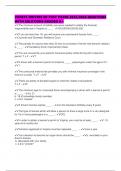
NSG 318 FINAL EXAM QUESTIONS WITH
DETAILED VERIFIED ANSWERS
acquired resistance Ans: type of resistance that is caused by prior
exposure to an antibiotic. this can cause an antibiotic to not be effective
as it once was for a certain bacteria
Acyclovir (Zovarix) Ans: antiviral drug used for the treatment of herpes
simplex virus and varicella
important to increase fluids
phlebitis (check site before and throughout therapy), increased bleeding
time
nephrotoxic
Amoxicillin Ans: penicillin that is commonly used for otitis media,
tonsilitis, and urinary tract infections
broad-spectrum
monitor urinary output (if less than 30mL/hr, decrease the dose)
tongue/tooth discoloration
superinfection - vaginitis
anaphylactic reaction Ans: a reaction to a drug that may begin with
shortness of breath and can lead to vascular collapse, laryngeal edema,
bronchospasms, and cardiac arrest.
antacids Ans: OTC drugs that should not be taken at the same time as
azithromycin (Zithromax) or levofloxacin (Levaquin)
Azithromycin (Zithromax) Ans: antibiotic that inhibits the steps of
protein synthesis and is used for bacterial conjuctivitis, STIs, and skin
, Page | 2
infections, NOT UTIs works well for those who are allergic to
penicillin/cephalosporin
1 hr before/2 hr after meals and with water
C diff, tinnitus, photosensitivity
broad spectrum antibiotic Ans: effective against gram-positive and
gram-negative bacteria
BUN, CR, liver enzymes Ans: labs needed before giving antibiotics to
determine the ability to metabolize and excrete the drug
Ceftriaxone (Rocephin) Ans: broad spectrum antibiotic that is used for
OM, meningitis, and surgical infection prophylaxis that have a disulfiram-
like reaction
Cephalosporins Ans: if a client is allergic to penicillin they can also be
allergic to this classification of drug
disulfiram like reaction
superinfection: stomatitis
hepatotoxic
clostridium difficile Ans: superinfection
multiple episodes of watery, diarrhea that may be bloody, abdominal
cramping, and a possible increased temperature
disulfiram-like reaction Ans: a reaction that a client may have with
metronidazide (Flagyl) or ceftriaxone and drinking alcohol
doxycycline Ans: antibiotic that is used to treat acne, E. coli, MRSA, STIs
and anthrax that should not be taken with milk, penicillins, and oral
contraceptives
teratogenic effects, avoid if <8yrs (permanent discoloration)
, Page | 3
photosensitivity
fluconazole (Difulcan) Ans: azole antifungal
used for candida infections and prophylactically for those undergoing
bone marrow transplant. drinks w caffeine are contraindicated when
taking this drug.
gentamicin sulfate Ans: antibiotic that is administered via IM or IV and
used for endocardiits, septicemia, bone/joint infection, and meningitis,
NOT OM. may cause alopecia, photosensitivity, tinnitus (especially with
furosemide), nephrotoxic
invermectin (stromectol) Ans: an anthelmic medication used to treat
clients with parasitic worms such as roundworm
injection site redness Ans: expected side effect of isoniazid and
ceftriaxone that the nurse should monitor but does not require
discontinuation of medication
levofloxacin (Levaquin) Ans: antibiotic that interferes with enzyme DNA
gyrase and is used to treat cellulitis, impetigo and skin infections. may
cause abdominal cramps, restlessness, depression, photosensitivity,
tinnitus and injection site reaction.
obtain specimen and cultures, increase fluids
metronidazide (Flagyl) Ans: peptide medication that is used for
anaerobic infections including rosacea
oral contraceptives Ans: may have reduced effects when taken with
doxycycline
peak level Ans: lab test that is drawn within 30-60 min after
administration of a medication to determine the amount of medication in
the system
penicillin Ans: broad spectrum antibiotic that inhibits bacterial cell wall
synthesis and has a beta-lactam ring structure
NSG 318 FINAL EXAM QUESTIONS WITH
DETAILED VERIFIED ANSWERS
acquired resistance Ans: type of resistance that is caused by prior
exposure to an antibiotic. this can cause an antibiotic to not be effective
as it once was for a certain bacteria
Acyclovir (Zovarix) Ans: antiviral drug used for the treatment of herpes
simplex virus and varicella
important to increase fluids
phlebitis (check site before and throughout therapy), increased bleeding
time
nephrotoxic
Amoxicillin Ans: penicillin that is commonly used for otitis media,
tonsilitis, and urinary tract infections
broad-spectrum
monitor urinary output (if less than 30mL/hr, decrease the dose)
tongue/tooth discoloration
superinfection - vaginitis
anaphylactic reaction Ans: a reaction to a drug that may begin with
shortness of breath and can lead to vascular collapse, laryngeal edema,
bronchospasms, and cardiac arrest.
antacids Ans: OTC drugs that should not be taken at the same time as
azithromycin (Zithromax) or levofloxacin (Levaquin)
Azithromycin (Zithromax) Ans: antibiotic that inhibits the steps of
protein synthesis and is used for bacterial conjuctivitis, STIs, and skin
, Page | 2
infections, NOT UTIs works well for those who are allergic to
penicillin/cephalosporin
1 hr before/2 hr after meals and with water
C diff, tinnitus, photosensitivity
broad spectrum antibiotic Ans: effective against gram-positive and
gram-negative bacteria
BUN, CR, liver enzymes Ans: labs needed before giving antibiotics to
determine the ability to metabolize and excrete the drug
Ceftriaxone (Rocephin) Ans: broad spectrum antibiotic that is used for
OM, meningitis, and surgical infection prophylaxis that have a disulfiram-
like reaction
Cephalosporins Ans: if a client is allergic to penicillin they can also be
allergic to this classification of drug
disulfiram like reaction
superinfection: stomatitis
hepatotoxic
clostridium difficile Ans: superinfection
multiple episodes of watery, diarrhea that may be bloody, abdominal
cramping, and a possible increased temperature
disulfiram-like reaction Ans: a reaction that a client may have with
metronidazide (Flagyl) or ceftriaxone and drinking alcohol
doxycycline Ans: antibiotic that is used to treat acne, E. coli, MRSA, STIs
and anthrax that should not be taken with milk, penicillins, and oral
contraceptives
teratogenic effects, avoid if <8yrs (permanent discoloration)
, Page | 3
photosensitivity
fluconazole (Difulcan) Ans: azole antifungal
used for candida infections and prophylactically for those undergoing
bone marrow transplant. drinks w caffeine are contraindicated when
taking this drug.
gentamicin sulfate Ans: antibiotic that is administered via IM or IV and
used for endocardiits, septicemia, bone/joint infection, and meningitis,
NOT OM. may cause alopecia, photosensitivity, tinnitus (especially with
furosemide), nephrotoxic
invermectin (stromectol) Ans: an anthelmic medication used to treat
clients with parasitic worms such as roundworm
injection site redness Ans: expected side effect of isoniazid and
ceftriaxone that the nurse should monitor but does not require
discontinuation of medication
levofloxacin (Levaquin) Ans: antibiotic that interferes with enzyme DNA
gyrase and is used to treat cellulitis, impetigo and skin infections. may
cause abdominal cramps, restlessness, depression, photosensitivity,
tinnitus and injection site reaction.
obtain specimen and cultures, increase fluids
metronidazide (Flagyl) Ans: peptide medication that is used for
anaerobic infections including rosacea
oral contraceptives Ans: may have reduced effects when taken with
doxycycline
peak level Ans: lab test that is drawn within 30-60 min after
administration of a medication to determine the amount of medication in
the system
penicillin Ans: broad spectrum antibiotic that inhibits bacterial cell wall
synthesis and has a beta-lactam ring structure