Adaptations to terrestrial environments
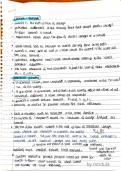
Evolution of camels
Camels behaviourally respond to the sun by facing towards it, presenting a smaller
profile for the sun’s rays to warm
The camel has a large body relative to its surface area, so these heat inputs raise its
body temperature slowly
At night, as the air and sand cool rapidly, the camel radiates its excess heat into the
air or lies down and transfers its excess body heat to the sand
Camels are able to cool their brains
Can store large amounts of water in its body, most of which resides in its tissues
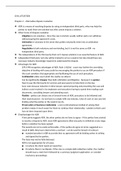
Soil nutrients
In addition to the oxygen, carbon and hydrogen that plants incorporate into carbohydrates
to fuel their survival and growth, plants require many other inorganic nutrients including
nitrogen, phosphorus, calcium and potassium to make proteins, nucleic acids, and other
essential organic compounds. Nitrogen exists in soil as ammonium (NH4+) and nitrate ions
(NO3-), phosphorus exists as phosphate ions (PO43-), and calcium and potassium exist as
the elemental ions Ca2+ and K+.
Soil structure and water-holding capacity
Smaller particles have a larger surface area, relative to their volume, compared to larger
particles. As a result, the total surface area of particles in a given volume of soil increases as
particle size decreases. Therefore, soils with a high proportion of clay particles hold more
water than soils with a high proportion of sand particles. Soils with a high proportion of sand
particles tend to dry out because water quickly drains away, leaving many tiny pockets of air
between the large sand particles. Clay soils represent the opposite extreme; each tiny
particle of clay can attract a thin film of water on its surface, leaving little space for air
pockets. Although clay soils retain a lot of water, clay particles can hold water molecules so
tightly that it can be difficult for plants to extract the water from the soil.
Osmotic pressure and water uptake
Osmotic forces cause water molecules to move from area of low solute concentration to
areas of high solute concentration. At the same time, ions and other solutes diffuse through
water from regions of high solute concentration to regions of low solute concentration. Root
cells possess two adaptation that prevent this equalization. First, semipermeable cell
membranes prevent larger solute molecules from leaving the plant’s root. Second, cell
membranes can actively transport ions and small molecules against a concentration
gradient into the root cells. These two adaptations maintain high solute concentrations
inside the roots and allow strong osmotic forces to continue.
Transpiration and the cohesion-tension theory
Plants conduct water to their leaves through tubular xylem elements, which are the empty
remains of xylem cells in the cores of roots and stems, connected to form the equivalent of
water pipes. The movement of water through these xylem cells depends on the cohesion of
water molecules and differences in water potential between the leaves and roots.
, To prevent water loss from the leaves, most of the exterior of a leaf are coated with a waxy
cuticle that retards water loss and they have stomata, guard cells close the stomata.
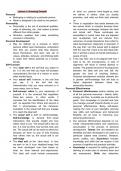
Sunlight provides the energy for photosynthesis
The energy of photons is related positively to their frequency and inversely to their
wavelength; the highest energy photons have the highest frequency and the shortest
wavelengths. Wavelengths are expressed in units of nanometres. The different wavelengths
of light can be separated using a prism. Infrared radiation has long wavelengths, which
contain lower energy. Short wavelengths, such as UV, contain higher energy. Chloroplasts
contain stacks of membranes known as thylakoids and fluid-filled space surrounding the
thylakoids called the stroma. Embedded within the thylakoid membranes are several kinds
of pigments that absorb solar radiation, including chlorophylls and carotenoids.
Chlorophylls, which are primarily responsible for capturing light energy for photosynthesis,
absorb red and violet light. Chlorophylls reflect green and blue light, which is why leaves are
green. They are four types of chlorophyll that differ in the wavelengths that they absorb:
chlorophyll a, b, c and d. chlorophyll a is used in photosynthesis and the others are
accessory pigments. Chlorophyll f is found in algae. Carotenoids, the pigments that give
Evolution of camels
Camels behaviourally respond to the sun by facing towards it, presenting a smaller
profile for the sun’s rays to warm
The camel has a large body relative to its surface area, so these heat inputs raise its
body temperature slowly
At night, as the air and sand cool rapidly, the camel radiates its excess heat into the
air or lies down and transfers its excess body heat to the sand
Camels are able to cool their brains
Can store large amounts of water in its body, most of which resides in its tissues
Soil nutrients
In addition to the oxygen, carbon and hydrogen that plants incorporate into carbohydrates
to fuel their survival and growth, plants require many other inorganic nutrients including
nitrogen, phosphorus, calcium and potassium to make proteins, nucleic acids, and other
essential organic compounds. Nitrogen exists in soil as ammonium (NH4+) and nitrate ions
(NO3-), phosphorus exists as phosphate ions (PO43-), and calcium and potassium exist as
the elemental ions Ca2+ and K+.
Soil structure and water-holding capacity
Smaller particles have a larger surface area, relative to their volume, compared to larger
particles. As a result, the total surface area of particles in a given volume of soil increases as
particle size decreases. Therefore, soils with a high proportion of clay particles hold more
water than soils with a high proportion of sand particles. Soils with a high proportion of sand
particles tend to dry out because water quickly drains away, leaving many tiny pockets of air
between the large sand particles. Clay soils represent the opposite extreme; each tiny
particle of clay can attract a thin film of water on its surface, leaving little space for air
pockets. Although clay soils retain a lot of water, clay particles can hold water molecules so
tightly that it can be difficult for plants to extract the water from the soil.
Osmotic pressure and water uptake
Osmotic forces cause water molecules to move from area of low solute concentration to
areas of high solute concentration. At the same time, ions and other solutes diffuse through
water from regions of high solute concentration to regions of low solute concentration. Root
cells possess two adaptation that prevent this equalization. First, semipermeable cell
membranes prevent larger solute molecules from leaving the plant’s root. Second, cell
membranes can actively transport ions and small molecules against a concentration
gradient into the root cells. These two adaptations maintain high solute concentrations
inside the roots and allow strong osmotic forces to continue.
Transpiration and the cohesion-tension theory
Plants conduct water to their leaves through tubular xylem elements, which are the empty
remains of xylem cells in the cores of roots and stems, connected to form the equivalent of
water pipes. The movement of water through these xylem cells depends on the cohesion of
water molecules and differences in water potential between the leaves and roots.
, To prevent water loss from the leaves, most of the exterior of a leaf are coated with a waxy
cuticle that retards water loss and they have stomata, guard cells close the stomata.
Sunlight provides the energy for photosynthesis
The energy of photons is related positively to their frequency and inversely to their
wavelength; the highest energy photons have the highest frequency and the shortest
wavelengths. Wavelengths are expressed in units of nanometres. The different wavelengths
of light can be separated using a prism. Infrared radiation has long wavelengths, which
contain lower energy. Short wavelengths, such as UV, contain higher energy. Chloroplasts
contain stacks of membranes known as thylakoids and fluid-filled space surrounding the
thylakoids called the stroma. Embedded within the thylakoid membranes are several kinds
of pigments that absorb solar radiation, including chlorophylls and carotenoids.
Chlorophylls, which are primarily responsible for capturing light energy for photosynthesis,
absorb red and violet light. Chlorophylls reflect green and blue light, which is why leaves are
green. They are four types of chlorophyll that differ in the wavelengths that they absorb:
chlorophyll a, b, c and d. chlorophyll a is used in photosynthesis and the others are
accessory pigments. Chlorophyll f is found in algae. Carotenoids, the pigments that give