

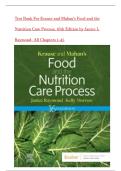
Test Bank For Krause and Mahan’s Food and the
Nutrition Care Process, 16th Edition by Janice L
Raymond- All Chapters 1-45
,Krause and Mahan’s Food and the Nutrition Care Process, 16th Edition, 16th Edition
by Janice L. Raymond and Kelly Morrow
Table of Content
PART I: NUTRITION ASSESSMENT
1. Intake: Gastrointestinal Digestion, Absorption, and Excretion of Nutrients
2. Intake: Energy
3. Clinical: Water, Electrolytes, and Acid–Base Balance
4. Intake: Assessment of Food- and Nutrition-Related History
5. Clinical: Biochemical, Physical, and Functional Assessment
6. Clinical: Nutritional Genomics
7. Inflammation and the Pathophysiology of Chronic Disease
8. Behavioral–Environmental: The Individual in the Community
PART II: NUTRITION DIAGNOSIS AND INTERVENTION
9. Overview of Nutrition Diagnosis and Intervention
10. Food and Nutrient Delivery: Planning the Diet With Cultural Competency
11. Food and Nutrient Delivery: Complementary and Integrative Medicine and Dietary
Supplements
12. Food and Nutrient Delivery: Nutrition Support Methods
13. Education and Counseling: Behavioral Change
PART III: NUTRITION IN THE LIFE CYCLE
14. Nutrition in Pregnancy and Lactation
15. Nutrition in Infancy
16. Nutrition in Childhood
17. Nutrition in Adolescence
18. Nutrition for Transgender People
19. Nutrition in the Adult Years
20. Nutrition in Aging
,PART IV: NUTRITION FOR A HEALTHY LIFESTYLE
21. Nutrition in Weight Management
22. Nutrition in Eating Disorders
23. Nutrition in Exercise and Sports Performance
24. Nutrition and Bone Health
25. Nutrition for Oral and Dental Health
PART V: MEDICAL NUTRITION THERAPY
26. Medical Nutrition Therapy for Adverse Reactions to Food: Allergies and Intolerances
27. Medical Nutrition Therapy for Upper Gastrointestinal Tract Disorders
28. Medical Nutrition Therapy for Lower Gastrointestinal Tract Disorders
29. Medical Nutrition Therapy for Hepatobiliary and Pancreatic Disorders
30. Medical Nutrition Therapy for Diabetes Mellitus and Hypoglycemia of Nondiabetic
Origin
31. Medical Nutrition Therapy for Thyroid, Adrenal, and Other Endocrine Disorders
32. Medical Nutrition Therapy for Anemia
33. Medical Nutrition Therapy for Cardiovascular Disease
34. Medical Nutrition Therapy for Pulmonary Disease
35. Medical Therapy for Renal Disorders
36. Medical Nutrition Therapy for Cancer Prevention, Treatment, and Survivorship
37. Medical Nutrition Therapy for Infectious Diseases
38. Medical Nutrition Therapy for HIV and AIDS
39. Medical Nutrition Therapy in Critical Care
40. Medical Nutrition Therapy for Rheumatic and Musculoskeletal Disease
41. Medical Nutrition Therapy for Neurologic Disorders
42. Medical Nutrition Therapy for Psychiatric and Cognitive Disorders
PART VI: PEDIATRIC SPECIALTIES
43. Medical Nutrition Therapy for Low-Birth Weight Infants
44. Medical Nutrition Therapy for Genetic Metabolic Disorders
45. Medical Nutrition Therapy for Intellectual and Developmental Disabilities
, Chapter 01: Intake: Gastrointestinal Digestion, Absorption, and Excretion of Nutrients
Raymond: Krause and Mahan’s Food and the Nutrition Care Process, 16th Edition
MULTIPLE CHOICE
1. Pepsinogen is converted to pepsin when it comes in contact with
a. enterokinase.
b. trypsinogen.
c. hydrochloric acid.
d. peptidases.
ANS: C
Pepsinogen is secreted in the stomach and converted to its active form by the acid
environment of the stomach. Enterokinase is secreted by the brush border of the small
intestine in response to the presence of chyme. Trypsinogen is secreted by the pancreas and
activated by enterokinase. Various peptidases are secreted by the either brush border or the
pancreas.
2. Which of the following is formed by bacterial synthesis in the colon?
a. Vitamin K
b. Vitamin D
c. Vitamin B6
d. Niacin
ANS: A
Colonic bacteria produce vitamin K, vitamin B12, thiamin, and riboflavin. Vitamin D may be
metabolized by exposure of precursor vitamin D in the skin to ultraviolet light. The human
body can synthesize niacin from the amino acid tryptophan. Vitamin B 6 must be obtained
from dietary sources such as meats, whole grains, vegetables, and nuts.
3. After surgical removal of a large portion of the small intestine, what functional complication
is most likely to develop?
a. Changes in dietary habits
b. Impaired digestion
c. Loss of absorptive tissue
d. Elimination of dietary residue
ANS: C
The small intestine is the primary site of nutrient absorption because of its large absorption
surface area. Secretions from the liver, gallbladder, and pancreas can still contribute to
digestion of intestinal contents. However, decreased absorption of nutrients and food
components may result in more intestinal remains and residue. A patient may change dietary
habits as a result of gastrointestinal discomfort experienced after intestinal resection, but this
is not a functional complication.
4. The sight or smell of food produces vagal stimulation of the parietal cells of the gastric
mucosa, resulting in the increased production of what?
a. Motilin
b. Gastrin
c. Cholecystokinin
Nutrition Care Process, 16th Edition by Janice L
Raymond- All Chapters 1-45
,Krause and Mahan’s Food and the Nutrition Care Process, 16th Edition, 16th Edition
by Janice L. Raymond and Kelly Morrow
Table of Content
PART I: NUTRITION ASSESSMENT
1. Intake: Gastrointestinal Digestion, Absorption, and Excretion of Nutrients
2. Intake: Energy
3. Clinical: Water, Electrolytes, and Acid–Base Balance
4. Intake: Assessment of Food- and Nutrition-Related History
5. Clinical: Biochemical, Physical, and Functional Assessment
6. Clinical: Nutritional Genomics
7. Inflammation and the Pathophysiology of Chronic Disease
8. Behavioral–Environmental: The Individual in the Community
PART II: NUTRITION DIAGNOSIS AND INTERVENTION
9. Overview of Nutrition Diagnosis and Intervention
10. Food and Nutrient Delivery: Planning the Diet With Cultural Competency
11. Food and Nutrient Delivery: Complementary and Integrative Medicine and Dietary
Supplements
12. Food and Nutrient Delivery: Nutrition Support Methods
13. Education and Counseling: Behavioral Change
PART III: NUTRITION IN THE LIFE CYCLE
14. Nutrition in Pregnancy and Lactation
15. Nutrition in Infancy
16. Nutrition in Childhood
17. Nutrition in Adolescence
18. Nutrition for Transgender People
19. Nutrition in the Adult Years
20. Nutrition in Aging
,PART IV: NUTRITION FOR A HEALTHY LIFESTYLE
21. Nutrition in Weight Management
22. Nutrition in Eating Disorders
23. Nutrition in Exercise and Sports Performance
24. Nutrition and Bone Health
25. Nutrition for Oral and Dental Health
PART V: MEDICAL NUTRITION THERAPY
26. Medical Nutrition Therapy for Adverse Reactions to Food: Allergies and Intolerances
27. Medical Nutrition Therapy for Upper Gastrointestinal Tract Disorders
28. Medical Nutrition Therapy for Lower Gastrointestinal Tract Disorders
29. Medical Nutrition Therapy for Hepatobiliary and Pancreatic Disorders
30. Medical Nutrition Therapy for Diabetes Mellitus and Hypoglycemia of Nondiabetic
Origin
31. Medical Nutrition Therapy for Thyroid, Adrenal, and Other Endocrine Disorders
32. Medical Nutrition Therapy for Anemia
33. Medical Nutrition Therapy for Cardiovascular Disease
34. Medical Nutrition Therapy for Pulmonary Disease
35. Medical Therapy for Renal Disorders
36. Medical Nutrition Therapy for Cancer Prevention, Treatment, and Survivorship
37. Medical Nutrition Therapy for Infectious Diseases
38. Medical Nutrition Therapy for HIV and AIDS
39. Medical Nutrition Therapy in Critical Care
40. Medical Nutrition Therapy for Rheumatic and Musculoskeletal Disease
41. Medical Nutrition Therapy for Neurologic Disorders
42. Medical Nutrition Therapy for Psychiatric and Cognitive Disorders
PART VI: PEDIATRIC SPECIALTIES
43. Medical Nutrition Therapy for Low-Birth Weight Infants
44. Medical Nutrition Therapy for Genetic Metabolic Disorders
45. Medical Nutrition Therapy for Intellectual and Developmental Disabilities
, Chapter 01: Intake: Gastrointestinal Digestion, Absorption, and Excretion of Nutrients
Raymond: Krause and Mahan’s Food and the Nutrition Care Process, 16th Edition
MULTIPLE CHOICE
1. Pepsinogen is converted to pepsin when it comes in contact with
a. enterokinase.
b. trypsinogen.
c. hydrochloric acid.
d. peptidases.
ANS: C
Pepsinogen is secreted in the stomach and converted to its active form by the acid
environment of the stomach. Enterokinase is secreted by the brush border of the small
intestine in response to the presence of chyme. Trypsinogen is secreted by the pancreas and
activated by enterokinase. Various peptidases are secreted by the either brush border or the
pancreas.
2. Which of the following is formed by bacterial synthesis in the colon?
a. Vitamin K
b. Vitamin D
c. Vitamin B6
d. Niacin
ANS: A
Colonic bacteria produce vitamin K, vitamin B12, thiamin, and riboflavin. Vitamin D may be
metabolized by exposure of precursor vitamin D in the skin to ultraviolet light. The human
body can synthesize niacin from the amino acid tryptophan. Vitamin B 6 must be obtained
from dietary sources such as meats, whole grains, vegetables, and nuts.
3. After surgical removal of a large portion of the small intestine, what functional complication
is most likely to develop?
a. Changes in dietary habits
b. Impaired digestion
c. Loss of absorptive tissue
d. Elimination of dietary residue
ANS: C
The small intestine is the primary site of nutrient absorption because of its large absorption
surface area. Secretions from the liver, gallbladder, and pancreas can still contribute to
digestion of intestinal contents. However, decreased absorption of nutrients and food
components may result in more intestinal remains and residue. A patient may change dietary
habits as a result of gastrointestinal discomfort experienced after intestinal resection, but this
is not a functional complication.
4. The sight or smell of food produces vagal stimulation of the parietal cells of the gastric
mucosa, resulting in the increased production of what?
a. Motilin
b. Gastrin
c. Cholecystokinin

