ANCC FNP sample Questions with Correct
Answers
Save
Terms in this set (22)
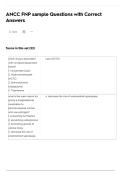
which drug is associated Lasix (HCTZ)
with increased lipoprotein
levles?
1. furosemide (Lasix)
2. Hydroclorothiazide
(HCTZ)
3. Spironolactone
(Aladactone)
4. Triamterene
what is the main reason for 4. decrease the risk of endometrial hyperplasia
giving a progestational
medication to
perimenopausal women
who use estrogen?
1. preventing hot flashes
2. preventing osteoporosis
3. promoting growth of
uterine lining
4. decrease the risk of
endometrial hyperplasia
, The FNP asks a patient to 1. cerebellar function
perform rapid, alternating
movements of the hands
to evaluate:
1. cerebellar function
2. cognitive function
3. reflex arc function
4. stereognostic function
A 38 yo Vietnamese 1. hepatitis B
patient tells the FNP that
his parent died in her 40s
from liver cancer. That
patient is at risk for:
1. hepatitis B
2. malaria
3. tularemia
4. tyrosenemia
a difficult aspect of 3.long latency period between exposure and disease
determining occupational development
exposure to disease is the:
1. confidentiality of the
information in company
records
2. inaccuracy of disease
reporting
3.long latency period
between exposure and
disease development
4. reliance on workers'
memories
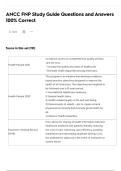
Answers
Save
Terms in this set (22)
which drug is associated Lasix (HCTZ)
with increased lipoprotein
levles?
1. furosemide (Lasix)
2. Hydroclorothiazide
(HCTZ)
3. Spironolactone
(Aladactone)
4. Triamterene
what is the main reason for 4. decrease the risk of endometrial hyperplasia
giving a progestational
medication to
perimenopausal women
who use estrogen?
1. preventing hot flashes
2. preventing osteoporosis
3. promoting growth of
uterine lining
4. decrease the risk of
endometrial hyperplasia
, The FNP asks a patient to 1. cerebellar function
perform rapid, alternating
movements of the hands
to evaluate:
1. cerebellar function
2. cognitive function
3. reflex arc function
4. stereognostic function
A 38 yo Vietnamese 1. hepatitis B
patient tells the FNP that
his parent died in her 40s
from liver cancer. That
patient is at risk for:
1. hepatitis B
2. malaria
3. tularemia
4. tyrosenemia
a difficult aspect of 3.long latency period between exposure and disease
determining occupational development
exposure to disease is the:
1. confidentiality of the
information in company
records
2. inaccuracy of disease
reporting
3.long latency period
between exposure and
disease development
4. reliance on workers'
memories