603 Week 5 Test
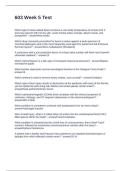
Which type of heat-related illness involves a core body temperature of at least 104 F
and may present with hot dry skin, acute mental status change, absent sweat, and
tachypnea? - answerHeat stroke
Which drug commonly prescribed for burns is active against a wide spectrum of
microbial pathogens and is the most frequently used agent for partial and full-thickness
thermal injuries? - answerSilver sulfadiazine (Silvadene)
A sunscreen with a sun-protection factor of at least what number will block most harmful
ultraviolet radiation? - answer15
Which clinical feature is a late sign of increased intracranial pressure? - answerDilated,
nonreactive pupils
What number represents normal neurological function of the Glasgow Coma Scale? -
answer15
Which method is used to remove heavy metals, such as lead? - answerChelation
Which type of burn injury results in destruction of the epidermis with most of the dermis,
yet the epidermal cells lining hair follicles and sweat glands remain intact? -
answerDeep partial-thickness burns
Which carboxyhemoglobin (COHb) level correlates with the clinical symptoms of
confusion, lethargy, and ST-segment depression on the electrocardiogram? -
answer30% COHb
What condition is sometimes confused with anaphylaxis from an insect sting? -
answerVasovagal reaction
After a head injury, what is it called when air enters into the cerebrospinal fluid (CSF)-
filled spaces within the head? - answerPneumocephalus
What condition is characterized by a brief loss of consciousness, then a brief "lucid"
moment, followed by momentary unconsciousness minutes after the injury? -
answerEpidural hematoma
A patient with a basilar skull fracture may experience an impaired downward gaze or
diplopia from which affected cranial nerve? - answerCN IV
Which type of heat-related illness involves a core body temperature of at least 104 F
and may present with hot dry skin, acute mental status change, absent sweat, and
tachypnea? - answerHeat stroke
Which drug commonly prescribed for burns is active against a wide spectrum of
microbial pathogens and is the most frequently used agent for partial and full-thickness
thermal injuries? - answerSilver sulfadiazine (Silvadene)
A sunscreen with a sun-protection factor of at least what number will block most harmful
ultraviolet radiation? - answer15
Which clinical feature is a late sign of increased intracranial pressure? - answerDilated,
nonreactive pupils
What number represents normal neurological function of the Glasgow Coma Scale? -
answer15
Which method is used to remove heavy metals, such as lead? - answerChelation
Which type of burn injury results in destruction of the epidermis with most of the dermis,
yet the epidermal cells lining hair follicles and sweat glands remain intact? -
answerDeep partial-thickness burns
Which carboxyhemoglobin (COHb) level correlates with the clinical symptoms of
confusion, lethargy, and ST-segment depression on the electrocardiogram? -
answer30% COHb
What condition is sometimes confused with anaphylaxis from an insect sting? -
answerVasovagal reaction
After a head injury, what is it called when air enters into the cerebrospinal fluid (CSF)-
filled spaces within the head? - answerPneumocephalus
What condition is characterized by a brief loss of consciousness, then a brief "lucid"
moment, followed by momentary unconsciousness minutes after the injury? -
answerEpidural hematoma
A patient with a basilar skull fracture may experience an impaired downward gaze or
diplopia from which affected cranial nerve? - answerCN IV