Summary NR 602 Midterm Review.
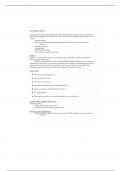
NR 602 Midterm Review Chalazion Chalazion is a chronic sterile inflammation of the eyelid resulting from a lipogranuloma of the meibomian glands that line the posterior margins of the eyelids (see Fig. 29-7). It is deeper in the eyelid tissue than a hordeolum and may result from an internal hordeolum or retained lipid granular secretions. Clinical Findings Initially, mild erythema and slight swelling of the involved eyelid are seen. After a few days the inflammation resolves, and a slow growing, round, nonpigmented, painless (key finding) mass remains. It may persist for a long time and is a commonly acquired lid lesion seen in children (see Fig. 29-7). 727 Management • Acute lesions are treated with hot compresses. • Refer to an ophthalmologist for surgical incision or topical intralesional corticosteroid injections if the condition is unresolved or if the lesion causes cosmetic concerns. A chalazion can distort vision by causing astigmatism as a result of pressure on the orbit. Complications Recurrence is common. Fragile, vascular granulation tissue called pyogenic granuloma that enlarges and bleeds rapidly can occur if a chalazion breaks through the conjunctival surface. Types of Conjunctivitis Type Incidence/Etiology Clinical Findings Diagnosis Management* Ophthalmia neonatorum Neonates: Chlamydia trachomatis, Staphylococcus aureus, Neisseria gonorrhoeae, HSV (silver nitrate reaction occurs in 10% of neonates) Erythema, chemosis, purulent exudate with N. gonorrhoeae; clear to mucoid exudate with chlamydia Culture (ELISA, PCR), Gram stain, R/O N. gonorrhoeae, chlamydia Saline irrigation to eyes until exudate gone; follow with erythromycin ointment For N. gonorrhoeae:ceftriaxone or IM or IV For chlamydia: erythromycin or possibly azithromycin PO For HSV: antivirals IV or PO Bacterial conjunctivitis In neonates 5 to 14 days old, preschoolers, and sexually active teens: Haemophilus influenzae(nontypeable), Streptococcus pneumoniae, S. aureus, N. gonorrhoeae Erythema, chemosis, itching, burning, mucopurulent exudate, matter in eyelashes; ↑ in winter Cultures (required in neonate); Gram stain (optional); chocolate agar (for N. gonorrhoeae) R/O pharyngitis, N. gonorrhoeae, AOM, URI, seborrhea Neonates: Erythromycin 0.5% ophthalmic ointment ≥1 year old: Fourth-generation fluoroquinolone For concurrent AOM: Treat accordingly for AOM Warm soaks to eyes three times a day until clear No sharing towels, pillows No school until treatment begins Chronic bacterial conjunctivitis (unresponsive conjunctivitis previously treated as bacterial in etiology) School-age children and teens: Bacteria, viruses, C. trachomatis Same as above; foreign body sensation Cultures, Gram stain; R/O dacryostenosis, blepharitis, corneal ulcers, trachoma Depends on prior treatment, laboratory results, and differential diagnoses Review compliance and prior drug choices of conjunctivitis treatment Consult with ophthalmologist Inclusion conjunctivitis Neonates 5 to 14 days old and sexually active teens: C. trachomatis Erythema, chemosis, clear or mucoid exudate, palpebral follicles Cultures (ELISA, PCR), R/O sexual activity Neonates: Erythromycin or azithromycin PO Adolescents: Doxycycline, azithromycin, EES, erythromycin base, levofloxacin PO Viral conjunctivitis Adenovirus 3, 4, 7; HSV, herpes zoster, varicella Erythema, chemosis, tearing (bilateral); HSV and herpes zoster: unilateral with photophobia, fever; zoster: nose lesion; spring and fall Cultures, R/O corneal infiltration Refer to ophthalmologist if HSV or photophobia present Cool compresses three or four times a day Allergic and vernal conjunctivitis Atopy sufferers, seasonal Stringy, mucoid exudate, swollen eyelids and conjunctivae, itching (key finding), tearing, palpebral follicles, headache, rhinitis Eosinophils in conjunctival scrapings Naphazoline/pheniramine, naphazoline/antazoline ophthalmic solution (see text) Mast cell stabilizer (see text) Refer to allergist if needed *See text for dosages. Blepharitis Blepharitis is an acute or chronic inflammation of the eyelash follicles or meibomian sebaceous glands of the eyelids (or both). It is usually bilateral. There may be a history of contact lens wear or physical contact with another symptomatic person. It is commonly caused by contaminated makeup or contact lens solution. Poor hygiene, tear deficiency, rosacea, and seborrheic dermatitis of the scalp and face are also possible etiologic factors. The ulcerative form of blepharitis is usually caused by S. aureus. Nonulcerative blepharitis is occasionally seen in children with psoriasis, seborrhea, eczema, allergies, lice infestation, or in children with trisomy 21. Clinical Findings • Swelling and erythema of the eyelid margins and palpebral conjunctiva 726 • Flaky, scaly debris over eyelid margins on awakening; presence of lice • Gritty, burning feeling in eyes • Mild bulbar conjunctival injection • Ulcerative form: Hard scales at the base of the lashes (if the crust is removed, ulceration is seen at the hair follicles, the lashes fall out, and an associated conjunctivitis is present) Differential Diagnosis Pediculosis of the eyelashes. Management Explain to the patient that this may be chronic or relapsing. Instructions for the patient include: • Scrub the eyelashes and eyelids with a cotton-tipped applicator containing a weak (50%) solution of no-tears shampoo to maintain proper hygiene and debride the scales. • Use warm compresses for 5 to 10 minutes at a time two to four times a day and wipe away lid debris. • At times antistaphylococcal antibiotic (e.g., erythromycin 0.5% ophthalmic ointment) is used until symptoms subside and for at least 1 week thereafter. Ointment is preferable to eye drops because of increased duration of contact with the ocular tissue. Azithromycin 1% ophthalmic solution for 4 weeks may also be used (Shtein, 2014). • Treat associated seborrhea, psoriasis, eczema, or allergies as indicated. • Remove contact lenses and wear eyeglasses for the duration of the treatment period. Sterilize or clean lenses before reinserting. • Purchase new eye makeup; minimize use of mascara and eyeliner.
Escuela, estudio y materia
- Institución
- Chamberlain College Of Nursing
- Grado
- NR 602 Midterm Review
Información del documento
- Subido en
- 10 de febrero de 2021
- Número de páginas
- 101
- Escrito en
- 2020/2021
- Tipo
- Resumen
Temas
-
nr 602 midterm review
-
chalazion
-
types of conjunc
-
chalazion is a chronic sterile inflammation of the eyelid resulting from a lipogranuloma of the meibomian glands that line the posterior margins of the