PAGE 1
r1
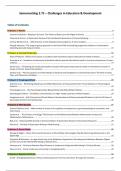
, Table of Contents are Given Below r1 r1 r1 r1 r1
"Principles of Microeconomics, 2nd Edition" by Betsey Stevenson and Justin Wolfers is structured into five
r1 r1 r1 r1 r1 r1 r1 r1 r1 r1 r1 r1 r1 r1
parts, each focusing on different aspects of microeconomic theory and application. The chapters are as
r1 r1 r1 r1 r1 r1 r1 r1 r1 r1 r1 r1 r1 r1 r1
follows:
r1
Part I: Foundations of Economics
r1 r1 r1 r1
1. The Core Principles of Economics
r1 r1 r1 r1
2. Demand: Thinking Like a Buyer r1 r1 r1 r1
3. Supply: Thinking Like a Seller r1 r1 r1 r1
4. Equilibrium: Where Supply Meets Demand r1 r1 r1 r1
r1 Part II: Analyzing Markets
r1 r1 r1
5. Elasticity: Measuring Responsiveness r1 r1
6. When Governments Intervene in Markets r1 r1 r1 r1
7. Welfare and Efficiency r1 r1
8. Gains from Trade r1 r1
Part III: Applications and Policy Issues
r1 r1 r1 r1 r1
9. International Trade r1
10. Externalities and Public Goods r1 r1 r1
11. The Labor Market r1 r1
12. Wages, Workers, and Management r1 r1 r1
13. Inequality, Social Insurance, and Redistribution r1 r1 r1 r1
r1 Part IV: Market Structure and Business Strategy
r1 r1 r1 r1 r1 r1
14. Market Structure and Market Power r1 r1 r1 r1
15. Entry, Exit, and Long-Run Profitability r1 r1 r1 r1
16. Business Strategy r1
17. Sophisticated Pricing Strategies r1 r1
18. Game Theory and Strategic Choices r1 r1 r1 r1
r1 Part V: Advanced Decisions
r1 r1 r1
PAGE 2
r1
, 19. Decisions Involving Uncertainty r1 r1
20. Decisions Involving Private Information r1 r1 r1
This comprehensive structure provides a solid foundation for understanding microeconomic principles,
r1 r1 r1 r1 r1 r1 r1 r1 r1 r1
analyzing markets, and exploring various applications and policy issues.
r1 r1 r1 r1 r1 r1 r1 r1 r1
Thought for a few seconds
r1 r1 r1 r1
Certainly! Below are 100 Multiple Choice Questions (MCQs) based on the "Principles of
r1 r1 r1 r1 r1 r1 r1 r1 r1 r1 r1 r1
Microeconomics, 2nd Edition" by Stevenson, categorized into two main sections:
r1 r1 r1 r1 r1 r1 r1 r1 r1 r1
1. The Core Principles of Economics
r1 r1 r1 r1
2. Demand: Thinking Like a Buyer r1 r1 r1 r1
Each question is accompanied by four options, the correct answer, and a brief explanation.
r1 r1 r1 r1 r1 r1 r1 r1 r1 r1 r1 r1 r1
1. THE CORE PRINCIPLES OF ECONOMICS
r1 r1 r1 r1
Questions 1-50 r1
1. What is the basic economic problem that arises because resources are limited?
r1 r1 r1 r1 r1 r1 r1 r1 r1 r1 r1
o A) Inflationr1
o B) Scarcity r1
o C) Unemployment
r1
o D) Trade deficits
r1 r1
Answer: B r1
Explanation: Scarcity refers to the fundamental economic problem of having seemingly unlimited
r1 r1 r1 r1 r1 r1 r1 r1 r1 r1 r1
human wants in a world of limited resources.
r1 r1 r1 r1 r1 r1 r1 r1
2. Opportunity cost is best defined as: r1 r1 r1 r1 r1
o A) The monetary cost of an alternative.
r1 r1 r1 r1 r1 r1
o B) The benefit of the next best alternative foregone.
r1 r1 r1 r1 r1 r1 r1 r1
o C) The total cost of all alternatives.
r1 r1 r1 r1 r1 r1
o D) The cost of producing one more unit.
r1 r1 r1 r1 r1 r1 r1
Answer: B r1
Explanation: Opportunity cost is the value of the next best alternative that is foregone when a choice is
r1 r1 r1 r1 r1 r1 r1 r1 r1 r1 r1 r1 r1 r1 r1 r1 r1
made.
r1
3. Which of the following is NOT considered a factor of production?
r1 r1 r1 r1 r1 r1 r1 r1 r1 r1
o A) Land r1
o B) Labor r1
o C) Capital r1
o D) Money r1
PAGE 3
r1
, Answer: D r1
Explanation: The factors of production include land, labor, capital, and entrepreneurship. Money is
r1 r1 r1 r1 r1 r1 r1 r1 r1 r1 r1 r1
not a factor of production.
r1 r1 r1 r1 r1
4. Marginal analysis involves comparing:
r1 r1 r1
o A) Total costs to total benefits.
r1 r1 r1 r1 r1
o B) Average costs to average benefits.
r1 r1 r1 r1 r1
o C) The additional benefits of an action to the additional costs.
r1 r1 r1 r1 r1 r1 r1 r1 r1 r1
o D) Fixed costs to variable costs.
r1 r1 r1 r1 r1
Answer: C r1
Explanation: Marginal analysis examines the additional benefits and additional costs of an action to
r1 r1 r1 r1 r1 r1 r1 r1 r1 r1 r1 r1 r1
determine its worth.
r1 r1 r1
5. Which principle states that people respond to incentives?
r1 r1 r1 r1 r1 r1 r1
o A) Scarcity
r1
o B) Opportunity Cost
r1 r1
o C) Marginal Analysis
r1 r1
o D) Incentives Matter
r1 r1
Answer: D r1
Explanation: The principle "People Respond to Incentives" highlights that individuals' behavior
r1 r1 r1 r1 r1 r1 r1 r1 r1 r1
changes in response to rewards or penalties.
r1 r1 r1 r1 r1 r1 r1
6. Trade-offs are necessary because:
r1 r1 r1
o A) Resources are unlimited.
r1 r1 r1
o B) Choices have no costs.
r1 r1 r1 r1
o C) Allocating resources to one use means they are not available for another.
r1 r1 r1 r1 r1 r1 r1 r1 r1 r1 r1 r1
o D) Markets are always efficient.
r1 r1 r1 r1
Answer: C r1
Explanation: Trade-offs arise because resources allocated to one use cannot be used for another,
r1 r1 r1 r1 r1 r1 r1 r1 r1 r1 r1 r1 r1
necessitating choices.
r1 r1
7. The law of diminishing marginal utility states that:
r1 r1 r1 r1 r1 r1 r1
o A) Total utility increases with each additional unit consumed.
r1 r1 r1 r1 r1 r1 r1 r1
o B) Marginal utility decreases as more units are consumed.
r1 r1 r1 r1 r1 r1 r1 r1
o C) Utility is constant regardless of consumption.
r1 r1 r1 r1 r1 r1
o D) Marginal utility increases with each additional unit consumed.
r1 r1 r1 r1 r1 r1 r1 r1
Answer: B r1
Explanation: As more units of a good are consumed, the additional satisfaction (marginal utility)
r1 r1 r1 r1 r1 r1 r1 r1 r1 r1 r1 r1 r1
from each extra unit tends to decrease.
r1 r1 r1 r1 r1 r1 r1
8. Which of the following best describes a market economy?
r1 r1 r1 r1 r1 r1 r1 r1
o A) The government makes all economic decisions.
r1 r1 r1 r1 r1 r1
o B) Economic decisions are made based on tradition.
r1 r1 r1 r1 r1 r1 r1
o C) Resources are allocated through voluntary exchanges in markets.
r1 r1 r1 r1 r1 r1 r1 r1
o D) All resources are owned by the public.
r1 r1 r1 r1 r1 r1 r1
PAGE 4 r1
r1
, Table of Contents are Given Below r1 r1 r1 r1 r1
"Principles of Microeconomics, 2nd Edition" by Betsey Stevenson and Justin Wolfers is structured into five
r1 r1 r1 r1 r1 r1 r1 r1 r1 r1 r1 r1 r1 r1
parts, each focusing on different aspects of microeconomic theory and application. The chapters are as
r1 r1 r1 r1 r1 r1 r1 r1 r1 r1 r1 r1 r1 r1 r1
follows:
r1
Part I: Foundations of Economics
r1 r1 r1 r1
1. The Core Principles of Economics
r1 r1 r1 r1
2. Demand: Thinking Like a Buyer r1 r1 r1 r1
3. Supply: Thinking Like a Seller r1 r1 r1 r1
4. Equilibrium: Where Supply Meets Demand r1 r1 r1 r1
r1 Part II: Analyzing Markets
r1 r1 r1
5. Elasticity: Measuring Responsiveness r1 r1
6. When Governments Intervene in Markets r1 r1 r1 r1
7. Welfare and Efficiency r1 r1
8. Gains from Trade r1 r1
Part III: Applications and Policy Issues
r1 r1 r1 r1 r1
9. International Trade r1
10. Externalities and Public Goods r1 r1 r1
11. The Labor Market r1 r1
12. Wages, Workers, and Management r1 r1 r1
13. Inequality, Social Insurance, and Redistribution r1 r1 r1 r1
r1 Part IV: Market Structure and Business Strategy
r1 r1 r1 r1 r1 r1
14. Market Structure and Market Power r1 r1 r1 r1
15. Entry, Exit, and Long-Run Profitability r1 r1 r1 r1
16. Business Strategy r1
17. Sophisticated Pricing Strategies r1 r1
18. Game Theory and Strategic Choices r1 r1 r1 r1
r1 Part V: Advanced Decisions
r1 r1 r1
PAGE 2
r1
, 19. Decisions Involving Uncertainty r1 r1
20. Decisions Involving Private Information r1 r1 r1
This comprehensive structure provides a solid foundation for understanding microeconomic principles,
r1 r1 r1 r1 r1 r1 r1 r1 r1 r1
analyzing markets, and exploring various applications and policy issues.
r1 r1 r1 r1 r1 r1 r1 r1 r1
Thought for a few seconds
r1 r1 r1 r1
Certainly! Below are 100 Multiple Choice Questions (MCQs) based on the "Principles of
r1 r1 r1 r1 r1 r1 r1 r1 r1 r1 r1 r1
Microeconomics, 2nd Edition" by Stevenson, categorized into two main sections:
r1 r1 r1 r1 r1 r1 r1 r1 r1 r1
1. The Core Principles of Economics
r1 r1 r1 r1
2. Demand: Thinking Like a Buyer r1 r1 r1 r1
Each question is accompanied by four options, the correct answer, and a brief explanation.
r1 r1 r1 r1 r1 r1 r1 r1 r1 r1 r1 r1 r1
1. THE CORE PRINCIPLES OF ECONOMICS
r1 r1 r1 r1
Questions 1-50 r1
1. What is the basic economic problem that arises because resources are limited?
r1 r1 r1 r1 r1 r1 r1 r1 r1 r1 r1
o A) Inflationr1
o B) Scarcity r1
o C) Unemployment
r1
o D) Trade deficits
r1 r1
Answer: B r1
Explanation: Scarcity refers to the fundamental economic problem of having seemingly unlimited
r1 r1 r1 r1 r1 r1 r1 r1 r1 r1 r1
human wants in a world of limited resources.
r1 r1 r1 r1 r1 r1 r1 r1
2. Opportunity cost is best defined as: r1 r1 r1 r1 r1
o A) The monetary cost of an alternative.
r1 r1 r1 r1 r1 r1
o B) The benefit of the next best alternative foregone.
r1 r1 r1 r1 r1 r1 r1 r1
o C) The total cost of all alternatives.
r1 r1 r1 r1 r1 r1
o D) The cost of producing one more unit.
r1 r1 r1 r1 r1 r1 r1
Answer: B r1
Explanation: Opportunity cost is the value of the next best alternative that is foregone when a choice is
r1 r1 r1 r1 r1 r1 r1 r1 r1 r1 r1 r1 r1 r1 r1 r1 r1
made.
r1
3. Which of the following is NOT considered a factor of production?
r1 r1 r1 r1 r1 r1 r1 r1 r1 r1
o A) Land r1
o B) Labor r1
o C) Capital r1
o D) Money r1
PAGE 3
r1
, Answer: D r1
Explanation: The factors of production include land, labor, capital, and entrepreneurship. Money is
r1 r1 r1 r1 r1 r1 r1 r1 r1 r1 r1 r1
not a factor of production.
r1 r1 r1 r1 r1
4. Marginal analysis involves comparing:
r1 r1 r1
o A) Total costs to total benefits.
r1 r1 r1 r1 r1
o B) Average costs to average benefits.
r1 r1 r1 r1 r1
o C) The additional benefits of an action to the additional costs.
r1 r1 r1 r1 r1 r1 r1 r1 r1 r1
o D) Fixed costs to variable costs.
r1 r1 r1 r1 r1
Answer: C r1
Explanation: Marginal analysis examines the additional benefits and additional costs of an action to
r1 r1 r1 r1 r1 r1 r1 r1 r1 r1 r1 r1 r1
determine its worth.
r1 r1 r1
5. Which principle states that people respond to incentives?
r1 r1 r1 r1 r1 r1 r1
o A) Scarcity
r1
o B) Opportunity Cost
r1 r1
o C) Marginal Analysis
r1 r1
o D) Incentives Matter
r1 r1
Answer: D r1
Explanation: The principle "People Respond to Incentives" highlights that individuals' behavior
r1 r1 r1 r1 r1 r1 r1 r1 r1 r1
changes in response to rewards or penalties.
r1 r1 r1 r1 r1 r1 r1
6. Trade-offs are necessary because:
r1 r1 r1
o A) Resources are unlimited.
r1 r1 r1
o B) Choices have no costs.
r1 r1 r1 r1
o C) Allocating resources to one use means they are not available for another.
r1 r1 r1 r1 r1 r1 r1 r1 r1 r1 r1 r1
o D) Markets are always efficient.
r1 r1 r1 r1
Answer: C r1
Explanation: Trade-offs arise because resources allocated to one use cannot be used for another,
r1 r1 r1 r1 r1 r1 r1 r1 r1 r1 r1 r1 r1
necessitating choices.
r1 r1
7. The law of diminishing marginal utility states that:
r1 r1 r1 r1 r1 r1 r1
o A) Total utility increases with each additional unit consumed.
r1 r1 r1 r1 r1 r1 r1 r1
o B) Marginal utility decreases as more units are consumed.
r1 r1 r1 r1 r1 r1 r1 r1
o C) Utility is constant regardless of consumption.
r1 r1 r1 r1 r1 r1
o D) Marginal utility increases with each additional unit consumed.
r1 r1 r1 r1 r1 r1 r1 r1
Answer: B r1
Explanation: As more units of a good are consumed, the additional satisfaction (marginal utility)
r1 r1 r1 r1 r1 r1 r1 r1 r1 r1 r1 r1 r1
from each extra unit tends to decrease.
r1 r1 r1 r1 r1 r1 r1
8. Which of the following best describes a market economy?
r1 r1 r1 r1 r1 r1 r1 r1
o A) The government makes all economic decisions.
r1 r1 r1 r1 r1 r1
o B) Economic decisions are made based on tradition.
r1 r1 r1 r1 r1 r1 r1
o C) Resources are allocated through voluntary exchanges in markets.
r1 r1 r1 r1 r1 r1 r1 r1
o D) All resources are owned by the public.
r1 r1 r1 r1 r1 r1 r1
PAGE 4 r1