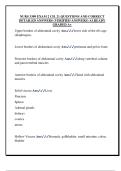
NSG 300 FINAL EXAM FALL-SPRING QUESTIONS AND ANSWERS GRADED A+ GCU
A patient discharged a week ago following a stroke is currently participating in rehabilitation sessions
provided by nurses, physical therapists, and registered dietitians in an outpatient setting. In what level
of prevention is the patient participating?
a. Primary prevention
b. Secondary prevention
c. Tertiary prevention
d. Transtheoretical prevention - (ANSWER)Answer: C
* Tertiary prevention minimizes the effects of disease or disability through restoration and rehabilitation
A nurse is conducting a home visit with a new mom and her three children. While in the home the nurse
weighs each family member and reviews their 3-day food diary. She checks the mom's blood pressure
and encourages the mom to take the children for a 15- to 30-minute walk every day. The nurse is
addressing which level of need, according to Maslow?
a. Physiological
b. Safety and security
c. Love and belonging
d. Self-actualization - (ANSWER)Answer: a
* Physiological needs include air, food, drink, shelter, warthm, sex, sleep
The licensed practical nurse (LPN) provides you with the change-of-shift vital signs on four of your
patients. Which patient does the nurse need to assess first?
a. 84-year-old man recently admitted with pneumonia, RR 28, SpO2 89%
b. 54-year-old woman admitted after surgery for repair of a fractured arm, BP 160/86 mm Hg, HR 72
c. 63-year-old man with venous ulcers from diabetes, temperature 37.3° C (99.1° F), HR 84
d. 77-year-old woman with left mastectomy 2 days ago, RR 22, BP 148/62 - (ANSWER)Answer: a
* Respirations above normal (12-20 bpm)
,NSG 300 FINAL EXAM FALL-SPRING QUESTIONS AND ANSWERS GRADED A+ GCU
* SpO2 percentage is below normal (>/= 95%)
Which type of personal protective equipment should the nurse wear when caring for a patient who is
placed on Airborne Precautions for confirmed chickenpox/herpes zoster? (Select all that apply)
a. Disposable gown
b. N95 respirator mask
c. Face shield or goggles
d. Disposable mask
e. Gloves - (ANSWER)Answer: a, b, & e
* Airborne - measles, chickenpox, disse inated varicella zoster (shingles), pulmonary TB
* Droplet - rubella, mumps, strep throat, meningitis
* Contact - MRSA, c. diff, herpes simplex, scabies,
A patient is diagnosed with meningitis. Which type of isolation precaution is most appropriate for this
patient?
a. Reverse isolation
b. Droplet Precautions
c. Standard Precautions
d. Contact Precautions - (ANSWER)Answer: b
Before transferring a patient from the bed to a stretcher, which assessment data does the nurse need to
gather? (Select all that apply)
a. Patient's weight
b. Patient's activity tolerance
c. Patient's level of mobility
, NSG 300 FINAL EXAM FALL-SPRING QUESTIONS AND ANSWERS GRADED A+ GCU
d. Recent laboratory values
e. Nutritional intake - (ANSWER)Answer: a, b, & c
A nurse is instructing a patient who has decreased leg strength on the left side on how to use a cane.
Which actions indicate proper cane use by the patient?
a. The patient keeps the cane on the left side of the body.
b. The patient slightly leans to one side while walking.
c. The patient keeps two points of support on the floor at all times.
d. After the patient places the cane forward, he or she then moves the right leg forward to the cane. -
(ANSWER)Answer: c
A patient has been on bed rest for over 5 days. Which of these findings during the nurse's assessment
may indicate a complication of immobility?
a. Decreased peristalsis
b. Decreased heart rate
c. Increased blood pressure
d. Increased urinary output - (ANSWER)Answer: a
An older adult patient has been bedridden for 2 weeks. Which of these complaints by the patient
indicates to the nurse that he or she is developing a complication of immobility?
a. Increase of appetite
b. Gum soreness
c. Difficulty in swallowing
d. Left ankle joint stiffness - (ANSWER)Answer: d
A patient discharged a week ago following a stroke is currently participating in rehabilitation sessions
provided by nurses, physical therapists, and registered dietitians in an outpatient setting. In what level
of prevention is the patient participating?
a. Primary prevention
b. Secondary prevention
c. Tertiary prevention
d. Transtheoretical prevention - (ANSWER)Answer: C
* Tertiary prevention minimizes the effects of disease or disability through restoration and rehabilitation
A nurse is conducting a home visit with a new mom and her three children. While in the home the nurse
weighs each family member and reviews their 3-day food diary. She checks the mom's blood pressure
and encourages the mom to take the children for a 15- to 30-minute walk every day. The nurse is
addressing which level of need, according to Maslow?
a. Physiological
b. Safety and security
c. Love and belonging
d. Self-actualization - (ANSWER)Answer: a
* Physiological needs include air, food, drink, shelter, warthm, sex, sleep
The licensed practical nurse (LPN) provides you with the change-of-shift vital signs on four of your
patients. Which patient does the nurse need to assess first?
a. 84-year-old man recently admitted with pneumonia, RR 28, SpO2 89%
b. 54-year-old woman admitted after surgery for repair of a fractured arm, BP 160/86 mm Hg, HR 72
c. 63-year-old man with venous ulcers from diabetes, temperature 37.3° C (99.1° F), HR 84
d. 77-year-old woman with left mastectomy 2 days ago, RR 22, BP 148/62 - (ANSWER)Answer: a
* Respirations above normal (12-20 bpm)
,NSG 300 FINAL EXAM FALL-SPRING QUESTIONS AND ANSWERS GRADED A+ GCU
* SpO2 percentage is below normal (>/= 95%)
Which type of personal protective equipment should the nurse wear when caring for a patient who is
placed on Airborne Precautions for confirmed chickenpox/herpes zoster? (Select all that apply)
a. Disposable gown
b. N95 respirator mask
c. Face shield or goggles
d. Disposable mask
e. Gloves - (ANSWER)Answer: a, b, & e
* Airborne - measles, chickenpox, disse inated varicella zoster (shingles), pulmonary TB
* Droplet - rubella, mumps, strep throat, meningitis
* Contact - MRSA, c. diff, herpes simplex, scabies,
A patient is diagnosed with meningitis. Which type of isolation precaution is most appropriate for this
patient?
a. Reverse isolation
b. Droplet Precautions
c. Standard Precautions
d. Contact Precautions - (ANSWER)Answer: b
Before transferring a patient from the bed to a stretcher, which assessment data does the nurse need to
gather? (Select all that apply)
a. Patient's weight
b. Patient's activity tolerance
c. Patient's level of mobility
, NSG 300 FINAL EXAM FALL-SPRING QUESTIONS AND ANSWERS GRADED A+ GCU
d. Recent laboratory values
e. Nutritional intake - (ANSWER)Answer: a, b, & c
A nurse is instructing a patient who has decreased leg strength on the left side on how to use a cane.
Which actions indicate proper cane use by the patient?
a. The patient keeps the cane on the left side of the body.
b. The patient slightly leans to one side while walking.
c. The patient keeps two points of support on the floor at all times.
d. After the patient places the cane forward, he or she then moves the right leg forward to the cane. -
(ANSWER)Answer: c
A patient has been on bed rest for over 5 days. Which of these findings during the nurse's assessment
may indicate a complication of immobility?
a. Decreased peristalsis
b. Decreased heart rate
c. Increased blood pressure
d. Increased urinary output - (ANSWER)Answer: a
An older adult patient has been bedridden for 2 weeks. Which of these complaints by the patient
indicates to the nurse that he or she is developing a complication of immobility?
a. Increase of appetite
b. Gum soreness
c. Difficulty in swallowing
d. Left ankle joint stiffness - (ANSWER)Answer: d