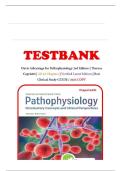
TEST BANK
Pathophysiology: Introductory Concepts and Clinical
Perspectives
Theresa Capriotti
3rd Edition
,Table of Contents
Chapter 01 The Cell in Health and Illness 1
Chapter 02 Cellular Injury, Adaptations, and Maladaptive Changes 17
Chapter 03 Genetic Basis of Disease 35
Chapter 04 Stress, Exercise, and Immobility 53
Chapter 05 Obesity and Nutritional Imbalances 71
Chapter 06 Pain 89
Chapter 07 Fluid and Electrolyte Imbalances 106
Chapter 08 Acid–Base Balances 124
Chapter 09 Inflammation and Dysfunctional Wound Healing 141
Chapter 10 Infectious Diseases 159
Chapter 11 Immune System Disorders 176
Chapter 12 White Blood Cell Disorders 195
Chapter 13 Red Blood Cell Disorders 213
Chapter 14 Platelet, Hemostasis, and Coagulation Disorders 231
Chapter 15 Arterial Disorders 249
Chapter 16 Ischemic Heart Disease and Conduction Disorders 267
Chapter 17 Heart Failure 286
Chapter 18 Valvular Heart Disease 303
Chapter 19 Venous System Disorders 320
Chapter 20 Respiratory Inflammation and Infection 337
Chapter 21 Restrictive and Obstructive Pulmonary Disorders 354
Chapter 22 Renal Disorders 372
Chapter 23 Urological Disorders 392
Chapter 24 Endocrine Disorders 410
Chapter 25 Diabetes Mellitus and the Metabolic Syndrome 428
Chapter 26 Female Reproductive System Disorders 447
Chapter 27 Male Reproductive System Disorders 466
Chapter 28 Sexually Transmitted Infections 483
Chapter 29 Esophagus, Stomach, and Small Intestine Disorders 502
Chapter 30 Large Intestine Disorders 522
Chapter 31 Infection, Inflammation, and Cirrhosis of the Liver 540
Chapter 32 Gallbladder, Pancreatic, and Bile Duct Dysfunction 559
Chapter 33 Cerebrovascular Disorders 578
Chapter 34 Chronic and Degenerative Neurological Disorders 597
Chapter 35 Brain and Spinal Cord Injury 615
Chapter 36 Psychobiology of Behavioral Disorders 634
Chapter 37 Musculoskeletal Trauma 653
Chapter 38 Degenerative Musculoskeletal Disorders 672
Chapter 39 Infectious and Inflammatory Musculoskeletal Disorders 690
Chapter 40 Cancer 708
,Chapter 41 Skin Disorders 726
Chapter 42 Burns 744
Chapter 43 Eye Disorders 763
Chapter 44 Ear Disorders 782
Chapter 45 Physiological Changes of Aging 800
Chapter 46 SIRS, Sepsis, Shock, MODS, and Death 819
,______________________________________________________________________________________________
Test Bank - Pathophysiology: Introductory Concepts and Clinical Perspectives, 3rd Edition (Capriotti, 2024)
Chapter 1, The Cell in Health and Illness
MULTIPLE CHOICE
1. Which statement regarding the sodium-potassium pump is correct?
A. The cell’s plasma membrane is more soluble to sodium ions than potassium ions.
B. The concentration of sodium ions should be higher inside the cell compartment.
C. The concentration of potassium ions should be higher outside the cell
compartment.
D. Active transport involves pumping out three sodium ions and pumping in two
potassium ions.
ANS: D
Chapter: Chapter 1, The Cell in Health and Illness
Objective: Recognize the major organelles and their function within the cell.
Page: 3
Heading: Cell Structure and Function>The Sodium Potassium Pump (Na+/K+ Pump)
Integrated Process: Nursing Process
Client Need: Physiological Integrity: Physiological Adaptation
Cognitive Level: Comprehension [Understanding]
Concept: Cellular Regulation
Difficulty: Moderate
Feedback
A This is incorrect. The plasma membrane of the cell is less soluble to sodium ions
and more soluble to potassium ions.
B This is incorrect. The concentration of sodium ions should be higher outside the
cell compartment.
C This is incorrect. The concentration of potassium ions should be higher inside
the cell compartment.
D This is correct. In active transport, for every three sodium ions pumped out, two
potassium ions are pumped in.
PTS: 1 CON: Cellular Regulation
2. Which cellular function generates the same amount of energy in the absence of oxygen as it
does in the presence of oxygen?
A. Dissipation of pyruvic acid
B. Initiation of the citric acid cycle
C. Activation of acetyl-coenzyme A
D. Creation of acidosis via lactic acid
ANS: B
Chapter: Chapter 1, The Cell in Health and Illness
Objective: Discuss the difference between aerobic and anaerobic metabolism.
Page: 3
Heading: Cell Structure and Function>Energy Metabolism
Integrated Process: Nursing Process
Client Need: Physiological Integrity: Physiological Adaptation
______________________________________________________________________________________________
1|Page
,______________________________________________________________________________________________
Test Bank - Pathophysiology: Introductory Concepts and Clinical Perspectives, 3rd Edition (Capriotti, 2024)
Cognitive Level: Analysis [Analyzing]
Concept: Cellular Regulation
Difficulty: Difficult
Feedback
A This is incorrect. When oxygen is not available, anaerobic metabolism produces
significantly less cellular energy: a net yield of 2 ATP, as well as pyruvic acid.
B This is correct. In the absence of oxygen, pyruvic acid is converted into
acetyl-coenzyme A, which triggers a series of reactions known as the Krebs
cycle, also called the citric acid cycle.
C This is incorrect. Acetyl-coenzyme is converted from pyruvic acid, not activated.
D This is incorrect. In cellular hypoxia, pyruvic acid is converted to lactic acid,
which is noxious to cells, causing muscle pain and biochemical alterations such
as acidosis.
PTS: 1 CON: Cellular Regulation
3. How many adenosine triphosphates (ATPs) are produced in aerobic energy metabolism?
A. 2
B. 3
C. 34
D. 53
ANS: C
Chapter: Chapter 1, The Cell in Health and Illness
Objective: Discuss the difference between aerobic and anaerobic metabolism.
Page: 3
Heading: Cell Structure and Function>Energy Metabolism
Integrated Process: Nursing Process
Client Need: Physiological Integrity: Physiological Adaptation
Cognitive Level: Knowledge [Remembering]
Concept: Cellular Regulation
Difficulty: Easy
Feedback
A This is incorrect.2 ATPs and pyruvic acid are produced in anaerobic, not
aerobic, energy metabolism.
B This is incorrect. Three sodium ions are pumped out during active transport in
the plasma membrane.
C This is correct. The process of aerobic energy requires oxygen and provides the
maximum amount of energy for cellular function, yielding 34 ATPs.
D This is incorrect. Aerobic energy metabolism produces 34 ATPs, not 53.
PTS: 1 CON: Cellular Regulation
4. Which cell organelles differ in their number according to the cell’s energy needs?
A. Ribosomes
B. Mitochondria
C. Ribonucleic acids
______________________________________________________________________________________________
2|Page
,______________________________________________________________________________________________
Test Bank - Pathophysiology: Introductory Concepts and Clinical Perspectives, 3rd Edition (Capriotti, 2024)
D. Deoxyribonucleic acids
ANS: B
Chapter: Chapter 1, The Cell in Health and Illness
Objective: Recognize the major organelles and their function within the cell.
Page: 3
Heading: Cell Structure and Function>Mitochondria
Integrated Process: Nursing Process
Client Need: Physiological Integrity: Physiological Adaptation
Cognitive Level: Comprehension [Understanding]
Concept: Cellular Regulation
Difficulty: Moderate
Feedback
A This is incorrect. Ribosomes are small, spherical organelles of the ribosomal
ribonucleic acid whose function is to manufacture various types of protein.
B This is correct. Cell types’ number of mitochondria differs according to the
cells’ energy needs. For example, muscle cells have abundant mitochondria
because they require a high amount of energy to function, whereas bone cells
have fewer mitochondria.
C This is incorrect. Ribonucleic acid is a component of ribosomes, not affected by
the cell’s energy needs.
D This is incorrect. Deoxyribonucleic acid is a genetic material in the cell nucleus
that functions to regulate activity of the cell. Its numbers are not affected by the
cell’s energy needs.
PTS: 1 CON: Cellular Regulation
5. Which option best explains why more energy is produced when a person is exercising?
A. Exercise causes an increase in the synthesis of protein.
B. There is an increase in the production of pyruvic acid in the cells.
C. The conversion of pyruvic acid to lactic acid is increased by exercise.
D. Muscle cells have more mitochondria to meet energy demands.
ANS: D
Chapter: Chapter 1, The Cell in Health and Illness
Objective: Recognize the major organelles and their function within the cell.
Page: 3
Heading: Cell Structure and Function>Mitochondria
Integrated Process: Nursing Process
Client Need: Physiological Integrity: Physiological Adaptation
Cognitive Level: Comprehension [Understanding]
Concept: Cellular Regulation
Difficulty: Moderate
Feedback
A This is incorrect. Protein synthesis is the function of ribosomes. An increase in
the synthesis of proteins does not yield energy and is not directly related to
exercise.
B This is incorrect. In aerobic energy metabolism created by exercise, anaerobic
______________________________________________________________________________________________
3|Page
,______________________________________________________________________________________________
Test Bank - Pathophysiology: Introductory Concepts and Clinical Perspectives, 3rd Edition (Capriotti, 2024)
metabolism, also referred to as glycolysis, occurs outside the mitochondria. In
anaerobic metabolism, glucose is used to create energy.
C This is incorrect. Conversion of pyruvic acid to lactic acid in cellular hypoxia is
noxious to cells and does not create energy.
D This is correct. Exercise stimulates mitochondria found in the muscle cells to
create energy. This process is supported by the increased number of
mitochondria found in muscle cells.
PTS: 1 CON: Cellular Regulation
6. When does ribosomal protein synthesis cease?
A. During endoplasmic reticulum stress
B. During the synthesis of adenosine triphosphate (ATP)
C. During severe hypoxia
D. During the processing of prohormone
ANS: C
Chapter: Chapter 1, The Cell in Health and Illness
Objective: Recognize the major organelles and their function within the cell.
Page: 5
Heading: Cell Structure and Function>Endoplasmic Reticulum>Ribosomes
Integrated Processes: Nursing Process
Client Need: Physiological Integrity: Physiological Adaptation
Cognitive Level: Comprehension [Understanding]
Concept: Cellular Regulation
Difficulty: Moderate
Feedback
A This is incorrect. Ribosomal protein synthesis does not cease during
endoplasmic reticulum stress.
B This is incorrect. ATP is synthesized in energy metabolism. It does not interfere
with protein synthesis.
C This is correct. When the cells are deprived of adequate oxygen supply, their
ribosomal protein synthesis ceases.
D This is incorrect. The processing of prohormones to hormones does not stop the
process of protein synthesis.
PTS: 1 CON: Cellular Regulation
7. Which cellular components are responsible for propelling mucus and inhaled debris out of
the lungs?
A. Cilia
B. Microfilaments
C. Secretory vesicles
D. Endoplasmic reticula
ANS: A
Chapter: Chapter 1, The Cell in Health and Illness
Objective: Recognize the major organelles and their function within the cell.
______________________________________________________________________________________________
4|Page
,______________________________________________________________________________________________
Test Bank - Pathophysiology: Introductory Concepts and Clinical Perspectives, 3rd Edition (Capriotti, 2024)
Page: 5
Heading: Cell Structure and Function>Endoplasmic Reticulum>Microtubules and
Microfilaments
Integrated Processes: Nursing Process
Client Need: Physiological Integrity: Physiological Adaptation
Cognitive Level: Knowledge [Remembering]
Concept: Cellular Regulation
Difficulty: Easy
Feedback
A This is correct. The cilia are responsible for propelling the mucus and inhaled
debris out of the lungs using a sweeping motion.
B This is incorrect. Microfilaments help in changing the shape of certain cells,
such as during macrophage movement and contraction of muscle.
C This is incorrect. Secretory vesicles store substances, such as hormones, that are
secreted by cells before they are released into the extracellular space.
D This is incorrect. The endoplasmic reticulum aids in the transport of synthesized
protein from the ribosomes to the Golgi apparatus.
PTS: 1 CON: Cellular Regulation
8. What are the key proteins in the contractile units of the muscle cells?
A. Actin and myosin
B. Prohormone and tubulin
C. Tubulin and actin
D. Myosin and prohormone
ANS: A
Chapter: Chapter 1, The Cell in Health and Illness
Objective: Recognize the major organelles and their function within the cell.
Page: 5
Heading: Cell Structure and Function>Endoplasmic Reticulum>Microtubules and
Microfilaments
Integrated Processes: Nursing Process
Client Need: Physiological Integrity: Physiological Adaptation
Cognitive Level: Knowledge [Remembering]
Concept: Cellular Regulation
Difficulty: Easy
Feedback
A This is correct. Actin and myosin are the key proteins in the contractile unit of
the muscle cells.
B This is incorrect. Prohormones are transferred to the Golgi apparatus to be
converted into complete hormones, and tubulin is associated with microtubule
formation; neither are key elements in the contractile units of the muscle cells.
C This is incorrect. Microtubules are hollow filaments composed of tubulin. So
tubulin is associated with microtubule formation, not the contractile units of the
muscle cells.
D This is incorrect. Prohormones are not one of the key proteins in the contractile
______________________________________________________________________________________________
5|Page
,______________________________________________________________________________________________
Test Bank - Pathophysiology: Introductory Concepts and Clinical Perspectives, 3rd Edition (Capriotti, 2024)
units of the muscle cells. They are transferred to the Golgi apparatus to be
converted into complete hormones.
PTS: 1 CON: Cellular Regulation
9. Which deficiency causes Tay-Sachs disease?
A. Proteasome
B. Peroxisome
C. Macrophage
D. Lysosomal enzymes
ANS: D
Chapter: Chapter 1, The Cell in Health and Illness
Objective: Recognize the major organelles and their function within the cell.
Page: 4
Heading: Cell Structure and Function>Lysosomes>Lack of Lysosomal Enzymes and
Disease
Integrated Processes: Nursing Process
Client Need: Physiological Integrity: Physiological Adaptation
Cognitive Level: Comprehension [Understanding]
Concept: Cellular Regulation
Difficulty: Easy
Feedback
A This is incorrect. A deficiency of proteasome in the cell does not cause
Tay-Sachs disease. Proteasome is an organelle that contains digestive enzymes
similar to lysosomes and degrades polypeptide chains and proteins.
B This is incorrect. A deficiency of peroxisomes in the cell does not cause
Tay-Sachs disease. Peroxisomes contain digestive enzymes such as lysosomes
and break down the long-chain fatty acids and free radicals.
C This is incorrect. A deficiency of macrophages in the body does not cause
Tay-Sachs disease. Macrophages are the major defensive white blood cells of the
body. They contain a large number of lysosomes.
D This is correct. Lysosomes contain digestive enzymes such as lysozyme,
proteases, and lipases to degrade the ingested foreign substances and cellular
debris. Tay-Sachs disease is a rare genetic disorder that is caused by the
deficiency of lysosomal enzymes. It results from the buildup of lipids in the
brain and spinal cord.
PTS: 1 CON: Cellular Regulation
10. Which of the following is a characteristic of adrenoleukodystrophy?
A. Accumulation of ganglioside
B. Cessation of ribosomal protein synthesis
C. Acceleration of cellular proteasome activity
D. Accumulation of long-chain fatty acids in the nervous system
ANS: D
Chapter: Chapter 1, The Cell in Health and Illness
Objective: Recognize the major organelles and their function within the cell.
______________________________________________________________________________________________
6|Page
, ______________________________________________________________________________________________
Test Bank - Pathophysiology: Introductory Concepts and Clinical Perspectives, 3rd Edition (Capriotti, 2024)
Page: 4
Heading: Cell Structure and Function>Proteasomes and Peroxisomes
Integrated Processes: Nursing Process
Client Need: Physiological Integrity: Physiological Adaptation
Cognitive Level: Comprehension [Understanding]
Concept: Cellular Regulation
Difficulty: Moderate
Feedback
A This is incorrect. The deficiency of lysosomal enzymes, as in Tay-Sachs disease,
causes the accumulation of ganglioside in the central nervous system.
B This is incorrect. Ribosomes are responsible for the synthesis of cellular
proteins. In severe hypoxia, ribosomal protein synthesis ceases, resulting in
decreased overall synthesis.
C This is incorrect. Accelerated proteasome activity is associated with cachexia, or
wasting of body mass. It is often seen in conditions such as cancer.
D This is correct. Adrenoleukodystrophy is associated with dysfunction of the
peroxisomes. The disease is characterized by the accumulation of long-chain
fatty acids in the nervous system. The disease causes the deterioration of the
nervous system and eventually leads to death.
PTS: 1 CON: Cellular Regulation
11. Which statement regarding endoplasmic reticulum (ER) stress is correct?
A. During ER stress, proteins are rapidly degraded.
B. During ER stress, lipids cannot travel to their proper intracellular locations.
C. During ER stress, long-chain fatty acids accumulate in the nervous system.
D. During ER stress, nondegraded substances accumulate in the cells.
ANS: A
Chapter: Chapter 1, The Cell in Health and Illness
Objective: Recognize the major organelles and their function within the cell.
Page: 4-5
Heading: Cell Structure and Function>Endoplasmic Reticulum
Integrated Processes: Nursing Process
Client Need: Physiological Integrity: Physiological Adaptation
Cognitive Level: Comprehension [Understanding]
Concept: Cellular Regulation
Difficulty: Moderate
Feedback
A This is correct. Proteins are rapidly degraded during ER stress.
B This is incorrect. Proteins, not lipids, cannot travel to their exact intracellular
locations during ER stress.
C This is incorrect. Accumulation of long-chain fatty acids in the nervous system
is not associated with ER stress but rather with adrenoleukodystrophy.
D This is incorrect. Accumulation of nondegraded substances in the cells occurs
because of the lack of lysosomal enzymes, but not as a result of ER stress.
______________________________________________________________________________________________
7|Page
Pathophysiology: Introductory Concepts and Clinical
Perspectives
Theresa Capriotti
3rd Edition
,Table of Contents
Chapter 01 The Cell in Health and Illness 1
Chapter 02 Cellular Injury, Adaptations, and Maladaptive Changes 17
Chapter 03 Genetic Basis of Disease 35
Chapter 04 Stress, Exercise, and Immobility 53
Chapter 05 Obesity and Nutritional Imbalances 71
Chapter 06 Pain 89
Chapter 07 Fluid and Electrolyte Imbalances 106
Chapter 08 Acid–Base Balances 124
Chapter 09 Inflammation and Dysfunctional Wound Healing 141
Chapter 10 Infectious Diseases 159
Chapter 11 Immune System Disorders 176
Chapter 12 White Blood Cell Disorders 195
Chapter 13 Red Blood Cell Disorders 213
Chapter 14 Platelet, Hemostasis, and Coagulation Disorders 231
Chapter 15 Arterial Disorders 249
Chapter 16 Ischemic Heart Disease and Conduction Disorders 267
Chapter 17 Heart Failure 286
Chapter 18 Valvular Heart Disease 303
Chapter 19 Venous System Disorders 320
Chapter 20 Respiratory Inflammation and Infection 337
Chapter 21 Restrictive and Obstructive Pulmonary Disorders 354
Chapter 22 Renal Disorders 372
Chapter 23 Urological Disorders 392
Chapter 24 Endocrine Disorders 410
Chapter 25 Diabetes Mellitus and the Metabolic Syndrome 428
Chapter 26 Female Reproductive System Disorders 447
Chapter 27 Male Reproductive System Disorders 466
Chapter 28 Sexually Transmitted Infections 483
Chapter 29 Esophagus, Stomach, and Small Intestine Disorders 502
Chapter 30 Large Intestine Disorders 522
Chapter 31 Infection, Inflammation, and Cirrhosis of the Liver 540
Chapter 32 Gallbladder, Pancreatic, and Bile Duct Dysfunction 559
Chapter 33 Cerebrovascular Disorders 578
Chapter 34 Chronic and Degenerative Neurological Disorders 597
Chapter 35 Brain and Spinal Cord Injury 615
Chapter 36 Psychobiology of Behavioral Disorders 634
Chapter 37 Musculoskeletal Trauma 653
Chapter 38 Degenerative Musculoskeletal Disorders 672
Chapter 39 Infectious and Inflammatory Musculoskeletal Disorders 690
Chapter 40 Cancer 708
,Chapter 41 Skin Disorders 726
Chapter 42 Burns 744
Chapter 43 Eye Disorders 763
Chapter 44 Ear Disorders 782
Chapter 45 Physiological Changes of Aging 800
Chapter 46 SIRS, Sepsis, Shock, MODS, and Death 819
,______________________________________________________________________________________________
Test Bank - Pathophysiology: Introductory Concepts and Clinical Perspectives, 3rd Edition (Capriotti, 2024)
Chapter 1, The Cell in Health and Illness
MULTIPLE CHOICE
1. Which statement regarding the sodium-potassium pump is correct?
A. The cell’s plasma membrane is more soluble to sodium ions than potassium ions.
B. The concentration of sodium ions should be higher inside the cell compartment.
C. The concentration of potassium ions should be higher outside the cell
compartment.
D. Active transport involves pumping out three sodium ions and pumping in two
potassium ions.
ANS: D
Chapter: Chapter 1, The Cell in Health and Illness
Objective: Recognize the major organelles and their function within the cell.
Page: 3
Heading: Cell Structure and Function>The Sodium Potassium Pump (Na+/K+ Pump)
Integrated Process: Nursing Process
Client Need: Physiological Integrity: Physiological Adaptation
Cognitive Level: Comprehension [Understanding]
Concept: Cellular Regulation
Difficulty: Moderate
Feedback
A This is incorrect. The plasma membrane of the cell is less soluble to sodium ions
and more soluble to potassium ions.
B This is incorrect. The concentration of sodium ions should be higher outside the
cell compartment.
C This is incorrect. The concentration of potassium ions should be higher inside
the cell compartment.
D This is correct. In active transport, for every three sodium ions pumped out, two
potassium ions are pumped in.
PTS: 1 CON: Cellular Regulation
2. Which cellular function generates the same amount of energy in the absence of oxygen as it
does in the presence of oxygen?
A. Dissipation of pyruvic acid
B. Initiation of the citric acid cycle
C. Activation of acetyl-coenzyme A
D. Creation of acidosis via lactic acid
ANS: B
Chapter: Chapter 1, The Cell in Health and Illness
Objective: Discuss the difference between aerobic and anaerobic metabolism.
Page: 3
Heading: Cell Structure and Function>Energy Metabolism
Integrated Process: Nursing Process
Client Need: Physiological Integrity: Physiological Adaptation
______________________________________________________________________________________________
1|Page
,______________________________________________________________________________________________
Test Bank - Pathophysiology: Introductory Concepts and Clinical Perspectives, 3rd Edition (Capriotti, 2024)
Cognitive Level: Analysis [Analyzing]
Concept: Cellular Regulation
Difficulty: Difficult
Feedback
A This is incorrect. When oxygen is not available, anaerobic metabolism produces
significantly less cellular energy: a net yield of 2 ATP, as well as pyruvic acid.
B This is correct. In the absence of oxygen, pyruvic acid is converted into
acetyl-coenzyme A, which triggers a series of reactions known as the Krebs
cycle, also called the citric acid cycle.
C This is incorrect. Acetyl-coenzyme is converted from pyruvic acid, not activated.
D This is incorrect. In cellular hypoxia, pyruvic acid is converted to lactic acid,
which is noxious to cells, causing muscle pain and biochemical alterations such
as acidosis.
PTS: 1 CON: Cellular Regulation
3. How many adenosine triphosphates (ATPs) are produced in aerobic energy metabolism?
A. 2
B. 3
C. 34
D. 53
ANS: C
Chapter: Chapter 1, The Cell in Health and Illness
Objective: Discuss the difference between aerobic and anaerobic metabolism.
Page: 3
Heading: Cell Structure and Function>Energy Metabolism
Integrated Process: Nursing Process
Client Need: Physiological Integrity: Physiological Adaptation
Cognitive Level: Knowledge [Remembering]
Concept: Cellular Regulation
Difficulty: Easy
Feedback
A This is incorrect.2 ATPs and pyruvic acid are produced in anaerobic, not
aerobic, energy metabolism.
B This is incorrect. Three sodium ions are pumped out during active transport in
the plasma membrane.
C This is correct. The process of aerobic energy requires oxygen and provides the
maximum amount of energy for cellular function, yielding 34 ATPs.
D This is incorrect. Aerobic energy metabolism produces 34 ATPs, not 53.
PTS: 1 CON: Cellular Regulation
4. Which cell organelles differ in their number according to the cell’s energy needs?
A. Ribosomes
B. Mitochondria
C. Ribonucleic acids
______________________________________________________________________________________________
2|Page
,______________________________________________________________________________________________
Test Bank - Pathophysiology: Introductory Concepts and Clinical Perspectives, 3rd Edition (Capriotti, 2024)
D. Deoxyribonucleic acids
ANS: B
Chapter: Chapter 1, The Cell in Health and Illness
Objective: Recognize the major organelles and their function within the cell.
Page: 3
Heading: Cell Structure and Function>Mitochondria
Integrated Process: Nursing Process
Client Need: Physiological Integrity: Physiological Adaptation
Cognitive Level: Comprehension [Understanding]
Concept: Cellular Regulation
Difficulty: Moderate
Feedback
A This is incorrect. Ribosomes are small, spherical organelles of the ribosomal
ribonucleic acid whose function is to manufacture various types of protein.
B This is correct. Cell types’ number of mitochondria differs according to the
cells’ energy needs. For example, muscle cells have abundant mitochondria
because they require a high amount of energy to function, whereas bone cells
have fewer mitochondria.
C This is incorrect. Ribonucleic acid is a component of ribosomes, not affected by
the cell’s energy needs.
D This is incorrect. Deoxyribonucleic acid is a genetic material in the cell nucleus
that functions to regulate activity of the cell. Its numbers are not affected by the
cell’s energy needs.
PTS: 1 CON: Cellular Regulation
5. Which option best explains why more energy is produced when a person is exercising?
A. Exercise causes an increase in the synthesis of protein.
B. There is an increase in the production of pyruvic acid in the cells.
C. The conversion of pyruvic acid to lactic acid is increased by exercise.
D. Muscle cells have more mitochondria to meet energy demands.
ANS: D
Chapter: Chapter 1, The Cell in Health and Illness
Objective: Recognize the major organelles and their function within the cell.
Page: 3
Heading: Cell Structure and Function>Mitochondria
Integrated Process: Nursing Process
Client Need: Physiological Integrity: Physiological Adaptation
Cognitive Level: Comprehension [Understanding]
Concept: Cellular Regulation
Difficulty: Moderate
Feedback
A This is incorrect. Protein synthesis is the function of ribosomes. An increase in
the synthesis of proteins does not yield energy and is not directly related to
exercise.
B This is incorrect. In aerobic energy metabolism created by exercise, anaerobic
______________________________________________________________________________________________
3|Page
,______________________________________________________________________________________________
Test Bank - Pathophysiology: Introductory Concepts and Clinical Perspectives, 3rd Edition (Capriotti, 2024)
metabolism, also referred to as glycolysis, occurs outside the mitochondria. In
anaerobic metabolism, glucose is used to create energy.
C This is incorrect. Conversion of pyruvic acid to lactic acid in cellular hypoxia is
noxious to cells and does not create energy.
D This is correct. Exercise stimulates mitochondria found in the muscle cells to
create energy. This process is supported by the increased number of
mitochondria found in muscle cells.
PTS: 1 CON: Cellular Regulation
6. When does ribosomal protein synthesis cease?
A. During endoplasmic reticulum stress
B. During the synthesis of adenosine triphosphate (ATP)
C. During severe hypoxia
D. During the processing of prohormone
ANS: C
Chapter: Chapter 1, The Cell in Health and Illness
Objective: Recognize the major organelles and their function within the cell.
Page: 5
Heading: Cell Structure and Function>Endoplasmic Reticulum>Ribosomes
Integrated Processes: Nursing Process
Client Need: Physiological Integrity: Physiological Adaptation
Cognitive Level: Comprehension [Understanding]
Concept: Cellular Regulation
Difficulty: Moderate
Feedback
A This is incorrect. Ribosomal protein synthesis does not cease during
endoplasmic reticulum stress.
B This is incorrect. ATP is synthesized in energy metabolism. It does not interfere
with protein synthesis.
C This is correct. When the cells are deprived of adequate oxygen supply, their
ribosomal protein synthesis ceases.
D This is incorrect. The processing of prohormones to hormones does not stop the
process of protein synthesis.
PTS: 1 CON: Cellular Regulation
7. Which cellular components are responsible for propelling mucus and inhaled debris out of
the lungs?
A. Cilia
B. Microfilaments
C. Secretory vesicles
D. Endoplasmic reticula
ANS: A
Chapter: Chapter 1, The Cell in Health and Illness
Objective: Recognize the major organelles and their function within the cell.
______________________________________________________________________________________________
4|Page
,______________________________________________________________________________________________
Test Bank - Pathophysiology: Introductory Concepts and Clinical Perspectives, 3rd Edition (Capriotti, 2024)
Page: 5
Heading: Cell Structure and Function>Endoplasmic Reticulum>Microtubules and
Microfilaments
Integrated Processes: Nursing Process
Client Need: Physiological Integrity: Physiological Adaptation
Cognitive Level: Knowledge [Remembering]
Concept: Cellular Regulation
Difficulty: Easy
Feedback
A This is correct. The cilia are responsible for propelling the mucus and inhaled
debris out of the lungs using a sweeping motion.
B This is incorrect. Microfilaments help in changing the shape of certain cells,
such as during macrophage movement and contraction of muscle.
C This is incorrect. Secretory vesicles store substances, such as hormones, that are
secreted by cells before they are released into the extracellular space.
D This is incorrect. The endoplasmic reticulum aids in the transport of synthesized
protein from the ribosomes to the Golgi apparatus.
PTS: 1 CON: Cellular Regulation
8. What are the key proteins in the contractile units of the muscle cells?
A. Actin and myosin
B. Prohormone and tubulin
C. Tubulin and actin
D. Myosin and prohormone
ANS: A
Chapter: Chapter 1, The Cell in Health and Illness
Objective: Recognize the major organelles and their function within the cell.
Page: 5
Heading: Cell Structure and Function>Endoplasmic Reticulum>Microtubules and
Microfilaments
Integrated Processes: Nursing Process
Client Need: Physiological Integrity: Physiological Adaptation
Cognitive Level: Knowledge [Remembering]
Concept: Cellular Regulation
Difficulty: Easy
Feedback
A This is correct. Actin and myosin are the key proteins in the contractile unit of
the muscle cells.
B This is incorrect. Prohormones are transferred to the Golgi apparatus to be
converted into complete hormones, and tubulin is associated with microtubule
formation; neither are key elements in the contractile units of the muscle cells.
C This is incorrect. Microtubules are hollow filaments composed of tubulin. So
tubulin is associated with microtubule formation, not the contractile units of the
muscle cells.
D This is incorrect. Prohormones are not one of the key proteins in the contractile
______________________________________________________________________________________________
5|Page
,______________________________________________________________________________________________
Test Bank - Pathophysiology: Introductory Concepts and Clinical Perspectives, 3rd Edition (Capriotti, 2024)
units of the muscle cells. They are transferred to the Golgi apparatus to be
converted into complete hormones.
PTS: 1 CON: Cellular Regulation
9. Which deficiency causes Tay-Sachs disease?
A. Proteasome
B. Peroxisome
C. Macrophage
D. Lysosomal enzymes
ANS: D
Chapter: Chapter 1, The Cell in Health and Illness
Objective: Recognize the major organelles and their function within the cell.
Page: 4
Heading: Cell Structure and Function>Lysosomes>Lack of Lysosomal Enzymes and
Disease
Integrated Processes: Nursing Process
Client Need: Physiological Integrity: Physiological Adaptation
Cognitive Level: Comprehension [Understanding]
Concept: Cellular Regulation
Difficulty: Easy
Feedback
A This is incorrect. A deficiency of proteasome in the cell does not cause
Tay-Sachs disease. Proteasome is an organelle that contains digestive enzymes
similar to lysosomes and degrades polypeptide chains and proteins.
B This is incorrect. A deficiency of peroxisomes in the cell does not cause
Tay-Sachs disease. Peroxisomes contain digestive enzymes such as lysosomes
and break down the long-chain fatty acids and free radicals.
C This is incorrect. A deficiency of macrophages in the body does not cause
Tay-Sachs disease. Macrophages are the major defensive white blood cells of the
body. They contain a large number of lysosomes.
D This is correct. Lysosomes contain digestive enzymes such as lysozyme,
proteases, and lipases to degrade the ingested foreign substances and cellular
debris. Tay-Sachs disease is a rare genetic disorder that is caused by the
deficiency of lysosomal enzymes. It results from the buildup of lipids in the
brain and spinal cord.
PTS: 1 CON: Cellular Regulation
10. Which of the following is a characteristic of adrenoleukodystrophy?
A. Accumulation of ganglioside
B. Cessation of ribosomal protein synthesis
C. Acceleration of cellular proteasome activity
D. Accumulation of long-chain fatty acids in the nervous system
ANS: D
Chapter: Chapter 1, The Cell in Health and Illness
Objective: Recognize the major organelles and their function within the cell.
______________________________________________________________________________________________
6|Page
, ______________________________________________________________________________________________
Test Bank - Pathophysiology: Introductory Concepts and Clinical Perspectives, 3rd Edition (Capriotti, 2024)
Page: 4
Heading: Cell Structure and Function>Proteasomes and Peroxisomes
Integrated Processes: Nursing Process
Client Need: Physiological Integrity: Physiological Adaptation
Cognitive Level: Comprehension [Understanding]
Concept: Cellular Regulation
Difficulty: Moderate
Feedback
A This is incorrect. The deficiency of lysosomal enzymes, as in Tay-Sachs disease,
causes the accumulation of ganglioside in the central nervous system.
B This is incorrect. Ribosomes are responsible for the synthesis of cellular
proteins. In severe hypoxia, ribosomal protein synthesis ceases, resulting in
decreased overall synthesis.
C This is incorrect. Accelerated proteasome activity is associated with cachexia, or
wasting of body mass. It is often seen in conditions such as cancer.
D This is correct. Adrenoleukodystrophy is associated with dysfunction of the
peroxisomes. The disease is characterized by the accumulation of long-chain
fatty acids in the nervous system. The disease causes the deterioration of the
nervous system and eventually leads to death.
PTS: 1 CON: Cellular Regulation
11. Which statement regarding endoplasmic reticulum (ER) stress is correct?
A. During ER stress, proteins are rapidly degraded.
B. During ER stress, lipids cannot travel to their proper intracellular locations.
C. During ER stress, long-chain fatty acids accumulate in the nervous system.
D. During ER stress, nondegraded substances accumulate in the cells.
ANS: A
Chapter: Chapter 1, The Cell in Health and Illness
Objective: Recognize the major organelles and their function within the cell.
Page: 4-5
Heading: Cell Structure and Function>Endoplasmic Reticulum
Integrated Processes: Nursing Process
Client Need: Physiological Integrity: Physiological Adaptation
Cognitive Level: Comprehension [Understanding]
Concept: Cellular Regulation
Difficulty: Moderate
Feedback
A This is correct. Proteins are rapidly degraded during ER stress.
B This is incorrect. Proteins, not lipids, cannot travel to their exact intracellular
locations during ER stress.
C This is incorrect. Accumulation of long-chain fatty acids in the nervous system
is not associated with ER stress but rather with adrenoleukodystrophy.
D This is incorrect. Accumulation of nondegraded substances in the cells occurs
because of the lack of lysosomal enzymes, but not as a result of ER stress.
______________________________________________________________________________________________
7|Page