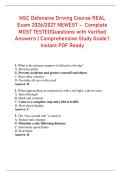
NSC Defensive Driving Course REAL
Exam 2026/2027 NEWEST – Complete
MOST TESTEDQuestions with Verified
Answers | Comprehensive Study Guide |
Instant PDF Ready
1. What is the primary purpose of defensive driving?
A. Increase speed
B. Prevent accidents and protect yourself and others
C. Race other vehicles
D. Overtake all cars on the road
Answer: B
2. When approaching an intersection with a red light, a driver must:
A. Speed through
B. Honk and continue
C. Come to a complete stop and yield to traffic
D. Slow down slightly
Answer: C
3. The “two-second rule” is used to:
A. Reduce lane changes
B. Maintain a safe following distance
C. Determine speed limits
D. Stop faster
Answer: B
,4. If a vehicle begins to skid on ice, the safest action is to:
A. Slam on the brakes
B. Accelerate
C. Steer in the direction of the skid and avoid sudden braking
D. Turn sharply
Answer: C
5. When driving in heavy rain, drivers should:
A. Increase speed
B. Ignore the conditions
C. Reduce speed and increase following distance
D. Maintain normal speed
Answer: C
6. Before changing lanes, a defensive driver should:
A. Ignore other cars
B. Check mirrors and blind spots, signal, then change lanes safely
C. Honk only
D. Speed up
Answer: B
7. Wearing a seatbelt is important because it:
A. Distracts the driver
B. Protects the driver and passengers in a collision
C. Slows the vehicle
D. Reduces engine efficiency
Answer: B
8. Defensive drivers anticipate hazards by:
A. Ignoring other vehicles
B. Predicting the behavior of other drivers and observing roadway
conditions
C. Accelerating at intersections
D. Tailgating
Answer: B
, 9. Drivers should always obey:
A. Only some traffic signs
B. All traffic signs and signals
C. Traffic lights only
D. Highway signs only
Answer: B
10. At a four-way stop, a driver must:
A. Ignore right-of-way rules
B. Yield according to the order of arrival
C. Always go first
D. Honk to assert priority
Answer: B
11. The term “stopping distance” refers to:
A. The time before noticing a hazard
B. The total distance a vehicle travels from perception to complete
stop
C. Distance traveled at constant speed
D. Distance to nearest traffic signal
Answer: B
12. When driving at night in well-lit areas, drivers should use:
A. High beams
B. Low beams
C. Flashing lights
D. Fog lights
Answer: B
13. Excessive speed in wet conditions:
A. Is safe
B. Increases the risk of hydroplaning
C. Reduces stopping distance
D. Improves vehicle control
Answer: B
Exam 2026/2027 NEWEST – Complete
MOST TESTEDQuestions with Verified
Answers | Comprehensive Study Guide |
Instant PDF Ready
1. What is the primary purpose of defensive driving?
A. Increase speed
B. Prevent accidents and protect yourself and others
C. Race other vehicles
D. Overtake all cars on the road
Answer: B
2. When approaching an intersection with a red light, a driver must:
A. Speed through
B. Honk and continue
C. Come to a complete stop and yield to traffic
D. Slow down slightly
Answer: C
3. The “two-second rule” is used to:
A. Reduce lane changes
B. Maintain a safe following distance
C. Determine speed limits
D. Stop faster
Answer: B
,4. If a vehicle begins to skid on ice, the safest action is to:
A. Slam on the brakes
B. Accelerate
C. Steer in the direction of the skid and avoid sudden braking
D. Turn sharply
Answer: C
5. When driving in heavy rain, drivers should:
A. Increase speed
B. Ignore the conditions
C. Reduce speed and increase following distance
D. Maintain normal speed
Answer: C
6. Before changing lanes, a defensive driver should:
A. Ignore other cars
B. Check mirrors and blind spots, signal, then change lanes safely
C. Honk only
D. Speed up
Answer: B
7. Wearing a seatbelt is important because it:
A. Distracts the driver
B. Protects the driver and passengers in a collision
C. Slows the vehicle
D. Reduces engine efficiency
Answer: B
8. Defensive drivers anticipate hazards by:
A. Ignoring other vehicles
B. Predicting the behavior of other drivers and observing roadway
conditions
C. Accelerating at intersections
D. Tailgating
Answer: B
, 9. Drivers should always obey:
A. Only some traffic signs
B. All traffic signs and signals
C. Traffic lights only
D. Highway signs only
Answer: B
10. At a four-way stop, a driver must:
A. Ignore right-of-way rules
B. Yield according to the order of arrival
C. Always go first
D. Honk to assert priority
Answer: B
11. The term “stopping distance” refers to:
A. The time before noticing a hazard
B. The total distance a vehicle travels from perception to complete
stop
C. Distance traveled at constant speed
D. Distance to nearest traffic signal
Answer: B
12. When driving at night in well-lit areas, drivers should use:
A. High beams
B. Low beams
C. Flashing lights
D. Fog lights
Answer: B
13. Excessive speed in wet conditions:
A. Is safe
B. Increases the risk of hydroplaning
C. Reduces stopping distance
D. Improves vehicle control
Answer: B