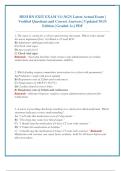
HESI RN EXIT EXAM V4 (NGN Latest Actual Exam |
Verified Questions and Correct Answers | Updated NGN
Edition | Graded A+| PDF
1. The nurse is caring for a client experiencing chest pain. Which order should
the nurse implement first? A) Obtain a 12-lead ECG
B) Administer sublingual nitroglycerin
C) Check vital signs
D) Assess pain level
C) Check vital signs
Rationale : Assessing baseline vitals ensures safe administration of cardiac
medications and determines hemodynamic stability.
2. Which finding requires immediate intervention in a client with pneumonia?
A) Productive cough with green sputum
B) Respiratory rate of 32/min and restlessness
C) Temperature of 100.8°F (38.2°C)
D) Crackles heard in lower lobes
B) Respiratory rate of 32/min and restlessness
Rationale : Indicates hypoxia; requires oxygen administration and provider
notification.
3. A nurse is providing discharge teaching to a client prescribed metformin. Which
statement indicates correct understanding?
A) “I will take this medication even if I skip meals.”
B) “This drug may cause low blood sugar.”
C) “I should stop the medication if I have CT scan with contrast.”
D) “I’ll take this medication at bedtime.”
C) “I should stop the medication if I have CT scan with contrast.” Rationale :
Metformin with contrast can cause lactic acidosis; hold 24–48 hours before and
after procedure.
,4. A client with chronic kidney disease is on a low-sodium diet. Which food should
be avoided? A) Fresh apples
B) Canned soup
C) Rice
D) Boiled potatoes
B) Canned soup
Rationale : Processed foods contain high sodium that can worsen fluid retention
and hypertension.
5. The nurse is assessing a post-operative client. Which finding suggests internal
bleeding?
A) Decreasing blood pressure and increasing pulse
B) Increased urine output
C) Warm, dry skin
D) Complaints of mild pain at incision site
A) Decreasing blood pressure and increasing pulse
Rationale : Classic signs of hypovolemic shock due to internal hemorrhage.
6. The nurse prepares to administer packed red blood cells. Which action is most
important?
A) Use a 24-gauge IV catheter
B) Verify the client’s identification with another nurse
C) Flush IV line with dextrose solution
D) Warm the blood before transfusion
B) Verify the client’s identification with another nurse Rationale :
Prevents life-threatening transfusion reactions.
7. Which nursing action prevents ventilator-associated pneumonia (VAP)?
A) Keep head of bed flat
B) Suction only when needed
C) Provide oral care with chlorhexidine
D) Turn client every 8 hours
,C) Provide oral care with chlorhexidine
Rationale : Reduces bacterial colonization in the oropharynx.
8. A client with asthma suddenly becomes short of breath and wheezing stops.
What should the nurse do first?
A) Assess breath sounds and oxygenation
B) Encourage slow, deep breathing
C) Administer sedatives
D) Reassure the client
A) Assess breath sounds and oxygenation
Rationale : Absence of wheezing may indicate airway obstruction and impending
respiratory failure.
9. The nurse is teaching a client prescribed lisinopril. Which side effect should
be reported immediately? A) Dry cough
B) Dizziness after standing
C) Swelling of lips and face
D) Fatigue
C) Swelling of lips and face
Rationale : Indicates angioedema, a serious and potentially fatal adverse effect.
10. A client on warfarin has an INR of 5.8. What should the nurse anticipate?
A) Give the next dose as scheduled
B) Hold the medication and notify provider
C) Administer vitamin B12
D) Encourage more green vegetables
B) Hold the medication and notify provider
Rationale : INR above therapeutic range increases bleeding risk; hold and report.
11. Which action is appropriate when caring for a client with neutropenia?
A) Provide fresh fruits and vegetables
B) Allow fresh flowers in the room
, C) Encourage visitors with recent colds
D) Use strict hand hygiene and avoid crowds
D) Use strict hand hygiene and avoid crowds
Rationale : Reduces infection risk in immunocompromised clients.
12. A nurse observes a patient experiencing a tonic-clonic seizure. What is the
nurse’s priority action? A) Insert an oral airway
B) Restrain the client’s movements
C) Turn the client to the side
D) Record the duration of the seizure
C) Turn the client to the side
Rationale : Prevents aspiration and maintains airway patency.
13. The nurse reviews a client’s labs: sodium 118 mEq/L. Which symptom
requires immediate attention? A) Muscle weakness
B) Lethargy and confusion
C) Nausea
D) Headache
B) Lethargy and confusion
Rationale : Signs of severe hyponatremia and potential cerebral edema.
14. A client reports severe abdominal pain with shoulder tip discomfort after a
cholecystectomy. What does this indicate?
A) Normal postoperative gas pain
B) Retained bile duct stone
C) Diaphragmatic irritation from gas
D) Bleeding under diaphragm
D) Bleeding under diaphragm
Rationale : Shoulder pain and abdominal distention may indicate internal bleeding
— priority assessment.
Verified Questions and Correct Answers | Updated NGN
Edition | Graded A+| PDF
1. The nurse is caring for a client experiencing chest pain. Which order should
the nurse implement first? A) Obtain a 12-lead ECG
B) Administer sublingual nitroglycerin
C) Check vital signs
D) Assess pain level
C) Check vital signs
Rationale : Assessing baseline vitals ensures safe administration of cardiac
medications and determines hemodynamic stability.
2. Which finding requires immediate intervention in a client with pneumonia?
A) Productive cough with green sputum
B) Respiratory rate of 32/min and restlessness
C) Temperature of 100.8°F (38.2°C)
D) Crackles heard in lower lobes
B) Respiratory rate of 32/min and restlessness
Rationale : Indicates hypoxia; requires oxygen administration and provider
notification.
3. A nurse is providing discharge teaching to a client prescribed metformin. Which
statement indicates correct understanding?
A) “I will take this medication even if I skip meals.”
B) “This drug may cause low blood sugar.”
C) “I should stop the medication if I have CT scan with contrast.”
D) “I’ll take this medication at bedtime.”
C) “I should stop the medication if I have CT scan with contrast.” Rationale :
Metformin with contrast can cause lactic acidosis; hold 24–48 hours before and
after procedure.
,4. A client with chronic kidney disease is on a low-sodium diet. Which food should
be avoided? A) Fresh apples
B) Canned soup
C) Rice
D) Boiled potatoes
B) Canned soup
Rationale : Processed foods contain high sodium that can worsen fluid retention
and hypertension.
5. The nurse is assessing a post-operative client. Which finding suggests internal
bleeding?
A) Decreasing blood pressure and increasing pulse
B) Increased urine output
C) Warm, dry skin
D) Complaints of mild pain at incision site
A) Decreasing blood pressure and increasing pulse
Rationale : Classic signs of hypovolemic shock due to internal hemorrhage.
6. The nurse prepares to administer packed red blood cells. Which action is most
important?
A) Use a 24-gauge IV catheter
B) Verify the client’s identification with another nurse
C) Flush IV line with dextrose solution
D) Warm the blood before transfusion
B) Verify the client’s identification with another nurse Rationale :
Prevents life-threatening transfusion reactions.
7. Which nursing action prevents ventilator-associated pneumonia (VAP)?
A) Keep head of bed flat
B) Suction only when needed
C) Provide oral care with chlorhexidine
D) Turn client every 8 hours
,C) Provide oral care with chlorhexidine
Rationale : Reduces bacterial colonization in the oropharynx.
8. A client with asthma suddenly becomes short of breath and wheezing stops.
What should the nurse do first?
A) Assess breath sounds and oxygenation
B) Encourage slow, deep breathing
C) Administer sedatives
D) Reassure the client
A) Assess breath sounds and oxygenation
Rationale : Absence of wheezing may indicate airway obstruction and impending
respiratory failure.
9. The nurse is teaching a client prescribed lisinopril. Which side effect should
be reported immediately? A) Dry cough
B) Dizziness after standing
C) Swelling of lips and face
D) Fatigue
C) Swelling of lips and face
Rationale : Indicates angioedema, a serious and potentially fatal adverse effect.
10. A client on warfarin has an INR of 5.8. What should the nurse anticipate?
A) Give the next dose as scheduled
B) Hold the medication and notify provider
C) Administer vitamin B12
D) Encourage more green vegetables
B) Hold the medication and notify provider
Rationale : INR above therapeutic range increases bleeding risk; hold and report.
11. Which action is appropriate when caring for a client with neutropenia?
A) Provide fresh fruits and vegetables
B) Allow fresh flowers in the room
, C) Encourage visitors with recent colds
D) Use strict hand hygiene and avoid crowds
D) Use strict hand hygiene and avoid crowds
Rationale : Reduces infection risk in immunocompromised clients.
12. A nurse observes a patient experiencing a tonic-clonic seizure. What is the
nurse’s priority action? A) Insert an oral airway
B) Restrain the client’s movements
C) Turn the client to the side
D) Record the duration of the seizure
C) Turn the client to the side
Rationale : Prevents aspiration and maintains airway patency.
13. The nurse reviews a client’s labs: sodium 118 mEq/L. Which symptom
requires immediate attention? A) Muscle weakness
B) Lethargy and confusion
C) Nausea
D) Headache
B) Lethargy and confusion
Rationale : Signs of severe hyponatremia and potential cerebral edema.
14. A client reports severe abdominal pain with shoulder tip discomfort after a
cholecystectomy. What does this indicate?
A) Normal postoperative gas pain
B) Retained bile duct stone
C) Diaphragmatic irritation from gas
D) Bleeding under diaphragm
D) Bleeding under diaphragm
Rationale : Shoulder pain and abdominal distention may indicate internal bleeding
— priority assessment.