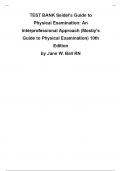
Test Bank for Understanding Anatomy & Physiology A
Visual, Auditory, Interactive Approach 3rd Edition By
Gale Sloan Thompson
1
TableofContents
,Chapter 1. An Introduction to the Human Body
Chapter 2. The Chemical Level of Organization
Chapter 3. The Cellular Level of Organization
Chapter 4. The Tissue Level of Organization
Chapter 5. Integumentary System
Chapter 6. Bone Tissue and the Skeletal System
Chapter 7. Axial Skeleton
Chapter 8. The Appendicular Skeleton
Chapter 9. Joints
Chapter 10. Muscle Tissue
Chapter 11. The Muscular System
Chapter 12. The Nervous System and Nervous Tissue
Chapter 13. Anatomy of the Nervous System
Chapter 14. The Somatic Nervous System
Chapter 15. The Autonomic Nervous System
Chapter 16. The Neurological Exam
Chapter 17. The Endocrine System
Chapter 18. The Cardiovascular System: Blood
Chapter 19. The Cardiovascular System: The Heart
Chapter 20. The Cardiovascular System: Blood Vessels and Circulation
Chapter 21. The Lymphatic and Immune System
Chapter 22. The Respiratory System
Chapter 23. The Digestive System
Chapter 24. Metabolism and Nutrition
Chapter 25. The Urinary System
Chapter 26. Fluid, Electrolyte, and Acid-Base Balance
Chapter 27. The Reproductive System
Chapter 28. Development and Inheritance
,2
1. An Introduction to the Human Body
1. is the study of the larger structures of the body, those visible without the aid of magnification
(A) Grossanatomy
(B) Microscopic anatomy
(C) Macroscopicanatomy
(D) Physicalanatomy
Ans A Diff Easy Page 8
2. The word “anatomy” comes from a Greek root that means “.............’’
(A) To cut apart
(B) Tofixwith
(C) To view inside
(D) Tostudy exterior
Ans A Diff Easy Page 8
3. Dissection is still used in
………….
(A) Medical schools
(B) Pathologylabs
(C) Anatomy courses
(D) All ofabove
Ans D DiffEasy Page 8
4.
5.................is the study of the structures that make up a discrete body system—that is, a group of
structures thatwork together to perform a unique body function.
(A) Regional anatomy
(B) Systematic anatomy
, (C) Bothofabove
(D) None of above
Ans C Diff Easy Page 9
6. Human physiology is the scientific study of the .............of the structures of the body and
the ways in whichtheywork together to supportthe functions oflife.
(A) Chemistry
(B) Physic
(C) Both Above
(D) None of Above
Ans C DiffMedium Page 9
7. Homeostasis is the state of steady --------maintained by living things.
(A) Internal Condition
(B) External conditions
(C) Both Above
(D) None of Above
Ans A Diff Easy Page 9
8. An organ is an anatomically distinct structure of the body composed of---------- tissue
types.
(A) One
(B) Two
(C) Twoor more
(D) None of above
4
Visual, Auditory, Interactive Approach 3rd Edition By
Gale Sloan Thompson
1
TableofContents
,Chapter 1. An Introduction to the Human Body
Chapter 2. The Chemical Level of Organization
Chapter 3. The Cellular Level of Organization
Chapter 4. The Tissue Level of Organization
Chapter 5. Integumentary System
Chapter 6. Bone Tissue and the Skeletal System
Chapter 7. Axial Skeleton
Chapter 8. The Appendicular Skeleton
Chapter 9. Joints
Chapter 10. Muscle Tissue
Chapter 11. The Muscular System
Chapter 12. The Nervous System and Nervous Tissue
Chapter 13. Anatomy of the Nervous System
Chapter 14. The Somatic Nervous System
Chapter 15. The Autonomic Nervous System
Chapter 16. The Neurological Exam
Chapter 17. The Endocrine System
Chapter 18. The Cardiovascular System: Blood
Chapter 19. The Cardiovascular System: The Heart
Chapter 20. The Cardiovascular System: Blood Vessels and Circulation
Chapter 21. The Lymphatic and Immune System
Chapter 22. The Respiratory System
Chapter 23. The Digestive System
Chapter 24. Metabolism and Nutrition
Chapter 25. The Urinary System
Chapter 26. Fluid, Electrolyte, and Acid-Base Balance
Chapter 27. The Reproductive System
Chapter 28. Development and Inheritance
,2
1. An Introduction to the Human Body
1. is the study of the larger structures of the body, those visible without the aid of magnification
(A) Grossanatomy
(B) Microscopic anatomy
(C) Macroscopicanatomy
(D) Physicalanatomy
Ans A Diff Easy Page 8
2. The word “anatomy” comes from a Greek root that means “.............’’
(A) To cut apart
(B) Tofixwith
(C) To view inside
(D) Tostudy exterior
Ans A Diff Easy Page 8
3. Dissection is still used in
………….
(A) Medical schools
(B) Pathologylabs
(C) Anatomy courses
(D) All ofabove
Ans D DiffEasy Page 8
4.
5.................is the study of the structures that make up a discrete body system—that is, a group of
structures thatwork together to perform a unique body function.
(A) Regional anatomy
(B) Systematic anatomy
, (C) Bothofabove
(D) None of above
Ans C Diff Easy Page 9
6. Human physiology is the scientific study of the .............of the structures of the body and
the ways in whichtheywork together to supportthe functions oflife.
(A) Chemistry
(B) Physic
(C) Both Above
(D) None of Above
Ans C DiffMedium Page 9
7. Homeostasis is the state of steady --------maintained by living things.
(A) Internal Condition
(B) External conditions
(C) Both Above
(D) None of Above
Ans A Diff Easy Page 9
8. An organ is an anatomically distinct structure of the body composed of---------- tissue
types.
(A) One
(B) Two
(C) Twoor more
(D) None of above
4