RMI 2302 EXAMINATION / WELL-DETAILED
QUESTIONS AND COMPREHENSIVE
ANSWERS FROM VERIFIED STUDY
RESOURCES / ALREADY GRADED A+ !!
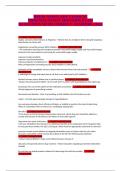
Risk
Uncertainty regarding loss
Danger (does/does not) equate risk
Danger does not equal risk
risk is measured by:
1. frequency/likelihood
2. Severity/impact
3. Expected value/loss
4. Risk Profile
Relative variation of actual from expected loss measured by:
Variation or Standard Deviation
Uncertainty
doubt about our ability to predict future outcomes
Uncertainty (can/cannot) differ across individuals even when risk is
same
Uncertainty can differ across individuals even when risk is same
Information (does/does not) alter risk (objective) but can alter
uncertainty
Information does not alter risk (objective) but can alter uncertainty
Reduction in certainty (can/cannot) be a good thing
Reduction in certainty can be a good thing
,CATEGORIES OF RISK
1. Pure v. Speculative
2. Static v. Dynamic
3. Fundamental v. Particular
4. Core v. Secondary
SOURCES OF RISK
1. Personal Risk
2. Property Risk
3. Liability Risks
4. Financial Risks
Exposure
person or property facing risk or loss
peril
immediate cause of loss
hazard
condition affecting the perils (frequency or severity of loss)
physical hazards
property conditions
moral hazard
behavioral changes
morale hazard
indifference
societal hazards
legal or cultural
risk neutral
indifferent toward risk, value of risky situation is expected loss
risk averse
prefer to avoid risk, willing to pay more than expected loss to avoid
risk
risk seeker
, prefer risk, would pay more than expected return to engage in risky
situation
BURDEN OF RISK ON SOCIETY
1. need for larger emergency funds
2. loss os needed goods and services
3. fear and worry
risk management
scientific approach to dealing with risk
RISK MANAGEMENT PROCESS
1. Determination of objectives
2. Identification of risks
3. evaluation of risks
4. consideration of alternatives-selection of the tool
5. implementing the decision
6. Evaluation and review
POST LOSS OBJECTIVES
Survival, continuity of operations, earnings stability, continued
growth, social responsibility
PRE LOSS OBJECTIVES
Economy, reduction in anxiety, meeting externally imposed
obligations, social responsibility
Step One of RM Process
Determination of objectives
Step Two of RM Process
Identification of Risk
Tools to assist in risk identification
questionnaires, checklists, and procedure guides
combination approach
all of the tools available are brought to bear on the problem
Inspections
QUESTIONS AND COMPREHENSIVE
ANSWERS FROM VERIFIED STUDY
RESOURCES / ALREADY GRADED A+ !!
Risk
Uncertainty regarding loss
Danger (does/does not) equate risk
Danger does not equal risk
risk is measured by:
1. frequency/likelihood
2. Severity/impact
3. Expected value/loss
4. Risk Profile
Relative variation of actual from expected loss measured by:
Variation or Standard Deviation
Uncertainty
doubt about our ability to predict future outcomes
Uncertainty (can/cannot) differ across individuals even when risk is
same
Uncertainty can differ across individuals even when risk is same
Information (does/does not) alter risk (objective) but can alter
uncertainty
Information does not alter risk (objective) but can alter uncertainty
Reduction in certainty (can/cannot) be a good thing
Reduction in certainty can be a good thing
,CATEGORIES OF RISK
1. Pure v. Speculative
2. Static v. Dynamic
3. Fundamental v. Particular
4. Core v. Secondary
SOURCES OF RISK
1. Personal Risk
2. Property Risk
3. Liability Risks
4. Financial Risks
Exposure
person or property facing risk or loss
peril
immediate cause of loss
hazard
condition affecting the perils (frequency or severity of loss)
physical hazards
property conditions
moral hazard
behavioral changes
morale hazard
indifference
societal hazards
legal or cultural
risk neutral
indifferent toward risk, value of risky situation is expected loss
risk averse
prefer to avoid risk, willing to pay more than expected loss to avoid
risk
risk seeker
, prefer risk, would pay more than expected return to engage in risky
situation
BURDEN OF RISK ON SOCIETY
1. need for larger emergency funds
2. loss os needed goods and services
3. fear and worry
risk management
scientific approach to dealing with risk
RISK MANAGEMENT PROCESS
1. Determination of objectives
2. Identification of risks
3. evaluation of risks
4. consideration of alternatives-selection of the tool
5. implementing the decision
6. Evaluation and review
POST LOSS OBJECTIVES
Survival, continuity of operations, earnings stability, continued
growth, social responsibility
PRE LOSS OBJECTIVES
Economy, reduction in anxiety, meeting externally imposed
obligations, social responsibility
Step One of RM Process
Determination of objectives
Step Two of RM Process
Identification of Risk
Tools to assist in risk identification
questionnaires, checklists, and procedure guides
combination approach
all of the tools available are brought to bear on the problem
Inspections