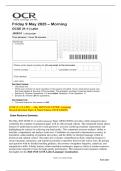
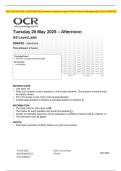
GCSE (9–1) LATIN — May 2025 PAST PAPER: Language
Merged Question Paper & Mark Scheme [OCR J282/01]
Exam Resource Summary
The May 2025 GCSE (9–1) Latin Language Paper (OCR J282/01) provides a fully merged resource
combining the complete examination paper with its official mark scheme. This integrated format allows
learners to understand exactly how each question is assessed, clarifying examiner expectations and
highlighting the criteria for achieving top-band marks. This component assesses students’ ability to
translate, comprehend, and analyse Latin texts. Candidates are expected to demonstrate accuracy in
translation, understanding of grammar and syntax, and the ability to interpret language within its
historical and cultural context. The paper also evaluates comprehension skills, requiring learners to
extract meaning, summarise, and respond accurately to questions based on the source texts. By pairing
each question with its detailed marking guidance, the resource strengthens linguistic, analytical, and
interpretative skills. It helps learners refine translation techniques, improve clarity in written responses,
and provides targeted revision for high-quality performance. This merged resource prepares students
thoroughly for the 2026 OCR GCSE Latin (Language) examination.
OCR is an exempt Charity
Turn over
, 2
Answer both Section A and Section B.
Section A
Read Passage 1.
Answer Questions 1–9.
Passage 1
The minor god Marsyas pays the price for challenging a more senior god to a music contest.
Marsyas erat satyrus stultus, qui in silvis habitabat. olim, dum in montibus ambulat, tibiam in
terra iacentem conspexit. ‘quam pulchra est illa tibia!’ exclamavit. ‘si artem canendi me docebo,
amici mei credent me deum graviorem esse.’ deinde, tibia statim rapta, domum rediit.
mox omnes satyrum mirabantur quod optime canere poterat. itaque Marsyas constituit
Apollinem ad certamen invitare. nam omnibus ostendere volebat se meliorem illo deo esse. 5
postridie certamen coepit. primo nemo dicere poterat quis e duobus deis melius caneret.
tandem tamen, satyro victo, Apollo nuntiavit ‘nunc hunc stultum satyrum necabo, quod me ad
certamen vocare ausus est.’ itaque Marsyas mortem crudelem passus est.
Names
Marsyas, Marsyae (m) Marsyas (a satyr)
Apollo, Apollinis (m) Apollo (the god of music)
Words
satyrus, satyri (m) satyr (a type of minor woodland god)
tibia, tibiae (f) flute
canendum, canendi (n) music-making
gravis, grave (here) important
cano, canere, cecini I play, I make music
certamen, certaminis (n) contest, competition
1 Marsyas erat satyrus stultus, qui in silvis habitabat (line 1): what two things are we told about the
satyr Marsyas?
1 .......................................................................................................................................................
2 .......................................................................................................................................................
[2]
2 dum in montibus ambulat, tibiam in terra iacentem conspexit (lines 1–2): what happened during
Marsyas’ walk in the mountains?
. ................................................................................................................................................. [2]
© OCR 2025
, 3
3 ‘si artem canendi me docebo, amici mei credent me deum graviorem esse’ (lines 2–3): in what
way did Marsyas think that learning to play the flute would benefit him?
..........................................................................................................................................................
. ................................................................................................................................................. [3]
4 mox omnes satyrum mirabantur quod optime canere poterat (line 4): why did everyone admire
Marsyas?
..........................................................................................................................................................
. ................................................................................................................................................. [1]
5 itaque Marsyas constituit Apollinem ad certamen invitare. nam omnibus ostendere volebat se
meliorem illo deo esse (lines 4–5):
(a) what did Marsyas decide to do?
..........................................................................................................................................................
. ................................................................................................................................................. [1]
(b) for what reason did he make this decision?
..........................................................................................................................................................
. ................................................................................................................................................. [3]
6 primo nemo dicere poterat quis e duobus deis melius caneret (line 6): what was unclear at the
start of the competition?
..........................................................................................................................................................
. ................................................................................................................................................. [1]
7 ‘nunc hunc stultum satyrum necabo quod me ad certamen vocare ausus est’ (lines 7–8): why did
Apollo say he would kill Marsyas?
..........................................................................................................................................................
. ................................................................................................................................................. [2]
8 Marsyas mortem crudelem passus est (line 8): what happened to Marsyas in the end?
. ................................................................................................................................................. [1]
Turn over for question 9
© OCR 2025 Turn over
, 4
9 For each of the Latin words below, give one English word which has been derived from the Latin
word and give the meaning of the English word.
One has been done for you.
Latin Word: optime
English Word: optimist
Meaning of English Word: someone who believes that good things always happen
Latin Word: habitabat
English Word: ..................................................
Meaning of English Word: . ....................................................................................... [2]
Latin Word: vocare
English Word: ..................................................
Meaning of English Word: . ....................................................................................... [2]
© OCR 2025
Merged Question Paper & Mark Scheme [OCR J282/01]
Exam Resource Summary
The May 2025 GCSE (9–1) Latin Language Paper (OCR J282/01) provides a fully merged resource
combining the complete examination paper with its official mark scheme. This integrated format allows
learners to understand exactly how each question is assessed, clarifying examiner expectations and
highlighting the criteria for achieving top-band marks. This component assesses students’ ability to
translate, comprehend, and analyse Latin texts. Candidates are expected to demonstrate accuracy in
translation, understanding of grammar and syntax, and the ability to interpret language within its
historical and cultural context. The paper also evaluates comprehension skills, requiring learners to
extract meaning, summarise, and respond accurately to questions based on the source texts. By pairing
each question with its detailed marking guidance, the resource strengthens linguistic, analytical, and
interpretative skills. It helps learners refine translation techniques, improve clarity in written responses,
and provides targeted revision for high-quality performance. This merged resource prepares students
thoroughly for the 2026 OCR GCSE Latin (Language) examination.
OCR is an exempt Charity
Turn over
, 2
Answer both Section A and Section B.
Section A
Read Passage 1.
Answer Questions 1–9.
Passage 1
The minor god Marsyas pays the price for challenging a more senior god to a music contest.
Marsyas erat satyrus stultus, qui in silvis habitabat. olim, dum in montibus ambulat, tibiam in
terra iacentem conspexit. ‘quam pulchra est illa tibia!’ exclamavit. ‘si artem canendi me docebo,
amici mei credent me deum graviorem esse.’ deinde, tibia statim rapta, domum rediit.
mox omnes satyrum mirabantur quod optime canere poterat. itaque Marsyas constituit
Apollinem ad certamen invitare. nam omnibus ostendere volebat se meliorem illo deo esse. 5
postridie certamen coepit. primo nemo dicere poterat quis e duobus deis melius caneret.
tandem tamen, satyro victo, Apollo nuntiavit ‘nunc hunc stultum satyrum necabo, quod me ad
certamen vocare ausus est.’ itaque Marsyas mortem crudelem passus est.
Names
Marsyas, Marsyae (m) Marsyas (a satyr)
Apollo, Apollinis (m) Apollo (the god of music)
Words
satyrus, satyri (m) satyr (a type of minor woodland god)
tibia, tibiae (f) flute
canendum, canendi (n) music-making
gravis, grave (here) important
cano, canere, cecini I play, I make music
certamen, certaminis (n) contest, competition
1 Marsyas erat satyrus stultus, qui in silvis habitabat (line 1): what two things are we told about the
satyr Marsyas?
1 .......................................................................................................................................................
2 .......................................................................................................................................................
[2]
2 dum in montibus ambulat, tibiam in terra iacentem conspexit (lines 1–2): what happened during
Marsyas’ walk in the mountains?
. ................................................................................................................................................. [2]
© OCR 2025
, 3
3 ‘si artem canendi me docebo, amici mei credent me deum graviorem esse’ (lines 2–3): in what
way did Marsyas think that learning to play the flute would benefit him?
..........................................................................................................................................................
. ................................................................................................................................................. [3]
4 mox omnes satyrum mirabantur quod optime canere poterat (line 4): why did everyone admire
Marsyas?
..........................................................................................................................................................
. ................................................................................................................................................. [1]
5 itaque Marsyas constituit Apollinem ad certamen invitare. nam omnibus ostendere volebat se
meliorem illo deo esse (lines 4–5):
(a) what did Marsyas decide to do?
..........................................................................................................................................................
. ................................................................................................................................................. [1]
(b) for what reason did he make this decision?
..........................................................................................................................................................
. ................................................................................................................................................. [3]
6 primo nemo dicere poterat quis e duobus deis melius caneret (line 6): what was unclear at the
start of the competition?
..........................................................................................................................................................
. ................................................................................................................................................. [1]
7 ‘nunc hunc stultum satyrum necabo quod me ad certamen vocare ausus est’ (lines 7–8): why did
Apollo say he would kill Marsyas?
..........................................................................................................................................................
. ................................................................................................................................................. [2]
8 Marsyas mortem crudelem passus est (line 8): what happened to Marsyas in the end?
. ................................................................................................................................................. [1]
Turn over for question 9
© OCR 2025 Turn over
, 4
9 For each of the Latin words below, give one English word which has been derived from the Latin
word and give the meaning of the English word.
One has been done for you.
Latin Word: optime
English Word: optimist
Meaning of English Word: someone who believes that good things always happen
Latin Word: habitabat
English Word: ..................................................
Meaning of English Word: . ....................................................................................... [2]
Latin Word: vocare
English Word: ..................................................
Meaning of English Word: . ....................................................................................... [2]
© OCR 2025